
 Stone Cutting Machines
 Stone Polishing Machines
 Bridge Saw Machines
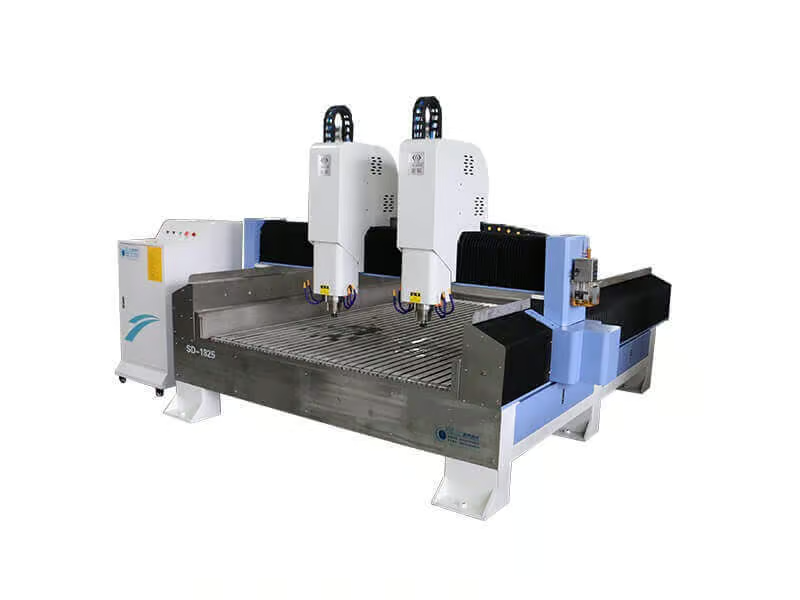 Stone Engraving Machines
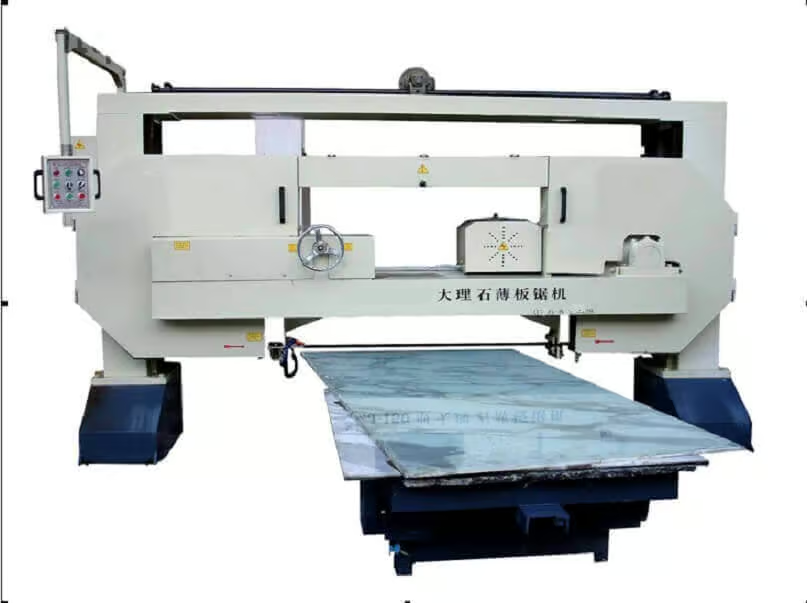
 Stone Veneer Saw
 Stone Quarry Machines
 Stone Band Saw Machines
 Stone Edging Beveling Machine
 Other Stone Machines
 Stone Diamond Tools
 Stone Slab Cutting
 Stone Slab Surface Edge Polishing
 Stone Block Slicing
 Stone Quarry Mining
 Stone Horizontal Splitting
 Stone Engraving Applications
 CNC Stone Cutting
 Countertop Cutting Polishing
 Other Applications
The stone fabrication industry is experiencing a massive shift. With the rising costs of raw materials, the exploding popularity of large-format slabs, and a severe shortage of skilled labor, relying on outdated hand-cranked equipment is a guaranteed path to shrinking profit margins. For high-volume fabrication shops, replacing outdated manual saws with a modern laser stone cutting machine is no longer a futuristic concept—it is the absolute baseline for survival, precision, and profitability.
1. Debunking the Myth: What “Laser” Really Means in Stone Shops
Before exploring the industry’s future, we must establish what we are actually talking about. In the heavy-duty stone industry, “laser technology” does not refer to a sci-fi thermal beam vaporizing the rock. Rather, it refers to the integration of Infrared Optical Alignment Technology combined with Automated Heavy-Duty Sawing.
This hybrid approach is the true future of fabrication. It retains the unmatched destructive power of a 15KW motor and a 400mm diamond blade, but gives the machine perfect “eyesight.” A highly visible red laser reticle projects the exact path of the blade onto the slab before the cut begins, completely removing the guesswork from the equation.
2. The Decline of Manual Stone Cutting Machines
To understand why the industry is rushing toward laser automation, we must look at the painful realities of the machines being left behind: the traditional manual hand-cranked bridge saw.
❌ The Exhaustion of Hand-Cranking
Manual saws require the operator to physically turn heavy hand-wheels to move the massive bridge and lower the blade. This purely physical labor is exhausting, drastically slowing down production speed as the day wears on. Furthermore, it demands a strong, highly experienced operator—a demographic that is becoming increasingly rare and expensive to hire.
❌ Visual Estimation vs. Reality
On a manual machine, positioning the slab relies on the operator visually estimating where the blade will drop. When cutting a $2,000 slab of Calacatta marble, eyeballing the cut is a massive financial risk. A deviation of just a few millimeters means a rejected countertop and a destroyed profit margin.


The transition from manual labor to smart automation.
3. The Core Technologies Driving the Future of Fabrication
Modern laser-guided systems solve the manual dilemma by combining three pivotal technologies:
High-Visibility Laser Reticles
Instead of guessing, the operator sees a sharp, bright red line projected directly onto the granite or quartz. The operator simply aligns the natural vein of the stone with the laser line, ensuring “what you see is what you cut.” This turns a 5-minute manual measuring task into a 5-second visual alignment.
PLC Automation (Leaving the Hand-Wheel Behind)
Once the laser is aligned, the operator no longer cranks a wheel. Advanced Programmable Logic Controllers (PLC) take over. The operator presses a button, and the machine automatically controls the feed rate (cutting speed). The PLC ensures the blade moves smoothly at an optimal pace, preventing blade deflection and edge chipping.
Vibration-Free Monoblock Structures
A laser line is useless if the machine shakes. The future of equipment design leans heavily into massive, one-piece cast-iron structures (often weighing over 5 tons). This rigidity guarantees that the laser diode remains perfectly parallel with the diamond blade year after year.
4. How Laser-Guided Systems Maximize Factory ROI
For factory owners, trends only matter if they make money. Upgrading from a manual hand-cranked saw to a laser-guided automated system transforms a workshop’s Return on Investment (ROI) in two major ways:
- Doubling Production Output: Because the PLC handles the cutting and the laser handles the measuring, an operator can process slabs significantly faster without physical fatigue.
- Near-Zero Waste: Eliminating the “human visual error” means eliminating crooked cuts. Your material yield skyrockets.
By integrating a heavy-duty granite laser cutting machine, modern factories are frequently seeing their equipment pay for itself within the first 12 months through labor and material savings alone.
5. The Verdict: Not Just the Future, But the Present
Is laser the future of stone cutting? The reality is that it is already the present. The industry has moved past the era of relying solely on the physical stamina and visual guesswork of the operator. Laser-guided optical alignment combined with PLC automation is now the standard for any professional shop that wants to process cut-to-size slabs quickly, safely, and profitably. If you are still hand-cranking your bridge saw, you are already falling behind.
6. Top 10 FAQ on Laser-Guided Stone Cutting
Insights into the most common questions regarding the transition to modern cutting technology.
1. How much faster is a laser stone cutting machine compared to a manual hand-cranked saw?
Because the laser eliminates manual measuring and the PLC automates the physical cutting process, operators typically see a 40% to 60% increase in daily slab processing speed.
2. Can I upgrade my old manual stone cutting machine with a laser?
While aftermarket lasers exist, old manual machines still suffer from human error during the hand-cranking process, and their worn rails often cause the laser to vibrate out of alignment. Upgrading to a built-in automated system is far superior.
3. Is a laser stone saw difficult for traditional operators to learn?
Not at all. Veteran operators love the upgrade. It removes the physical strain of turning wheels and replaces visual guesswork with a clear, highly visible guide line. Training usually takes less than a day.
4. Does the laser alignment system work on all types of marble and granite?
Yes. High-intensity industrial lasers are designed to be clearly visible on light marble, dark granite, and highly patterned luxury stones, even when the slab is wet from the cooling water.
5. What is the difference between a standard bridge saw and a laser-guided saw?
A standard older bridge saw requires the operator to visually estimate the blade path or rely on physical rulers. A laser-guided saw projects a flawless optical line indicating exactly where the diamond blade will travel.
6. How does laser alignment improve cutting large format porcelain slabs?
Sintered stone and porcelain are highly brittle. A misaligned manual cut will cause the slab to crack. The laser ensures the blade enters the slab at the perfect angle, while the PLC ensures a steady, non-aggressive cutting speed.
7. Does the PLC automation replace the need for an operator?
No, the operator is still essential for loading the slab, aligning the laser with the desired pattern (vein matching), and programming the dimensions. The PLC simply takes over the physical labor of pushing the blade through the stone.
8. How accurate is the laser optical alignment?
When mounted on a rigid, vibration-free monoblock frame, the laser alignment offers micron-level precision, ensuring the cut deviates by less than 0.1mm from the projected line.
9. Do laser machines require special factory lighting?
No. Industrial laser diodes are bright enough to cut through standard factory overhead lighting and remain highly visible to the operator.
10. What maintenance does the laser alignment module need?
The only maintenance required is occasionally wiping the glass lens of the laser diode with a soft cloth to remove dried stone dust and water spots, ensuring the red line remains sharp.
Future-Proof Your Fabrication Business Today
Leave the exhaustion and inaccuracy of hand-cranking in the past. Speak to our heavy machinery experts about upgrading your workshop to a highly profitable, automated laser system.
Explore Laser Machine Specs