
 Stone Cutting Machines
 Stone Polishing Machines
 Bridge Saw Machines
 CNC Stone Wire Saw Machine
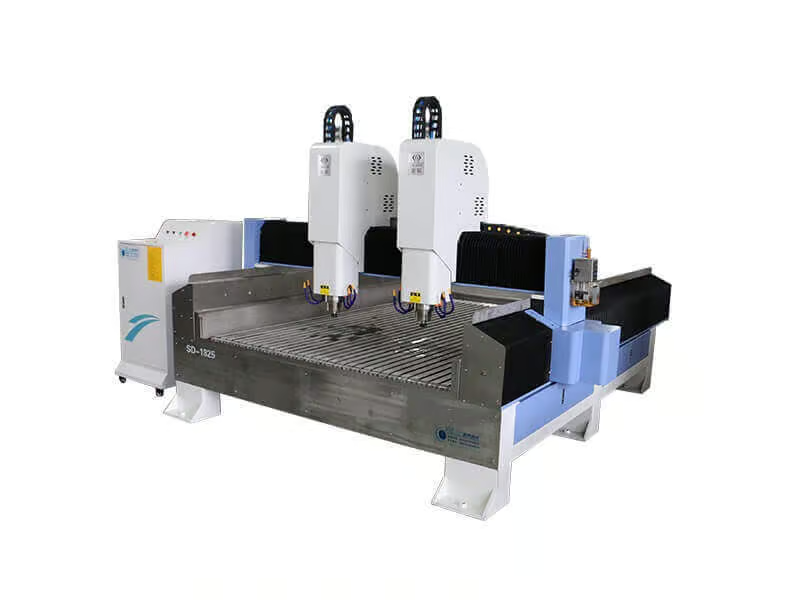 Stone Engraving Machines
 Stone Veneer Saw
 Stone Quarry Machines
 Stone Band Saw Machines
 Stone Edging Beveling Machine
 Other Stone Machines
 Stone Diamond Tools
 Stone Slab Cutting
 Stone Slab Surface Edge Polishing
 Stone Block Slicing
 Stone Quarry Mining
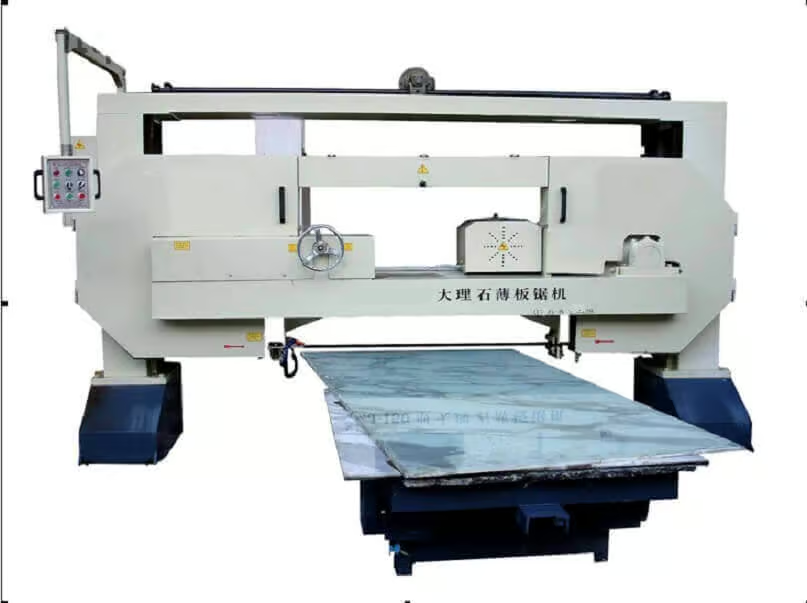 Stone Horizontal Splitting
 Stone Engraving Applications
 CNC Stone Cutting
 Countertop Cutting Polishing
 Other Applications
Many shop owners hesitate to upgrade their equipment, believing that a cheaper manual edge saw saves money upfront. The reality is vastly different. According to a 2026 cost-analysis study conducted by the MOSCUT Customer Success Team across 80 fabrication shops that still rely on manual push/hand-crank saws for waterfall edges: manually pushing a blade adds an average of 2.5 hours of labor per island and results in a staggering 12% material scrap rate due to edge chipping.
Last year, a mid-sized factory in Florida nearly lost a lucrative contract for 20 luxury apartments. Their workers were using a light-duty manual push saw to cut 45-degree angles on ultra-hard quartz. As the operators suffered from physical fatigue throughout the shift, their pushing speed became inconsistent. Even a fraction of a second of hesitation caused the blade to chatter, severely chipping the quartz edges and creating massive, ugly gaps during assembly. Desperate to save the order, they upgraded to our 45° Miter Bridge Saw. By replacing human pushing with a motorized, automated feed, they completely eliminated chipping and reduced their assembly time from half a day down to just 45 minutes per island. Let us explore exactly how a manual saw is silently draining your daily profits.


The Hidden Financial Drain of Manual Chamfering
While the initial purchase price of a manual edge cutter is lower, the hidden physical and mechanical limitations of hand-crank machines will cost you exponentially more in wasted time and ruined slabs.

The Time Trap of Manual Push Saws
Cutting through 3cm (1.25 inches) of solid granite requires immense force. On a manual edge saw, the operator must physically push or crank the cutting head across the entire length of the slab. As fatigue sets in, the cutting speed slows to a crawl. You are paying a highly skilled, high-wage fabricator to perform exhausting manual labor, drastically reducing your factory’s daily output capabilities.

Human Stutter and the Scrap Rate Nightmare
A flawless 45-degree cut requires an absolutely constant feed rate. When a human pushes the saw, micro-pauses (Human Stutter) and uneven pressure are inevitable. These slight hesitations cause the high-speed diamond blade to bounce or generate extreme localized heat. Because manual saws have lightweight frames, they cannot absorb this vibration, resulting in catastrophic blowouts and chipped edges on your most expensive slabs.
How a Dedicated 45° Miter Bridge Saw Changes the Math
By stepping up to a heavy-duty bridge saw explicitly engineered for 45-degree chamfering, you replace human error with unyielding mechanical automation.

Motorized Feed and Heavy-Duty Rigidity
The secret to zero chipping lies in momentum and mass. Our Miter Bridge Saw uses a massive cast-iron bridge and a high-torque motorized gear rack to drive the cutting head. It glides through the stone at a perfectly smooth, uninterrupted speed. The sheer weight of the machine absorbs all resonance, ensuring the blade never deflects, regardless of the stone’s hardness.

Precision Geometry Out of the Box
Tilting a manual saw often relies on guesswork and manual protractors, leading to cuts that are actually 44° or 46°. When you try to glue them together, the corner is visibly crooked. Our dedicated miter saw features precision-machined tilting mechanics that lock at exactly 45.0°. The pieces come off the machine ready to be glued, completely eliminating the need for workers to grind the angles flat by hand.
Head-to-Head Comparison: Manual Saw vs. Miter Bridge Saw
Let us look at the raw engineering data. Upgrading your equipment is not an expense; it is a direct investment in throughput, material savings, and product capability.
| Specification / Outcome | Manual Edge Cutting Machine | MOSCUT 45° Miter Bridge Saw |
|---|---|---|
| Max. Cutting Dimensions | 2400 × 1200 mm (Cannot cut full jumbo slabs, forces unwanted seams) | 3200 × 2000 mm (Easily accommodates super-jumbo waterfall panels) |
| Drive Mechanism | Hand-Pushed / Hand-Crank (Prone to stutter) | Motorized Gear Rack (100% constant speed) |
| Chassis Rigidity | Lightweight Steel Tube (Vibrates under load) | Heavy-Duty Cast Iron Beam (Zero deflection) |
| Edge Quality | Wavy, high risk of severe chipping | Razor-sharp, mirror-smooth finish |
| Average Scrap Rate | ~12% (High material waste) | < 0.5% (Virtually zero waste) |
| Processing Time (Per Island) | 3 – 4 Hours of intense manual labor | ~20 Minutes of automated cutting |
| Labor Requirement | Requires extreme physical exertion | Operator presses a button and monitors |
Comparing the Assembly Process: Glue, Clamps, and Frustration
The true test of a 45-degree cut is how easily the two pieces join together on the assembly table.

The Nightmare of Hand-Cut Seams
Because manual cuts often have micro-waves and chipped edges, the two pieces of stone will not sit flush. Fabricators are forced to use excessive amounts of thick, color-matched epoxy to fill the massive gaps. This results in a thick, ugly glue line. Furthermore, workers must use complex ratcheting clamps to force the uneven edges together while the glue cures.

The “Tape-and-Fold” Machine Perfection
When the 45° Miter Bridge Saw cuts the stone, the edge is so perfectly straight and sharp that you can use the industry’s favorite trick: the “Tape-and-Fold” method. You simply lay the two pieces flat, join the sharp edges with a strip of wide masking tape on the polished face, apply a thin bead of flowing glue into the V-groove, and literally fold the stone up to a perfect 90 degrees. The seam is virtually invisible, delivering the ultimate luxury aesthetic.
Stop Leaving Money on the Fabrication Table
In the highly competitive world of luxury stone fabrication, relying on exhausting manual labor and lightweight machinery is a fast track to shrinking profit margins. The cost of scrapped material and wasted wages far exceeds the investment in proper equipment.
Ready to completely eliminate chipped edges?
Explore the immense rigidity and automated precision of our equipment. Stop struggling with manual cranks and watch your factory’s profit margins soar.
Explore the 45° Miter Bridge SawView Manual Saws Browse All Bridge Saws
Top 10 FAQ: Upgrading from Manual Saws to Bridge Saws
1. Is the cutting speed of a motorized bridge saw really faster than hand-pushing?
Yes. While a human can aggressively push a blade for short bursts, they cannot sustain it over a 3-meter cut. A motorized saw maintains a relentless, optimized feed rate (usually 2-3 meters per minute) without stopping or tiring.
2. Why does my manual saw struggle to cut jumbo slabs?
Most manual edge saws are built with a maximum cutting length of 2400mm or 3000mm and limited table depth. The MOSCUT Miter Bridge saw offers a massive 3200x2000mm processing envelope, easily accommodating the largest quartz and quartzite slabs on the market.
3. Can I just upgrade the rails on my manual saw instead of buying a bridge saw?
No. The issue is not just the rails; it is the overall mass of the machine. The heavy cast-iron bridge of a dedicated miter saw absorbs high-frequency vibrations that a lightweight steel manual saw frame simply cannot handle.
4. Will upgrading to a bridge saw reduce my diamond blade costs?
Absolutely. The “human stutter” associated with hand-crank machines causes blades to glaze over or warp from sudden friction spikes. The constant, motorized feed of a bridge saw allows the diamond segments to wear evenly, extending blade life by up to 40%.
5. Do I need special training to operate the motorized Miter Bridge Saw?
No. If your workers know how to operate a manual saw, they will master the bridge saw in a few hours. The control panel is highly intuitive, using standard joysticks and simple directional buttons.
6. How quickly can I expect a return on investment (ROI)?
Most shops doing regular waterfall or mitered edge work see a full ROI within 6 to 9 months, purely based on the elimination of material scrap and the dramatic reduction in manual polishing labor hours.
7. Does the motorized bridge saw require a permanent concrete foundation?
We offer both options. You can choose a Gantry style (requires concrete walls) or a Monoblock style (a single steel chassis that requires no foundation and can be moved with a forklift).
8. Can the bridge saw also perform standard 90-degree straight cuts?
Yes. The 45-degree tilt is a specialized feature, but when locked at 0 degrees, the machine functions as an incredibly powerful, high-speed standard bridge saw for sizing slabs into rectangular countertops.
9. What maintenance is required for the motorized gear rack compared to manual rails?
The gear rack is actually easier to maintain in a wet environment. Unlike linear bearings that can jam if stone mud gets inside, the open-tooth gear rack simply needs a weekly application of standard marine-grade grease to run flawlessly.
10. Can I still cut small vanity backsplashes on a large bridge saw?
Yes. The laser guide allows you to accurately position even the smallest scrap pieces on the table, and the wireless remote lets the operator jog the blade precisely into position for small cuts.