
 Stone Cutting Machines
 Stone Polishing Machines
 Bridge Saw Machines
 CNC Stone Wire Saw Machine
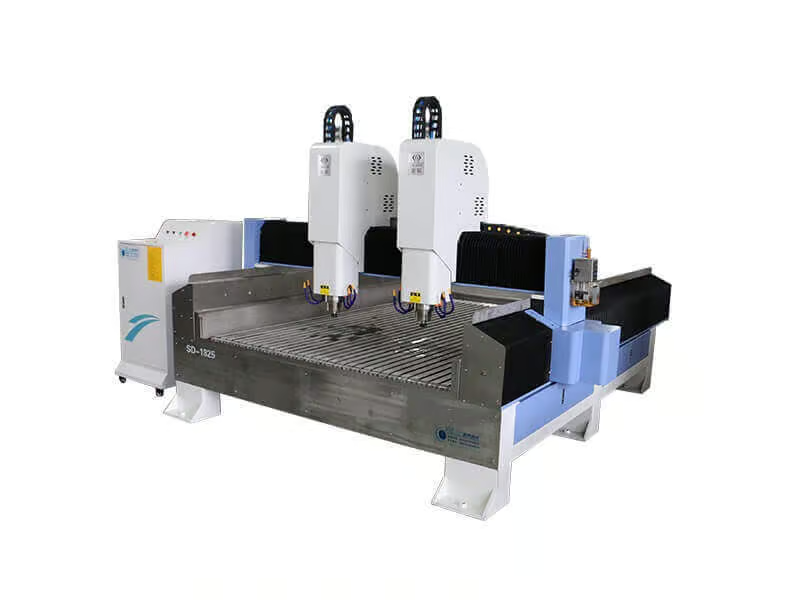 Stone Engraving Machines
 Stone Veneer Saw
 Stone Quarry Machines
 Stone Band Saw Machines
 Stone Edging Beveling Machine
 Other Stone Machines
 Stone Diamond Tools
 Stone Slab Cutting
 Stone Slab Surface Edge Polishing
 Stone Block Slicing
 Stone Quarry Mining
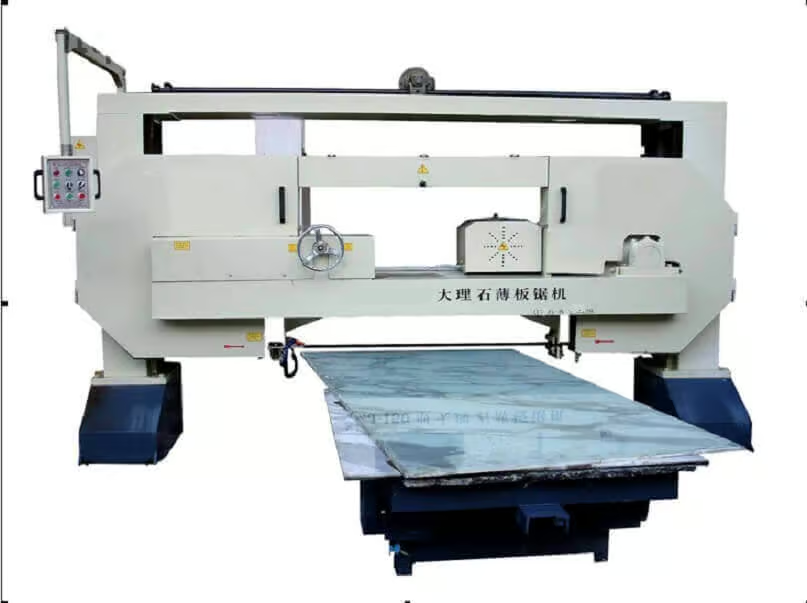 Stone Horizontal Splitting
 Stone Engraving Applications
 CNC Stone Cutting
 Countertop Cutting Polishing
 Other Applications
In the modern kitchen and bath industry, premium quartz, engineered stone, and sintered surfaces command incredibly high material costs. If your fabrication shop is still relying on manual measuring tapes, physical wooden templates, and semi-automatic saws, you are likely throwing away 15% to 20% of your expensive slabs straight into the dumpster as unusable offcuts.
Material waste is the silent killer of factory profitability. However, by leveraging the intelligent software and advanced camera systems available on modern CNC bridge saw, fabricators can drastically reduce their scrap rates. In this comprehensive guide, we will share professional techniques to squeeze every possible dollar out of your quartz slabs by maximizing your cutting yield.

The Financial Impact of Material Waste
Before upgrading their fabrication techniques, many factory owners underestimate just how much money is lost to the scrap bin. Every square foot of quartz saved goes directly to your bottom-line profit.

The Hidden Cost of Human Error
A single miscalculation by a manual operator—cutting a countertop half an inch too short—means a $500 to $1,000 piece of premium quartz is instantly ruined. Furthermore, manual layout often leaves large, awkward gaps between cut pieces, forcing you to consume a second expensive jumbo slab when a tighter digital layout could have fit everything onto one.

The Value of Quartz Remnants
Offcuts (remnants) are not trash. When managed properly through intelligent CNC software, these leftover pieces of quartz can be highly profitable. A 6-inch strip that might normally be thrown away can be effortlessly programmed by a CNC bridge saw to be cut into premium bathroom backsplashes, small vanity shelves, or threshold pieces.
Technique 1: Digital Templating and CAD Nesting
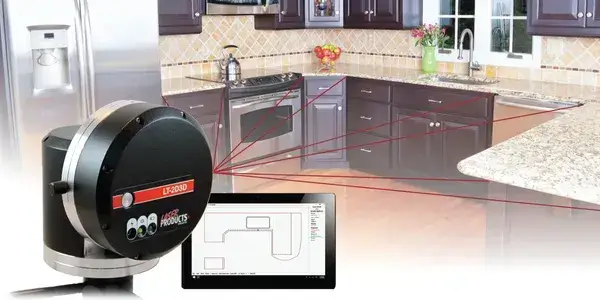
Say goodbye to physical wood or plastic templates. The foundation of high-yield fabrication relies on bringing exact, digitized dimensions into a smart computer system before the diamond blade ever spins.
Precision Digital Templating
The process starts in the customer’s home. By using a modern laser digital templating tool, installers can capture the exact dimensions of the kitchen cabinets, perfectly accommodating unlevel walls and odd angles. This data generates a 100% accurate DXF/CAD file, ensuring the factory never cuts a piece too large or too small.

Smart CNC Nesting Software
Once the CAD files are imported into the bridge saw’s control system (like the Italian ESA or Pegasus software), the magic happens. The “Nesting” function acts like a highly intelligent jigsaw puzzle solver. It automatically arranges the countertop pieces, islands, and backsplashes onto the digital slab representation, rotating them to leave the absolute minimum amount of gap space between cuts.
Technique 2: Utilizing Overhead Camera Systems
Many believe overhead cameras are only useful for matching veins on natural marble. In reality, a high-resolution camera system is the ultimate tool for salvaging quartz remnants and avoiding factory defects.

Managing and Cutting Remnants
If you have an oddly shaped leftover piece of quartz from a previous job, you simply place it on the CNC worktable. The overhead camera takes a high-definition photo, displaying its exact shape on the touchscreen. The operator can then drag a digital CAD file (like a small vanity top) directly inside the boundaries of that irregular scrap piece, turning waste into immediate cash.

Visual Defect Avoidance
Even engineered quartz can have factory flaws, such as resin pooling, unwanted discoloration spots, or edge chips from shipping. The camera captures these defects clearly. The operator can easily position the digital sink cutout directly over the defect—meaning the flawed area will simply drop into the trash when the sink hole is routed out, saving the rest of the pristine slab.
Technique 3: Eliminating Edge Chipping
A perfectly nested slab is worthless if the saw blade chips the edges so badly that the piece requires heavy, time-consuming manual grinding, or worse, is entirely rejected by the client. Protecting the integrity of the cut edge is paramount to yield.
Selecting the Right Quartz Blade
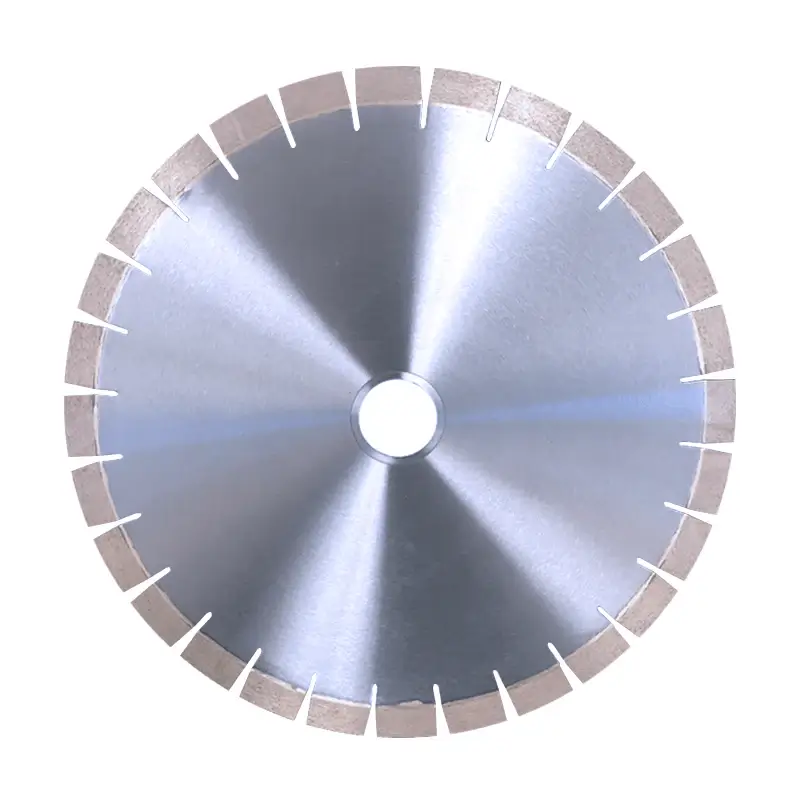
Quartz is incredibly dense and heavily bound with industrial resins. Using a standard granite blade will cause severe edge chipping. You must equip the spindle with a premium, narrow-segment diamond blade specifically formulated for engineered stone. A sharper, cleaner cut means you don’t have to cut pieces oversized just to grind them down later.

Optimizing Feed Rates and RPM
Speed kills edges. By utilizing the VFD (Variable Frequency Drive) on a modern CNC bridge saw, operators must carefully balance the spindle’s RPM and the forward feed rate of the bridge. Plunging too fast into brittle quartz will instantly blow out the bottom edge. A slower, highly controlled feed rate guarantees a chip-free finish straight off the saw.

Generous Water Cooling
Friction generates immense heat. When cutting quartz, this heat will actually melt the internal resin, causing the stone to burn, discolor, and become highly brittle, leading to edge blowout. Ensuring the bridge saw’s water nozzles are fully open and flooding the cutting kerf is essential to keep the resin cool and the cut perfectly intact.
Technique 4: Smart Cutting Sequences
The order in which a CNC bridge saw cuts a slab heavily influences the structural integrity of the stone. Cutting in the wrong sequence can cause internal tension to release suddenly, cracking the entire piece in half.

Relief Cuts for Internal Corners
When cutting “L-shaped” countertops or large sink cutouts, sharp 90-degree internal corners are major weak points where cracks originate during transport. Advanced CNC software will automatically program the spindle to use a core drill bit to create a small round “relief hole” in the corner before the saw blade makes the straight cuts. This releases stress and prevents disastrous cracking.

45-Degree Miter Edges for Thick Looks
Here is a brilliant yield trick: instead of buying extremely expensive and heavy 4cm (1.5 inch) thick quartz slabs, buy standard 2cm slabs. By using a 5-axis CNC bridge saw to cut a perfect 45-degree mitered edge, you can glue a drop-apron piece to the front. This gives the illusion of a massive, solid 4cm thick countertop while consuming half the material and saving immense costs.
Upgrade Your Tech
You simply cannot extract maximum yield and achieve high profit margins using outdated manual measuring and cutting methods. In today’s competitive landscape, investing in digital templating, nesting software, and camera-equipped CNC machinery is the only sustainable path forward for ambitious fabrication shops.
Stop Throwing Away Your Profits
Are you ready to reduce your material waste by up to 20%? Upgrade your factory with MOSCUT’s intelligent CNC bridge saws featuring overhead cameras and automated nesting software.
Explore Smart MOSCUT Bridge SawsTop 10 FAQ: Quartz Yield & Cutting
Have questions about optimizing your quartz fabrication process? Read the most common inquiries from factory owners below.
Software & Yield Optimization
1. What exactly is CNC “Nesting”?
Nesting is a software feature that acts like a digital puzzle solver. It takes all the countertop pieces you need to cut and automatically arranges them on the digital slab screen in the most space-efficient way possible, leaving the smallest possible gaps between cuts.
2. How much material can a camera system actually save?
On average, factories report a 10% to 15% increase in material yield when switching from manual layout to a camera and nesting system. For a shop processing 20 slabs a week, this translates to thousands of dollars saved monthly.
3. Does the camera system work with plain, solid-color quartz?
Yes. While it doesn’t need to match veins, the camera is still incredibly useful for photographing irregular remnants (offcuts) so you can precisely nest small parts, like backsplashes, inside the scrap pieces.
4. What file formats does the nesting software accept?
Industry-standard CNC bridge saws accept DXF and DWG files. These files are typically generated by digital laser templators used at the customer’s job site or drawn in standard CAD programs like AutoCAD.
5. Can the software calculate the blade thickness?
Yes. Professional CNC software automatically accounts for the “kerf” (the physical width of the diamond blade, usually 3mm to 4mm) during nesting, ensuring pieces are not cut too small because of blade thickness.
Cutting Techniques & Tooling
6. Why does quartz chip more easily than granite?
Quartz is an engineered stone bound together with industrial resins. This makes it incredibly hard but also highly brittle. If the blade is dull, the speed is too high, or it gets too hot, the resin shatters at the edge, causing chipping.
7. Can I use the same diamond blade for Granite and Quartz?
While a general-purpose blade can cut both, it is highly discouraged for quality work. Granite requires a blade with harder bonds, while quartz requires a blade with softer bonds to constantly expose fresh diamonds. Using a quartz-specific blade prevents chipping.
8. What is the recommended feed rate for cutting quartz?
Feed rates vary based on machine power and slab thickness (2cm vs 3cm). Generally, a safe, chip-free feed rate for 3cm quartz on a CNC bridge saw is between 1.5 to 2.5 meters per minute, but you should always start slow and adjust.
9. Why do L-shaped countertops crack during transport?
If an L-shape is cut with sharp 90-degree internal corners, all the physical stress concentrates at that sharp point. A slight bump during transport will crack the stone. CNC machines drill a rounded “relief hole” in the corner first to distribute this stress.
10. What is a “plunge cut” and why is it dangerous?
A plunge cut is when the spinning blade lowers vertically into the center of the stone (like starting a sink hole). If the Z-axis lowers too fast, the immense pressure can blow out the bottom of the quartz slab. A slow, controlled CNC plunge is mandatory.