
 Stone Cutting Machines
 Stone Polishing Machines
 Bridge Saw Machines
 CNC Stone Wire Saw Machine
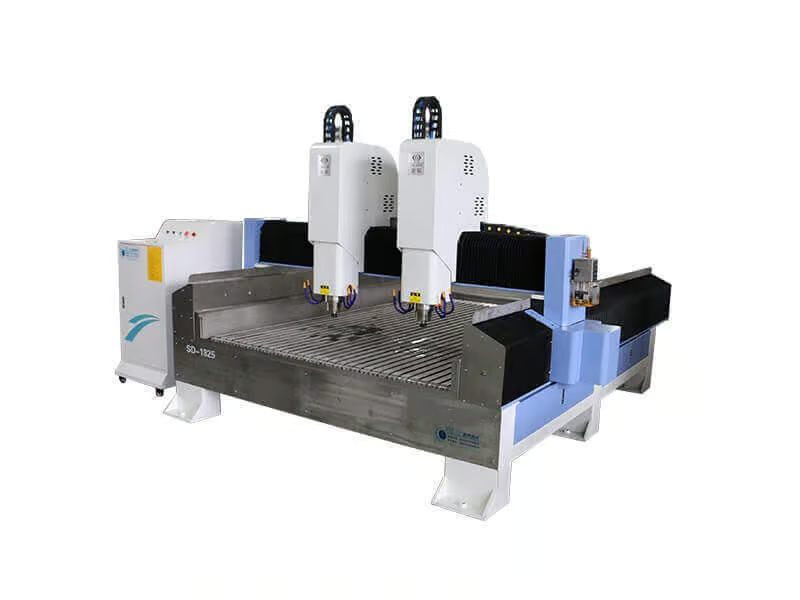 Stone Engraving Machines
 Stone Veneer Saw
 Stone Quarry Machines
 Stone Band Saw Machines
 Stone Edging Beveling Machine
 Other Stone Machines
 Stone Diamond Tools
 Stone Slab Cutting
 Stone Slab Surface Edge Polishing
 Stone Block Slicing
 Stone Quarry Mining
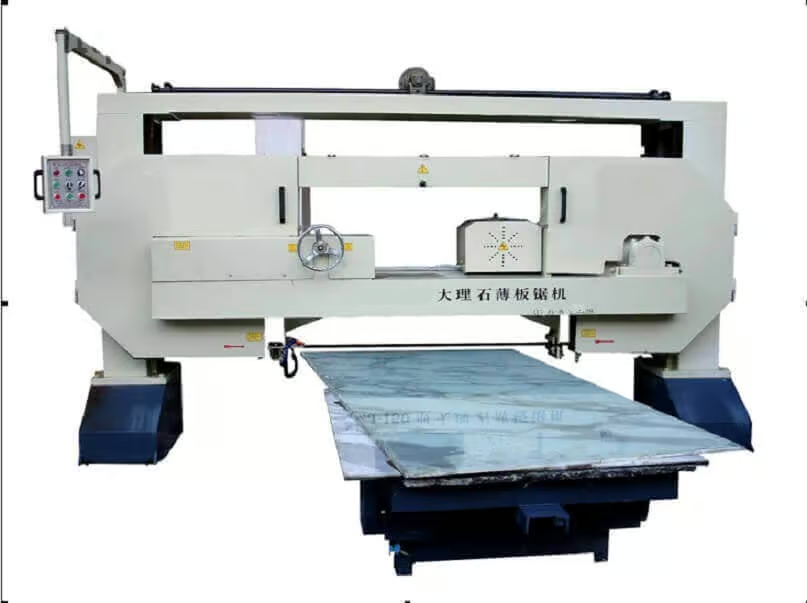 Stone Horizontal Splitting
 Stone Engraving Applications
 CNC Stone Cutting
 Countertop Cutting Polishing
 Other Applications
In the stone fabrication industry, processing a slab is only half the battle. The real challenge—and often the most dangerous and expensive part of the workflow—is physically moving the heavy, fragile stone before and after the cut. Factory owners frequently spend tens of thousands of dollars on high-speed CNC machines, only to watch their production stall because operators are constantly stopping to manually lift and shift pieces of granite and quartz.
According to the Occupational Safety and Health Administration (OSHA), manual material handling is the leading cause of severe musculoskeletal disorders and costly workplace compensation claims. Fortunately, modern 5-Axis CNC bridge saws equipped with a Spindle-Mounted Vacuum Manipulator completely eliminate this bottleneck. In this guide, we will analyze the immense Return on Investment (ROI) this automated system brings to your factory floor.


The Hidden Costs of Manual Material Handling
If your shop does not utilize an automated vacuum system, your machine is not running at its true capacity. The time spent manually intervening during a cutting cycle is a massive hidden cost that silently eats away at your daily profits.

The Labor Bottleneck
On a standard bridge saw, whenever a large section of the slab is cut, the operator must hit the “stop” button. They then have to shout across the noisy factory to call two other workers away from their polishing stations to help slide the heavy piece out of the way of the blade. This constant interruption destroys the momentum of the entire factory, turning a 20-minute cutting cycle into a 45-minute chore.

Chipped Edges and Breakage
When multiple pieces are nested tightly together to save material, separating them by hand is treacherous. Workers often use metal crowbars or wooden wedges to pry the heavy pieces apart. One slip, and the delicate edge of an expensive quartzite or sintered stone slab is instantly chipped. The cost of replacing the ruined material and delaying the client’s installation is staggering.
How the Spindle-Mounted Vacuum Lifter Works
The vacuum lifter is not just an accessory; it is an intelligent, pneumatic robotic arm integrated directly into the spindle housing of a 5-Axis CNC machine, governed entirely by the software’s brain.

Seamless Software Integration
When you program your cuts using advanced CAD/CAM software (like ESA or Pegasus), the system automatically calculates the exact dimensions, weight, and Center of Gravity (COG) of every individual piece on the table. The CNC knows exactly where the spindle must travel to safely drop the vacuum pads without dropping the stone.
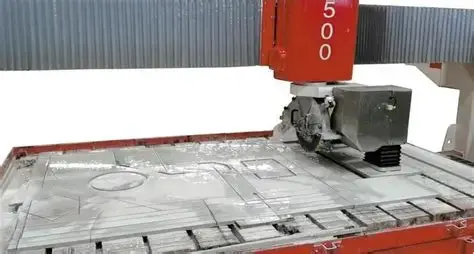
Automatic Piece Separation
During the cutting sequence, before the diamond blade makes a potentially dangerous cross-cut, the spindle lifts, rotates the vacuum pads downward, and suctions onto the cut piece. It gently lifts the stone, translates it a few inches across the table, and places it safely out of the blade’s path. This entire process happens automatically without the operator ever opening the safety doors.
Calculating the True Return on Investment
When factory owners look at the price tag of adding a vacuum manipulator to their 5-axis CNC, they often hesitate. However, when you break down the financial math, the system pays for itself incredibly fast.

Slashing Direct Labor Costs
A machine without an automated lifter requires one dedicated operator and at least one dedicated assistant for material handling. With an automated vacuum lifter, the machine requires only one operator. By saving the annual salary, benefits, and insurance costs of just one employee, the vacuum system typically yields a 100% ROI in less than 8 months.

Enabling “Unattended” Shifts
The ultimate goal of CNC automation is “unattended machining.” Because the vacuum lifter handles all piece separation automatically, the operator can hit “Start,” walk away from the machine, and spend the next 45 minutes programming the next job, performing quality control, or loading edge polishing machines. Your factory effectively doubles its output per man-hour.
Improving Workplace Safety and Morale
A profitable factory is a safe factory. Beyond the direct financial gains, the vacuum lifter radically transforms the physical working environment, making your shop a safer and more desirable place to work.

Preventing Back Injuries
Lifting wet, slippery slabs of stone that weigh hundreds of pounds is incredibly dangerous. A single severe back injury can result in a devastating workers’ compensation claim, increased insurance premiums, and the loss of a skilled worker. The automated vacuum lifter bears 100% of the weight, eliminating the primary cause of injury in the fabrication shop.

Reducing Operator Fatigue
Manual labor drains your workers’ energy. By 3:00 PM, a fatigued worker is more likely to make a measuring mistake or drop a piece of stone. By replacing grueling physical labor with intelligent CNC automation, your operators remain sharp, focused, and motivated throughout their entire shift, leading to higher quality finished products.
Upgrade Your Production Line
Investing in a 5-Axis CNC without an automated vacuum lifter is like buying a high-performance sports car with a manual hand-crank engine. To truly capitalize on the speed, precision, and nesting capabilities of modern CNC technology, automated material handling is an absolute necessity. It protects your workers, prevents material damage, and guarantees a rapid return on your investment.
Automate Your Material Handling Today
Stop paying for slow, dangerous manual labor. Discover how the integrated Vacuum Manipulator on the MOSCUT 5-Axis CNC Bridge Saw can revolutionize your factory’s workflow and skyrocket your ROI.
Explore the Automated 5-Axis CNCTop 10 FAQ: Automated Vacuum Lifters
Have questions about the physical capabilities and safety protocols of spindle-mounted vacuum systems? Review our expert answers below.
Capabilities & Limitations
1. How much weight can the automated vacuum lifter pick up?
Premium 5-axis machines are typically equipped with heavy-duty pneumatic suction pads that can safely lift and maneuver stone pieces weighing between 250 kg (550 lbs) and 500 kg (1,100 lbs), depending on the specific machine configuration.
2. Can the vacuum lifter pick up textured or leathered stone?
Yes, but with caveats. Standard vacuum pads work perfectly on polished and honed surfaces. For highly textured “leathered” or heavily flamed surfaces, the machine may require specialized soft-foam rubber pads to create a proper airtight seal.
3. Can it pick up very small pieces like backsplashes?
There is a minimum size requirement. The stone piece must be large enough to completely cover the diameter of the suction pad (usually around 6 to 8 inches wide) to generate a vacuum seal. Pieces smaller than the pad cannot be lifted automatically.
4. Does the vacuum lifter slow down the overall cutting time?
While the machine pauses cutting to move a piece, it is still drastically faster than stopping the machine, waiting for human workers to arrive, prying the pieces apart manually, and restarting the machine. Automation keeps the spindle moving constantly.
5. Can the lifter rotate pieces 90 degrees on the table?
Yes. Because the lifter is mounted to the 5-axis C-axis (rotation axis), it can lift a rectangular piece, rotate it 90 degrees, and set it back down. This is incredibly useful for executing blind cuts or saving space on the worktable.
Maintenance & Safety
6. What happens if the factory loses power while lifting a stone?
Safety is paramount. Advanced vacuum lifters are equipped with an emergency non-return valve and a vacuum pressure reservoir tank. If power or air pressure is suddenly lost, the tank maintains the suction for several minutes, allowing the piece to be safely lowered manually.
7. What happens if the lifter doesn’t get a good seal?
The CNC is equipped with digital vacuum pressure sensors. If the system does not reach the required negative pressure threshold (due to a dirty pad or porous stone), the software will trigger an alarm and refuse to lift the Z-axis, preventing the stone from dropping.
8. How often do the rubber suction pads need to be replaced?
With daily cleaning (wiping with a damp cloth to remove abrasive stone dust), the rubber pads typically last 1 to 2 years. If they become hard, cracked, or chemically degraded, they must be replaced immediately to ensure safety.
9. Does the vacuum lifter require a special air compressor?
The lifter operates on compressed air to generate a vacuum using a Venturi ejector (or a dedicated vacuum pump). It requires a steady, dry air supply, typically around 6 to 8 Bar (90-115 PSI) from your factory’s main industrial air compressor.
10. Can the vacuum lifter scratch the polished surface of the stone?
No, the pads are made of soft, non-marking industrial rubber. However, if the operator fails to wash the stone slurry off the table and abrasive quartz dust gets trapped between the pad and the stone, it can cause micro-scratches. Cleanliness is essential.