
 Stone Cutting Machines
 Stone Polishing Machines
 Bridge Saw Machines
 CNC Stone Wire Saw Machine
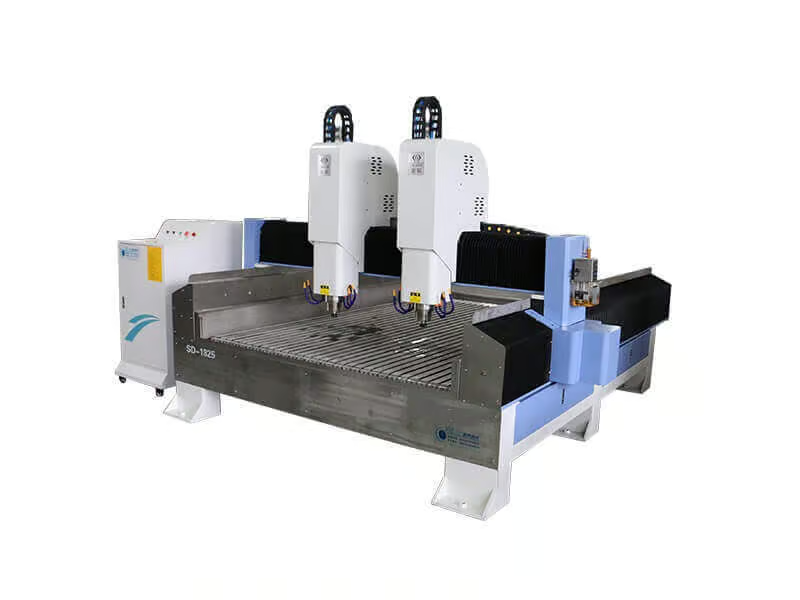 Stone Engraving Machines
 Stone Veneer Saw
 Stone Quarry Machines
 Stone Band Saw Machines
 Stone Edging Beveling Machine
 Other Stone Machines
 Stone Diamond Tools
 Stone Slab Cutting
 Stone Slab Surface Edge Polishing
 Stone Block Slicing
 Stone Quarry Mining
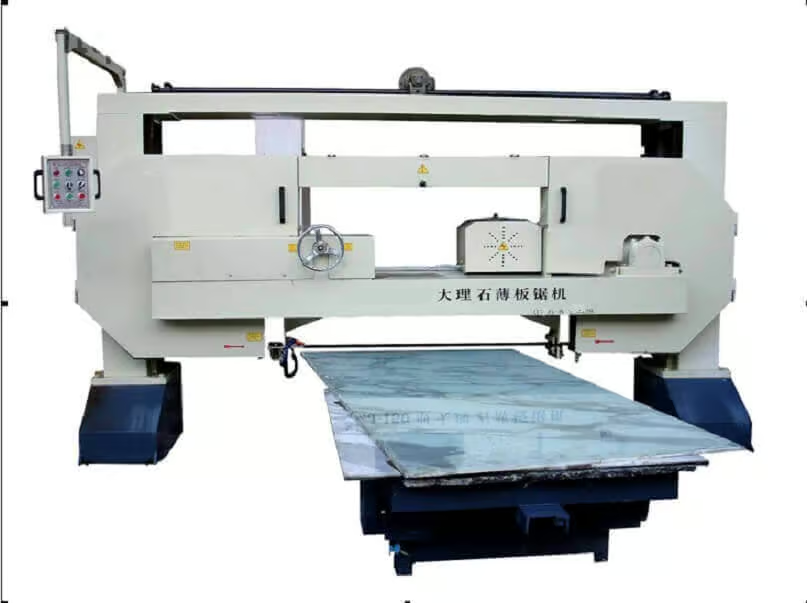 Stone Horizontal Splitting
 Stone Engraving Applications
 CNC Stone Cutting
 Countertop Cutting Polishing
 Other Applications
In a MOSCUT 2026 labor-audit survey of 150 stone fabrication shops worldwide, a startling conclusion was reached: when a 45-degree miter cut is imprecise, the labor cost wasted on assembly and seam-fixing accounts for over 40% of the total processing cost of a waterfall island. Most shop owners believe that “seamless” results come from expensive epoxy or master-level clamping, but the truth is much simpler.
Last year, a major countertop fabricator in Sydney, Australia, struggled with aging bridge saws that had developed rail wear. Their miter cuts were fluctuating between 44.0° and 46.5°. To join these pieces into a 90-degree waterfall, three senior fabricators spent 5 hours per island using 14 heavy-duty miter clamps and gallons of epoxy to fill the 4mm gaps. After upgrading to the MOSCUT 45° Miter Bridge Saw, the mechanical precision of the 45.0° lock changed everything. They ditched the heavy clamps entirely, using only masking tape and flowing glue to complete a “Tape-and-Fold” assembly in just 30 minutes. The secret to a seamless joint is not the glue—it is the accuracy of the cut.
The Myth of “Fixing it in Post”
Relying on assembly workers to hide the flaws of a poor machine cut is a strategy that bleeds profit and ruins material aesthetics.

The Color-Matching Nightmare
The wider the seam, the more glue is required. Trying to make a thick line of epoxy invisible is nearly impossible, especially on stones with complex natural veining. Even with perfect color matching, a thick glue line creates a “plastic” look that instantly lowers the luxury value of the stone. A perfect miter cut, however, allows for a hairline seam where the stones touch directly, making the glue line practically invisible.

The Structural Weakness of Thick Glue
Contrary to popular belief, more glue does not mean a stronger bond. Thick layers of epoxy are prone to shrinking, yellowing, and cracking over time due to thermal expansion and contraction. A “dry-fit” precision joint, where the stone faces are in maximum contact, creates a much stronger and more durable structure for heavy waterfall island ends.
The Clamp Trap: Why You’re Wasting Hours on Setup
Brute force is a poor substitute for geometric precision. If you are using more than a few light clamps, your cutting machine is failing you.

Forcing Imperfect Angles
When the miter angle isn’t a perfect 45.0°, fabricators use heavy miter clamps and vacuum seam setters to “force” the stone together. This creates massive internal tension within the slab. For brittle materials like sintered stone or porcelain, this mechanical stress often leads to corners snapping or edges chipping under the pressure of the clamps.

The Messy Cleanup
Forced joints result in massive glue squeeze-out. Workers then spend additional hours scraping away excess epoxy with razor blades and acetone, followed by the risky task of re-polishing the edge with a hand grinder. This post-processing is where most edge damage occurs, further increasing your shop’s scrap rate.
The True Secret: The Cut Dictates the Seam

The “Tape-and-Fold” Revolution
Our 45° Miter Bridge Saw enables the most efficient assembly process in the industry. By producing razor-sharp, perfectly straight edges, you can use the Tape-and-Fold method: simply lay the polished faces flat, tape the joint, apply flowing glue into the V-groove, and fold it 90 degrees. The tape acts as the perfect hinge and glue-guard. No heavy clamps required—just a hairline seam that looks like a solid block of stone.
Stop Bleeding Labor on the Assembly Table
Your most talented fabricators should be focusing on high-value craftsmanship, not fixing the flaws left behind by outdated machinery. Upgrading to a precision miter saw doesn’t just improve your cutting—it revolutionizes your entire assembly workflow.
Ready to ditch the heavy clamps and messy epoxy?
Discover how the absolute precision of our 45° Miter Bridge Saw can reduce your assembly time by up to 80% while delivering the hairline seams luxury clients demand.
See the Precision 45° Miter SawTop 10 FAQ: Mastering Miter Assemblies
1. Is the “Tape-and-Fold” method suitable for all types of stone?
Yes, but it is most effective on materials with very clean, chip-free miter cuts like granite, quartz, and sintered stone. If the cut is perfectly straight, the tape provides enough tension to hold the joint until the glue sets.
2. If the machine cuts the edge too sharp, will it break during assembly?
A “knife-edge” is fragile. Our bridge saw allows for a very slight “blunt” or miter-with-flat adjustment (leaving a 1-2mm vertical edge), which prevents chipping during the folding process while still maintaining a seamless look.
3. Which glue is best for a 45-degree waterfall seam on sintered stone?
For ultra-tight seams, we recommend flowing, high-strength acrylic or polyester adhesives. Because the joint is so tight, the glue must be thin enough to penetrate the entire depth of the miter.
4. Do I still need heavy vacuum seam setters for mitered joints?
While precision cutting reduces the need for them, vacuum setters are still useful for extra-long islands to ensure the stone doesn’t sag in the middle during the curing process.
5. How do I ensure the waterfall pattern matches perfectly across the joint?
Pattern matching (vein matching) depends on the laser alignment of the saw. You must align the vein exactly with the blade path before cutting the countertop and the side panel from the same slab area.
6. How can I tell if my bridge saw needs a miter calibration?
If you join two 45° cuts and find a gap at the top (face) or the bottom (back) of the joint, your machine is not cutting at exactly 45.0°. Even a 0.5° error will create visible gaps.
7. Can this machine handle mitering 12mm thin porcelain?
Yes. The rigidity of our cast-iron beam prevents the vibrating “chatter” that often breaks thin porcelain panels when tilting the blade.
8. Does the type of blade affect the final assembly quality?
Absolutely. A dull or improper blade will cause micro-chips that you’ll have to fill with glue. Always use a high-quality, continuous-rim miter blade for the cleanest results.
9. What is the most common mistake in mitered assembly?
Over-clamping. If you have to use massive force to close the seam, the stones were likely not cut at the correct angle. This creates internal stress that often leads to cracks later.
10. How long should I wait before moving a “Tape-and-Fold” joint?
Wait until the epoxy or acrylic adhesive has fully cured according to the manufacturer’s spec (typically 20-40 minutes) before removing the tape or moving the island end.