
 Stone Cutting Machines
 Stone Polishing Machines
 Bridge Saw Machines
 Stone Quarry Cutting Machines
 Stone Block Cutter Machine
 CNC Stone Wire Saw Machine
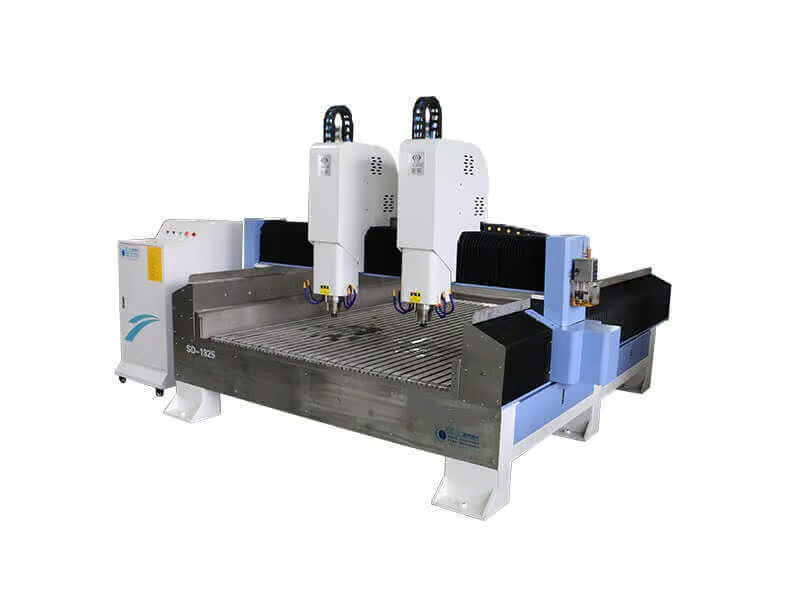 Stone Engraving Machines
 Thin Stone Veneer Saw Machine
 Horizontal Stone Slab Splitting Machine
 Stone Edge Polishing Profiling Machine
 Stone Auxiliary Equipment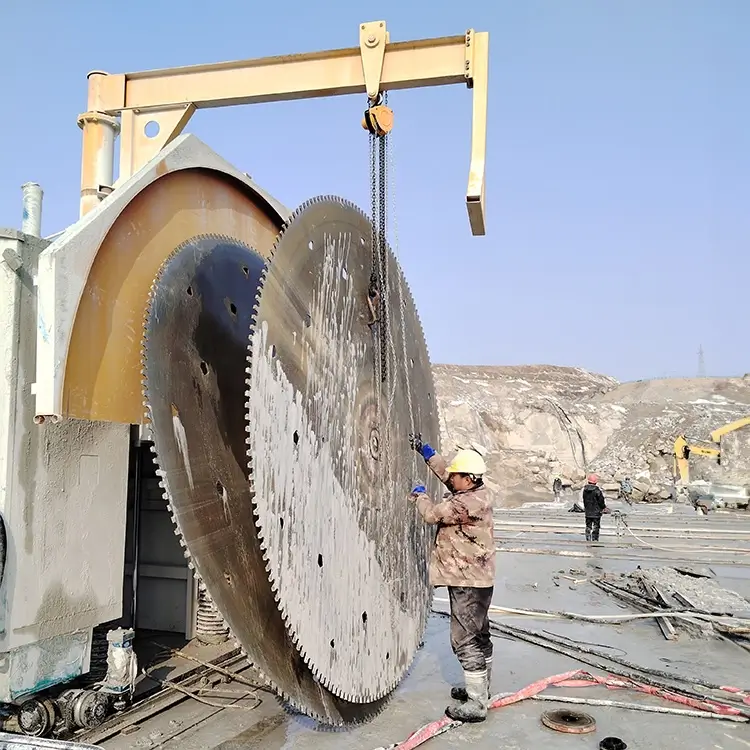
In the execution of high-velocity stone sawing, maintaining the mechanical equilibrium of a giant spinning disk is a complex thermodynamic challenge. According to manufacturing parameters established by the Federation of European Producers of Abrasives (FEPA) regarding large-diameter diamond saws, the pre-tensioning of steel cores is critical to preventing geometric deviation under intense centrifugal and frictional forces. Industrial diagnostics show that over 90% of instances where a blade cuts wavy lines or jams inside the stone are not caused by uneven machine tracks. They are the direct result of the steel core losing its internal structural tension—its ‘metallurgical memory’—due to localized thermal overload.
A high-capacity limestone quarry located in the Eastern Desert of Egypt experienced this failure cycle firsthand. Utilizing massive 3000mm circular saws on double blade cutters, their operation was constantly plagued by violent blade wobbling. The machine was producing highly irregular, ‘S-curve’ blocks that required expensive squaring, and several multi-thousand-dollar steel blades snapped mid-cut inside the channels. A MosCut engineering audit revealed that their internal cooling water manifolds were failing to reach the absolute bottom depth of the kerf, inducing rapid side-clearance wear. By reconstructing their water-delivery manifolds and sending the warped steel cores out for professional re-rolling and hammer tensioning, the quarry restored absolute blade rigidity, expanding their consumable operational lifespan by an incredible 300%.
The Physics of Rigidity: What is “Blade Tension”?
Tension is not how tightly the blade is bolted to the spindle. It is a hidden mechanical stress forged deep inside the steel.To a novice, a large circular stone saw blade appears to be a perfectly flat, uniform sheet of steel. This is incorrect. A raw, un-tensioned steel disk of that size would be as floppy as cardboard if spun at high operational RPMs. Centrifugal force pushes outward, causing the thin steel rim to expand far faster than the heavy center hub, resulting in the violent ‘potato chip’ warping effect.
To combat this, master saw smiths use advanced rollers and precision hammers to physically compress a specific concentric ring inside the steel disk before shipping. This process introduces a permanent state of internal **Pre-Stress (Pre-Tension)**. This internal tension acts as a rigid invisible skeleton. As the blade speeds up, the centrifugal expansion perfectly counteracts this built-in stress, pulling the steel disk into absolute, laser-straight flatness. Without this pre-tensioning, high-speed straight-line stone cutting is physically impossible.

The Thermal Enemy: Heat Expansion
Steel expands when heated. When the rim gets hotter than the center, your blade loses its memory.The primary assassin of built-in steel tension is heat. When a multi-blade or double blade quarry cutter plunges deep into a bench, the diamond segments at the outer edge generate tremendous friction heat. If the cooling water distribution is inadequate, this heat quickly sinks into the outer rim of the steel core.
As the steel rim gets hot, it naturally tries to expand outward. However, because the massive central hub of the blade remains cooled by the spindle housing, it does not expand. The expanding rim metal has nowhere to go, so it buckles sideways, destroying its internal tension network. The blade begins to wobble wildly inside the slot, the cutting channel widens, and the main electric motor experiences a massive current spike as it struggles to push a warped piece of steel through a straight rock canyon.
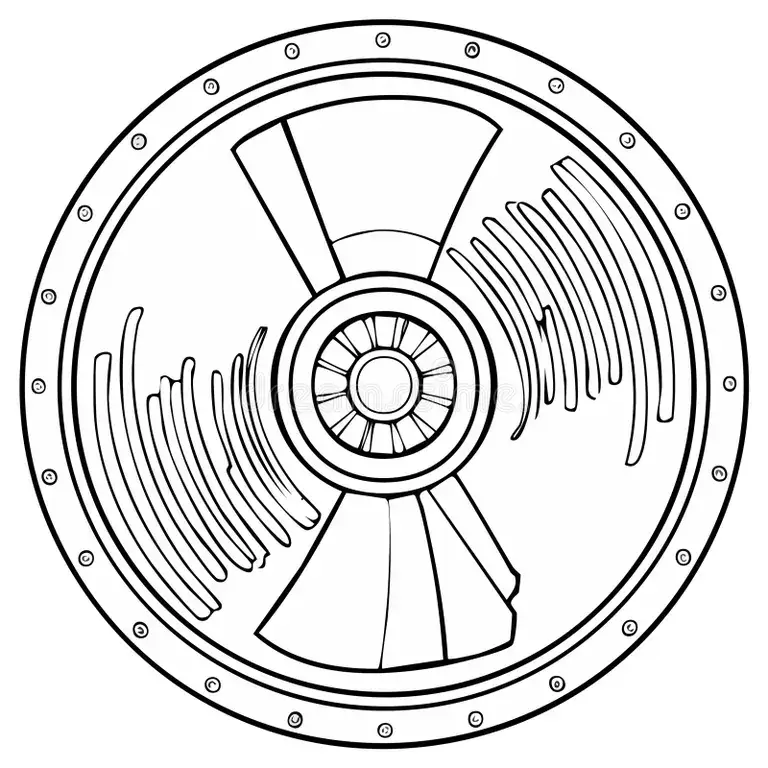
Side-Clearance Wear: The Silent Core Killer
The diamonds must cut a path wider than the steel core. If they fail, the steel becomes the cutting tool.To ensure a circular blade can rotate freely inside a deep rock slot without friction, the diamond segments welded to its edge must always be thicker than the steel plate itself. This thickness difference is known as **Side Clearance**. The clearance on each side is mathematically determined by the following formula:
Where Δw is the side clearance, Wsegment is the absolute segment width, and Wcore is the core plate thickness. In abrasive stone formations like sandstone or quartz-rich limestone, the slurry acts as liquid sandpaper, violently eroding the sides of the diamond segments. When this side clearance Δw drops to zero, the raw steel core begins to grind directly against the stone wall. The steel core effectively becomes the cutting tool, producing catastrophic friction heat that completely annihilates the blade’s tension and rapidly grinds the steel core thin, leading to a structural **core snap** inside the pit.
Diagnostic Symptoms: How to Spot a Failing Blade
Listen to your machine. A dying blade gives clear mechanical warnings before it fails.Operators must be vigilantly trained to monitor the physical feedback of the quarry cutter. Continuing to force a structurally compromised blade into the rock face will destroy a multi-thousand-dollar steel blank within minutes. Watch for these clear diagnostic warnings:
- High-Pitch Screaming: A transformation from a deep, grinding hum to a loud high-pitch metal shriek indicates that side clearance has dropped to zero and the raw steel core is actively rubbing against the rock walls.
- Wavy / S-Curve Cuts: If the stone vertical steps look bowed or show an obvious wavy path, the blade has lost its pre-tension skeleton and is bending under the pressure of the forward feed.
- Erratic Main Motor Amp Draw: When a blade begins to wobble laterally, the structural resistance fluctuates wildly. If the digital amp meter on the VFD panel begins to bounce erratically rather than holding stable, check for blade warpage immediately.
Recovery and Maintenance: Re-Tensioning
A warped blade is not always dead. Professional re-tensioning can resurrect a valuable steel core.The moment an operator diagnoses a wobbling or heat-warped blade, they must **disengage the feed drive immediately** and back the machine out of the cut. Continuing to operate will result in permanent microscopic fractures across the steel grain, making the blade unrepairable scrap.
If caught early and the outer steel wall has not been worn too thin by side friction, the expensive steel core can be salvaged. The blade must be unbolted and transported to a specialized blade service shop. Experienced saw smiths utilize precision rolling machines or synchronized hammering anvils to re-compress the internal concentric rings. This process completely restores the original metallurgical tension and structural flatness, allowing the core to be safely re-tipped with a fresh set of diamond segments for a fraction of the cost of buying a new blade.

Protect Your Capital Investment
Stop cutting wavy blocks and destroying expensive equipment. Upgrade to MosCut’s heavy-duty Q460c steel circular blades, engineered with optimized pre-tensioning and superior segment matrix retention.
View MosCut Circular Blades