
 Stone Cutting Machines
 Stone Polishing Machines
 Bridge Saw Machines
 Stone Quarry Cutting Machines
 Stone Block Cutter Machine
 CNC Stone Wire Saw Machine
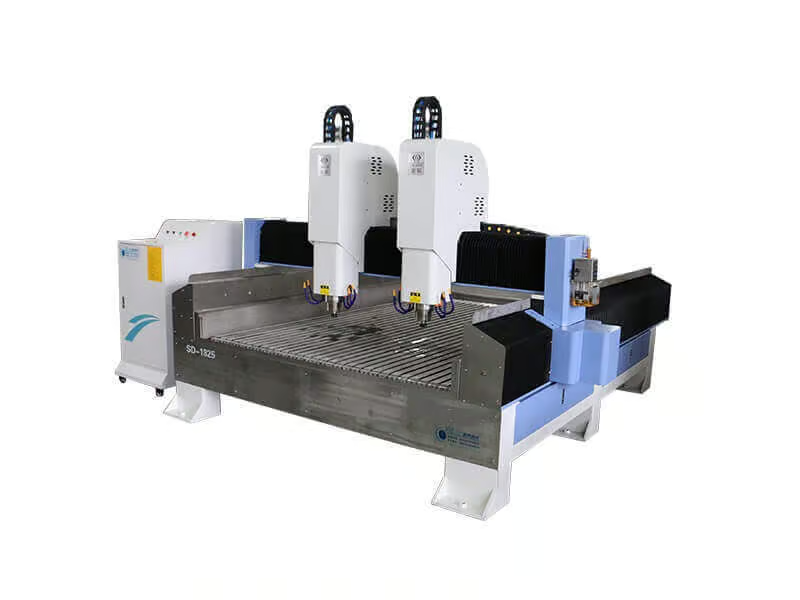 Stone Engraving Machines
 Thin Stone Veneer Saw Machine
 Horizontal Stone Slab Splitting Machine
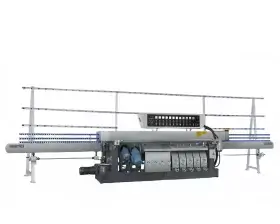 Stone Edge Polishing Profiling Machine
 Stone Auxiliary Equipment
In the dimensional stone industry, the initial low cost of black powder is the ultimate financial illusion. According to geological studies and shockwave propagation models published by the International Society of Explosives Engineers (ISEE), explosive detonation creates a violent kinetic shockwave that travels deep into the surrounding bedrock. This shockwave shatters the microscopic crystalline structure of the stone, creating invisible micro-fractures. While the blasted block may appear intact in the quarry, these fractures cause the stone to shatter catastrophically once it reaches the processing factory and is sliced into thin slabs. The hidden yield loss from blasting is the single largest financial black hole in modern quarrying.
A premium white marble quarry in Spain experienced this paradigm shift firsthand. Encroaching residential zones and increasingly strict environmental regulations forced them to completely abandon explosive blasting or face immediate closure. Transitioning to MosCut Heavy-Duty Hydraulic Rock Splitters not only eliminated their costly explosive permits and exorbitant hazardous insurance premiums, but also revolutionized their bottom line. Without the violent shockwaves of blasting, their marble blocks retained 100% of their structural integrity. The factory yield of usable slabs skyrocketed by 40%. The sheer profit from the ‘saved stone’ allowed the quarry to fully recoup the capital investment of the entire hydraulic system within just two months.
The Hidden Cost of Blasting: Micro-Fractures
Explosives don’t just break the stone where you want; they shatter the internal structural integrity of everything around them.Using explosives in a dimensional stone quarry (where stone is sold by volume and aesthetic integrity, rather than as crushed aggregate) is fundamentally counter-productive. When blasting powder detonates, it generates an instantaneous spike in gas pressure that radiates violently outward in all directions.
This massive concussive force shears the delicate quartz and calcite crystals deep inside the stone, generating thousands of unseen ‘micro-fractures’ that penetrate meters into the seemingly solid block. When that 20-ton block is transported to the processing plant and put under a multi-blade gang saw to be cut into 2cm thick commercial slabs, the slabs literally fall apart on the machine. You have spent money drilling, blasting, and transporting a block that yields nothing but factory scrap.

The Mechanics of Silence: How Hydraulic Splitters Work
Translating localized hydraulic pressure into unstoppable lateral mechanical force.Hydraulic splitters leverage a fundamental weakness in all natural rock: while stone possesses immense compressive strength (it can withstand massive weight pressing down on it), it has incredibly low tensile strength (it is easily pulled apart).
The system utilizes an ultra-high-pressure hydraulic pump station (often delivering up to 60 MPa / 8700 PSI) connected to a series of handheld steel cylinders. The operator inserts the steel wedge set into pre-drilled holes. When the valve is engaged, hydraulic oil forces a central wedge downward between two counter-wedges. As the central wedge descends, it forces the counter-wedges outward against the borehole walls with hundreds of tons of lateral force. This silent, unstoppable expansion tears the rock apart cleanly from the inside out. There is no vibration, no flying debris, and absolutely no shockwave.

ROI & Operational Comparison Table
Compare the true operational metrics of traditional blasting powder versus MosCut hydraulic splitting systems.| Operational Metric | Explosive Blasting | MosCut Hydraulic Splitters |
|---|---|---|
| Dimensional Block Yield | Low (40% – 50% due to shattering) | Extremely High (90%+ intact) |
| Permits & Insurance Costs | Exorbitant (Constant bureaucratic delays) | Zero (Classified as standard machinery) |
| Precision & Control | Unpredictable (Follows path of least resistance) | Absolute (Cracks follow the exact drill line) |
| Environmental Impact | Severe (Toxic fumes, noise, flying rock) | Zero (Silent, emission-free operation) |
| Operational Downtime | High (Evacuating quarry for every blast) | Zero (Continuous adjacent operations) |
Setup Geometry: Hole Spacing and Depth
Hydraulic splitting is a science of geometry. Spacing your pilot holes correctly dictates a flawless break.A hydraulic splitter is not a magic wand; its success depends entirely on how the operator prepares the rock face. Proper hole spacing and depth are critical variables that change based on the geological hardness of the stone.
Hole Spacing: For incredibly dense, hard stone like granite, the DTH drill holes must be spaced closely together (typically 30cm to 40cm apart) to ensure the crack connects successfully. For softer, more porous stones like limestone or marble, the spacing can be extended safely to 50cm or 60cm.
Hole Depth: This is a mandatory safety rule. The drilled hole must always be at least 10cm deeper than the total length of the splitter’s wedge set. If the hole is too shallow and the descending central wedge bottoms out against solid rock, the immense 60 MPa hydraulic force has nowhere to go. It will instantly bend or snap the thick steel cylinder shaft, destroying the tool.

Regulatory Compliance and Urban Quarrying
As global environmental regulations tighten, blasting permits are becoming extinct. Non-explosive extraction is the future of mining.The global mining landscape is shrinking. As urban sprawl pushes residential zones, highways, and high-voltage power grids closer to historical quarry sites, local governments are responding by aggressively revoking explosive permits.
For quarry owners, waiting weeks for explosive transportation permits, paying for specialized blasting engineers, and managing the liability of ground vibrations is an unsustainable business model. Investing in MosCut hydraulic rock splitters provides a ‘bulletproof’ operational safeguard. Because splitters generate zero shockwaves and zero noise pollution, operations can safely continue 365 days a year, completely unaffected by stringent municipal blasting bans. It is the ultimate insurance policy for uninterrupted quarrying.

Stop Shattering Your Profits
Transition to precise, silent, and high-yield dimensional block extraction. Equip your quarry with MosCut Heavy-Duty Hydraulic Rock Splitters today.
View MosCut Rock Splitters