
 Stone Cutting Machines
 Stone Polishing Machines
 Bridge Saw Machines
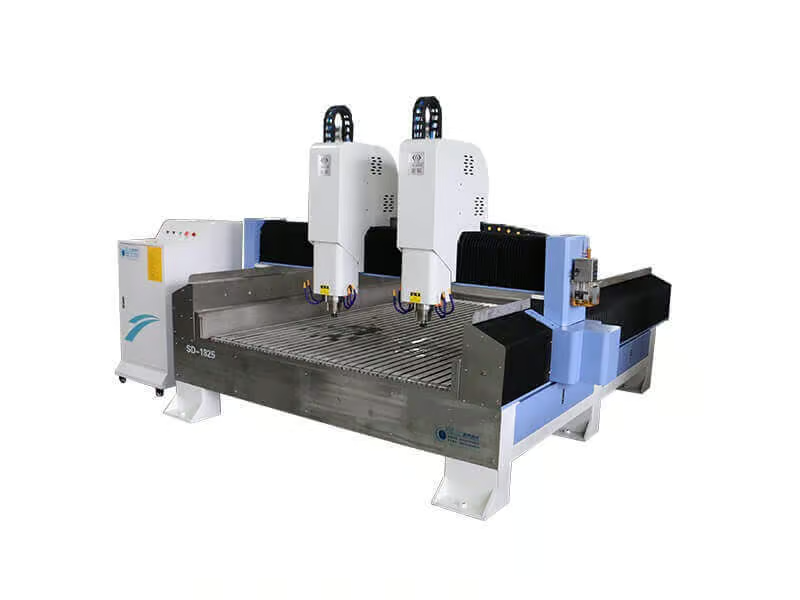 Stone Engraving Machines
 Stone Veneer Saw
 Stone Quarry Machines
 Stone Band Saw Machines
 Stone Edging Beveling Machine
 Other Stone Machines
 Stone Diamond Tools
 Stone Slab Cutting
 Stone Slab Surface Edge Polishing
 Stone Block Slicing
 Stone Quarry Mining
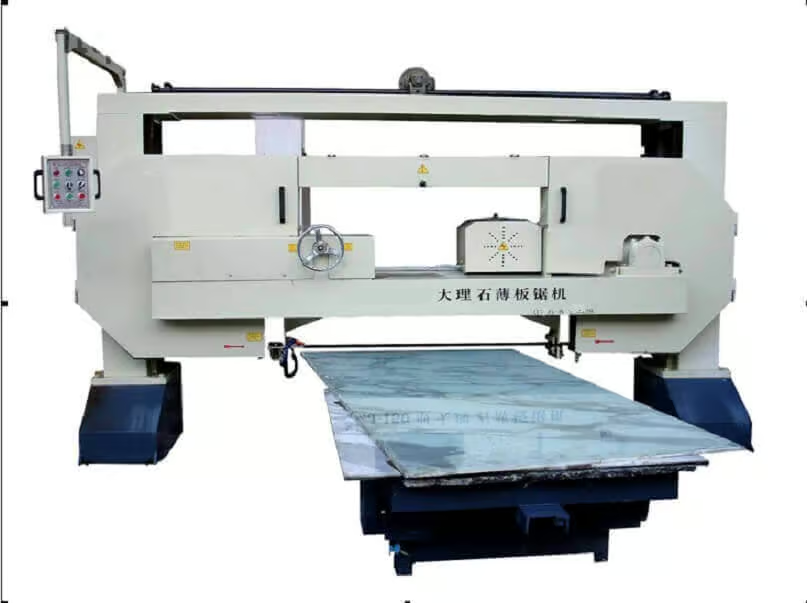 Stone Horizontal Splitting
 Stone Engraving Applications
 CNC Stone Cutting
 Countertop Cutting Polishing
 Other Applications
CNC vs. Manual: Which Stone Cutting Machine is Right for Your Shop?
The stone fabrication industry is standing at a technological crossroads. As a workshop owner, your most critical decision is investing in the right equipment. Should you stick with the lower upfront cost of traditional manual saws, or is it time to embrace automation? If you are struggling to keep up with complex countertop orders, upgrading to a CNC stone cutting machine might be your next logical step to ensure long-term profitability.
1. Understanding Manual Stone Cutting Machines
For decades, manual bridge saws have been the workhorse of the stone fabrication industry. These machines require an operator to manually align the laser, set the measurements, and actively control the cutting head's movement via hand-wheels or basic push-button pendants.

Manual stone cutting relies entirely on the operator's skill and physical stamina.
Pros of Manual Saws
- Lower initial purchase price.
- Simple maintenance with fewer electronic components.
- Adequate for basic, straight-line architectural cuts (like paving stones).
Cons of Manual Saws
- Extremely dependent on highly paid, skilled operators.
- High rate of human error leading to expensive material waste.
- Incapable of efficiently processing complex shapes, arcs, or precise sink holes.
2. The Rise of CNC Stone Cutting Technology
Computer Numerical Control (CNC) technology has revolutionized the way we work with natural stone. A stone CNC machine takes the physical labor and guesswork out of the equation. By utilizing sophisticated CAD/CAM software and automated 5-axis interpolated movements, these machines can read digital blueprints and execute the cuts with zero manual intervention.

CNC technology brings unparalleled automation and precision to stone fabrication.
3. Head-to-Head Comparison
To truly understand which machine fits your business model, we must break down their performance across four critical metrics:
Precision & Accuracy
Manual: Accuracy relies on the operator's eyesight and the physical alignment of a basic laser guide. Even the best craftsmen can experience a 1-2mm deviation, which is disastrous for high-end waterfall joints.
CNC: Guided by high-precision linear rails and servo motors, a bridge saw CNC delivers laser-calibrated accuracy down to ±0.05mm, ensuring perfectly seamless joints every time.
Production Speed
Manual: The machine must be stopped after every single cut to manually measure and reposition the slab or the cutting bridge, resulting in massive downtime.
CNC: Once the DXF file is loaded, the machine cuts continuously. Automatic head rotation means cross-cuts are executed instantly, boosting overall production speed by up to 40%.
Labor Costs & Skill Dependence
Manual: You are held hostage by the availability of "master" saw operators, who command high salaries and whose absence stops production.
CNC: A single, easily trained operator can manage multiple machines simultaneously. Software does the heavy lifting, drastically reducing your labor dependency.
Material Yield (Reducing Waste)
Manual: Fabricators estimate cuts visually, often leaving large, unusable offcuts of expensive granite or marble.
CNC: Uses "Auto-nesting" software to arrange parts digitally like a puzzle on the slab, maximizing yield and saving up to 15% on material costs per project.
4. Making the Choice: Is It Time to Upgrade?
If your workshop is a small, 1-2 person operation strictly focused on simple, straight-cut monuments or basic paving stones, a manual saw may still serve you well.

The ROI of a CNC machine often justifies the upgrade within the first year.
However, if you are scaling your business to handle custom kitchen countertops, intricate architectural cladding, or luxury mitered islands, sticking to manual equipment will choke your growth. The high cost of material waste and skilled labor quickly outweighs the initial savings of a manual machine. Discover how our flagship automatic CNC stone saw can quickly return your investment and position your shop as a premium fabrication leader.
5. FAQ: CNC vs. Manual Stone Cutting
Expert answers to your most pressing questions regarding equipment upgrades.
1. Is a stone CNC machine harder to maintain than a manual saw?
While a stone CNC machine has more electronic components, modern machines feature self-lubricating systems and remote diagnostics, making preventive maintenance highly manageable and straightforward.
2. How much space does a bridge saw CNC require compared to manual?
Surprisingly, footprint requirements are very similar. A mono-block bridge saw CNC is highly compact and doesn't require the massive external concrete walls that older manual rail saws needed.
3. Can I transition from a manual machine to a 5-axis CNC immediately?
Yes. With user-friendly touchscreen interfaces and our comprehensive software training, fabricators can successfully transition from a manual machine to cut marble to full 5-axis automation within a week.
4. Will a CNC machine completely replace my manual saw?
Many large shops keep their old manual saws for quick, rough cuts or trimming, while dedicating their automatic stone cutter to precision jobs, maximizing overall factory efficiency.
5. How does the camera system on a CNC save money?
The camera allows you to digitally place cuts around natural defects in the stone before the blade spins. This avoids ruining slabs, making the CNC the ideal marble cutting machine for luxury stones.
6. Is it difficult to find software operators for CNC stone machines?
No. Most CNC software accepts standard DXF files. Anyone with basic computer or CAD experience can quickly learn to operate a modern industrial stone cutter.
7. Can a manual saw cut 45-degree miter joints?
While possible with a tilting table, it is incredibly tedious and prone to chipping. A CNC stone cutting machine tilts its head automatically, producing perfect, repeatable 45-degree miter joints effortlessly.
8. Do CNC machines cut faster than manual machines?
Yes. Because the stone saw machine controls the feed rate optimally based on stone density, it cuts at the maximum safe speed without the hesitation common in manual operation.
9. What is the ROI timeframe when upgrading to a CNC?
Thanks to drastic reductions in material waste and labor costs, most shops recover the cost of an automatic CNC stone saw within 12 to 18 months.
10. Are there specific materials only a CNC can cut?
Ultra-compact surfaces like sintered stone and porcelain are highly brittle and require precise variable spindle speeds. A stone CNC machine handles these flawlessly, whereas manual cutting often results in cracked slabs.
Still Unsure Which Path to Take?
Choosing the right equipment is a major decision. Contact the MOSCUT engineering team for a free factory assessment and discover exactly how much an automated system can save your business.
View Our CNC Machine Specs