
 Stone Cutting Machines
 Stone Polishing Machines
 Bridge Saw Machines
 CNC Stone Wire Saw Machine
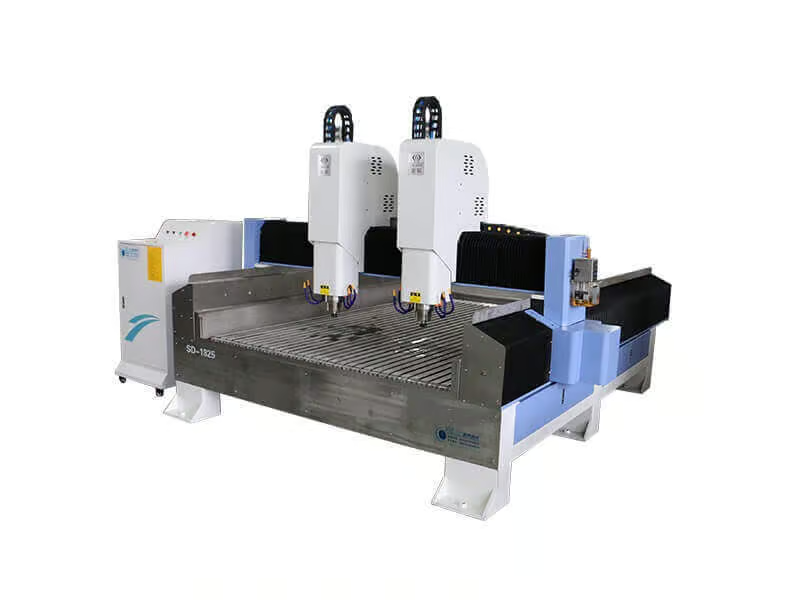 Stone Engraving Machines
 Stone Veneer Saw
 Stone Quarry Machines
 Stone Band Saw Machines
 Stone Edging Beveling Machine
 Other Stone Machines
 Stone Diamond Tools
 Stone Slab Cutting
 Stone Slab Surface Edge Polishing
 Stone Block Slicing
 Stone Quarry Mining
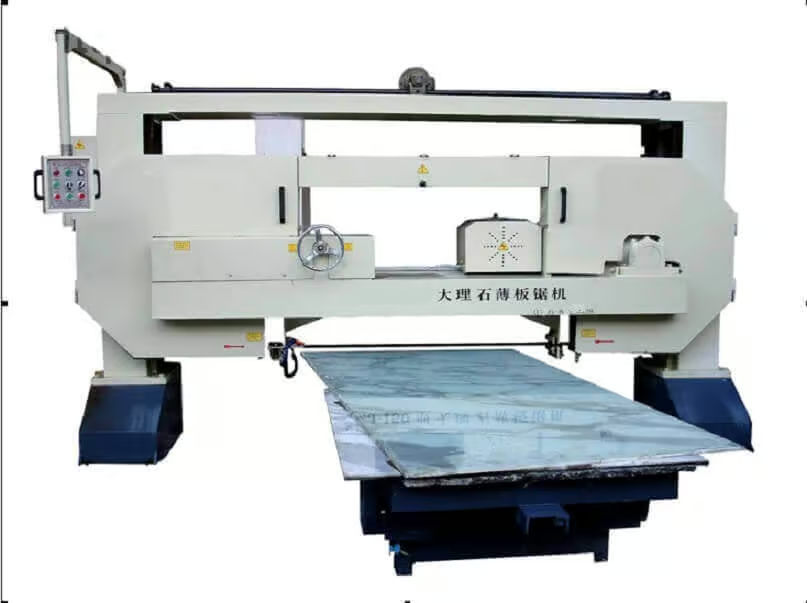 Stone Horizontal Splitting
 Stone Engraving Applications
 CNC Stone Cutting
 Countertop Cutting Polishing
 Other Applications
Large diameter GRP (Glass Reinforced Plastic) and FRP pipes are the backbone of modern municipal water systems, chemical plants, and desalination facilities. While these composite materials offer incredible strength and corrosion resistance, fabricating them in the workshop presents severe safety challenges.
Cutting fiberglass requires breaking down highly abrasive glass strands bonded by tough industrial resins. According to the strict permissible exposure limits (PEL) enforced by the Occupational Safety and Health Administration (OSHA), exposing workers to airborne fiberglass dust is a major health violation that can lead to severe respiratory diseases and massive compliance fines. If your workshop is still relying on dry manual cutting methods, you are putting both your employees and your business at risk.

The Hidden Dangers of Manual Pipe Cutting
When factory managers attempt to process massive pipes using traditional hand grinders or large circular saws, they immediately encounter three critical safety hazards.
- Toxic Airborne Dust: Using a high-speed abrasive wheel on dry fiberglass instantly pulverizes the material into microscopic shards. These toxic particles remain suspended in the workshop air for hours. Inhaling them causes severe lung irritation, coughing, and long-term respiratory damage that standard paper masks cannot prevent.
- Violent Kickback from Hand Tools: Composite resins can become gummy or incredibly hard depending on the friction heat. Hand-held blades frequently bind in the cut, causing the heavy grinder to kick back violently toward the operator, which is a leading cause of severe workshop injuries.
- Massive Rolling Hazards: A 2-meter diameter GRP pipe can weigh several tons. Attempting to cut this massive cylinder on a flat factory floor or improvised wooden blocks is extremely dangerous. A slight shift in weight during the cut can cause the pipe to roll uncontrollably, threatening anyone in its path.
Why Water-Cooled CNC Wire Saws are the Safest Solution
To eliminate these hazards, industry leaders are upgrading to CNC wire saw machine for GRP pipe cutting specifically adapted for composite pipe fabrication. These automated systems remove the worker from the danger zone and neutralize the dust problem entirely.

100% Dust Suppression
Our CNC wire saws utilize a continuous, high-volume water cooling system directly at the cutting kerf. The moment the diamond wire slices the fiberglass, the water traps the particles, instantly converting the toxic airborne dust into a heavy, wet slurry. This guarantees that your workshop air remains completely clean and safe for all employees.

Hands-Free Automated Cutting
Operators no longer need to wrestle with heavy, vibrating hand tools. With the CNC system, the operator securely clamps the pipe, sets the dimensions on the touch screen, and starts the machine from a safe distance. The automated descent of the diamond wire completely eliminates the risk of blade kickback and operator fatigue.

V-Shape Worktable Stability
To solve the rolling hazard, our heavy-duty machines feature a specialized V-shape worktable. The cylindrical pipe naturally settles deep into the V-groove, where it is locked down. This guarantees absolute stability for massive, multi-ton pipes throughout the entire high-speed cutting process.
A Quick Guide to Flawless and Safe GRP Cutting
When operating your automated wire saw, following a few simple best practices ensures both maximum safety and a perfectly clean pipe edge.
- Step 1: Secure the Load. Always ensure the massive pipe is properly centered and strapped tightly into the V-shape worktable before initiating any machine movement.
- Step 2: Use the Right Consumable. Equip the machine with a specialized diamond wire designed for composite materials. This prevents the wire from gumming up with melted resin.
- Step 3: Flood the Cut. Never run the wire dry. Ensure the water spray nozzles are accurately aimed directly at the entry point of the cut to maximize dust suppression and keep the wire cool.
- Step 4: Control the Feed Rate. Use the CNC control panel to set a smooth, consistent downward feed rate. Forcing the cut too quickly can cause the inner layers of the fiberglass pipe to splinter or delaminate as the wire exits the bottom.
Upgrade Your Workshop Safety
Manual dry cutting of massive composite pipes is an outdated practice that puts your workers and your business at severe risk. Upgrading to a water-cooled, automated CNC wire saw ensures that you can process the largest GRP and FRP pipes on the market quickly, perfectly, and most importantly, safely.
Ready to Eliminate Workshop Hazards?
Discover how our heavy-duty CNC wire saws can automate your pipe fabrication and completely suppress toxic fiberglass dust.
Explore Our CNC Wire Saws for GRP PipesTop 10 FAQ: Safe GRP Pipe Cutting
Health and Environmental Safety
1. Why is fiberglass dust so dangerous?
Fiberglass dust consists of microscopic glass shards. When inhaled, these shards can become deeply lodged in lung tissue, causing severe irritation, respiratory issues, and long-term health complications.
2. Does the water cooling system capture 100% of the dust?
When properly aimed at the cutting kerf, the continuous water flow acts as a liquid vacuum, capturing virtually all airborne particles instantly and turning them into a heavy, harmless slurry.
3. What do we do with the fiberglass slurry?
The slurry collects in a dedicated drainage trench or settling tank under the machine. Once the water separates, the wet fiberglass waste can be shoveled out and disposed of safely according to your local industrial waste regulations.
4. Do operators still need to wear respirators?
While the water-cooled wire saw eliminates airborne dust during the cut, we still recommend operators wear standard safety glasses and basic respiratory protection when cleaning the machine or handling dry pipes, adhering to general workshop safety policies.
5. Is the water system a closed loop?
Yes, many factories connect the wire saw to a closed-loop water recycling system. The water flows into a settling tank where the fiberglass dust sinks, and the clean water is pumped back to the cutting nozzles.
Technical Cutting Operations
6. How does the machine prevent the wire from snapping and hitting someone?
Premium CNC wire saws feature automatic pneumatic or hydraulic tensioning systems that keep the wire perfectly taut. If a rare break does occur, the machine’s safety sensors instantly stop the motors.
7. Can this machine cut thick-walled high-pressure pipes safely?
Absolutely. The diamond wire is exceptionally strong and is designed to cut through the densest composite resins and thickest pipe walls without bogging down or kicking back.
8. How do I stop the pipe from rolling off the machine?
The machine is built with a heavy-duty V-shape worktable. The V-groove naturally cradles the cylindrical shape, and industrial straps or clamps are used to lock the pipe securely in place before cutting begins.
9. Does the water damage the composite material?
No. GRP and FRP pipes are highly resistant to water and corrosion by design. The cutting water only serves to cool the wire and suppress dust, having zero negative effect on the pipe material itself.
10. Is the automated cutting process slower than manual cutting?
No, it is vastly faster. Because the diamond wire slices continuously through the entire cross-section of the pipe without stopping, it can finish a massive cut in minutes, whereas manual cutting could take hours.