
 Stone Cutting Machines
 Stone Polishing Machines
 Bridge Saw Machines
 Stone Quarry Cutting Machines
 Stone Block Cutter Machine
 CNC Stone Wire Saw Machine
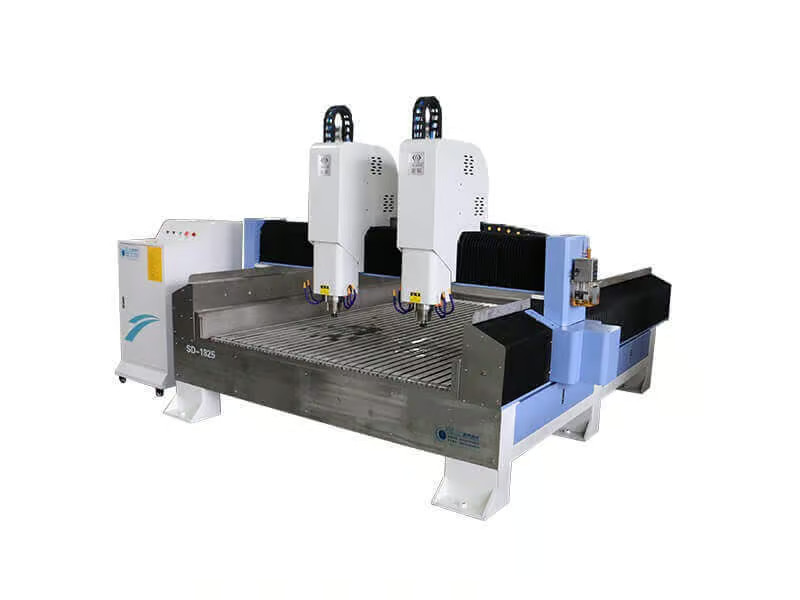 Stone Engraving Machines
 Thin Stone Veneer Saw Machine
 Horizontal Stone Slab Splitting Machine
 Stone Edge Polishing Profiling Machine
 Stone Auxiliary Equipment
In heavy industrial extraction, the cost of acquiring machinery is only the beginning; true profitability is dictated by consumable longevity. According to reports published by CIRP (International Academy for Production Engineering) on tool wear mechanisms, transitioning from brazed solid tools to ‘Indexable Inserts’ is a revolutionary strategy for minimizing the Total Cost of Ownership (TCO). In the brutal environment of stone quarrying, utilizing multi-edged, rotatable inserts maximizes material utilization, drastically reducing the frequency and cost of consumable replacements.
A massive commercial limestone quarry in Egypt demonstrated the financial impact of this technology. Previously relying on traditional welded-tooth chains, their operation suffered significant downtime. Once a tooth dulled, the entire chain had to be removed and shipped back to a workshop for expensive re-welding. By upgrading to MosCut chains featuring 8-sided indexable Tungsten Carbide inserts, their operators could perform on-site rotations in under 20 minutes to expose a brand-new cutting edge. This simple mechanical advantage extended the effective working life of a single chain by 800%, slashing their annual consumable procurement budget by an astounding 65%.
The 8-Sided Advantage: Stop Throwing Away Dull Tools
Traditional brazed teeth are a financial drain. Indexable inserts revolutionize quarry consumable economics by multiplying the life of a single tool.The core philosophy behind MosCut chain saw tooling is waste elimination. Traditional stone chains feature cutting teeth that are permanently brazed (welded) onto the steel links. When the leading edge wears out from grinding against solid rock, the entire tooth is functionally dead.
MosCut utilizes Indexable Octagonal Inserts. These inserts are bolted into a precision-machined pocket on the chain link, rather than welded. Because they are 8-sided, a single insert possesses eight distinct, independent 90-degree cutting edges. When the active edge facing the rock eventually dulls, you do not throw the tool away. You simply loosen the securing bolt, rotate the insert to the next fresh edge, and lock it down. You are essentially getting eight cutting tools for the price of one.

Identifying Tool Wear: When to Rotate
Waiting until an insert is completely rounded or shattered damages your machine and slows production. Proactive visual inspection is key.Pushing a dull tool through stone is terrible for your machine. It forces the main motor to work harder, generating excessive heat that can warp the guide bar. Operators must know exactly when to rotate the inserts.
Visual Indicators: A fresh insert has a sharp, distinct 90-degree corner. As it cuts, this corner will slowly wear down into a smooth, rounded edge. When the ’roundness’ exceeds 2mm to 3mm, the tool has lost its shaving ability and must be rotated.
Machine Feedback: Even without looking, a skilled operator can feel a dull chain. If the machine requires significantly more electrical current (higher amp draw on the VFD display) to maintain the same cutting speed, or if the cutting advance speed drops noticeably while producing finer dust instead of chips, it is time to stop and rotate.

The Step-by-Step Rotation SOP
Rotating inserts on the quarry floor is quick, provided operators follow strict torque guidelines to prevent in-cut tool loss.Performing a tool rotation directly on the quarry bench minimizes downtime, but it must be executed flawlessly to prevent the inserts from vibrating loose deep inside a cut.
- Meticulous Cleaning: Before loosening the bolt, use high-pressure air and a wire brush to blast away all stone dust. If even a single grain of sand is trapped under the insert when you tighten it, the tool will sit unevenly and shatter under the pressure of the cut.
- Torque Wrench Mandatory: Never rely on ‘feel’ with a standard wrench. Over-tightening stretches and weakens the high-tensile retaining bolt, causing it to snap. Under-tightening allows the insert to fly out. Always use a calibrated torque wrench set to the exact Nm specifications provided in the MosCut manual.
- Uniform Rotation: Never mix sharp and dull edges on the same chain. The entire set of inserts must be rotated to a fresh edge at the same time to ensure the cutting load is distributed perfectly evenly across the machine.

Material Matching: Tungsten Carbide vs. PCD
Selecting the right insert material for your specific rock density optimizes both cutting velocity and consumable expenditure.MosCut offers two distinct insert materials to conquer different geological challenges. Choosing the wrong one will burn your budget rapidly.
Tungsten Carbide: This is the undisputed workhorse. It offers incredible impact resistance and a highly attractive price-to-performance ratio. Tungsten carbide is the ideal choice for cutting standard marbles, limestones, and porous travertines where sudden changes in density or natural fissures might cause a brittle tool to chip.
Polycrystalline Diamond (PCD): PCD inserts have a layer of synthetic diamond fused to a carbide substrate. They are exceptionally hard and wear-resistant, offering a lifespan several times longer than standard carbide. However, they are more brittle and more expensive. PCD is strictly reserved for cutting highly dense, ultra-compact marbles that lack natural fractures.

The Silent Killers: Poor Tension and Lack of Grease
The best inserts in the world will shatter if the chain carrying them is loose, vibrating, or starved of lubrication.A chain saw is a symbiotic system. You can install brand new PCD inserts, but if the chain mechanism itself is neglected, the cutting tools will be destroyed in hours.
Chain Tension: A loose chain is lethal to inserts. If the chain sags, it will violently ‘slap’ against the rock as it enters the cut. This percussive shockwave will instantly shatter the edges of the tungsten carbide. Operators must rely on the MosCut automated hydraulic tensioning system and visually verify that the chain is seated firmly in the guide rail.
Grease Starvation: Because these machines dry-cut without water, industrial grease is the only thing managing extreme friction. If the automated grease pump runs dry, the friction between the chain links and the guide rail will generate localized heat exceeding 400°C. This extreme heat will anneal (soften) the steel tool holders, causing the inserts to warp out of alignment and snap.

Maximize Your Consumable ROI
Stop burning your budget on disposable, welded tools. Equip your quarry with the smart, indexable power of the MosCut Marble Chain Saw Machine.
View the Chain Saw Machine