
 Stone Cutting Machines
 Stone Polishing Machines
 Bridge Saw Machines
 Stone Quarry Cutting Machines
 Stone Block Cutter Machine
 CNC Stone Wire Saw Machine
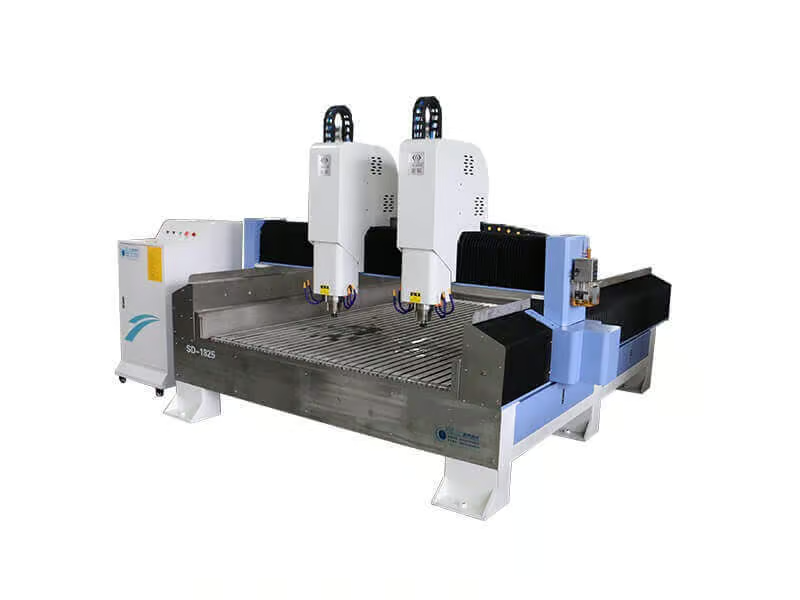 Stone Engraving Machines
 Thin Stone Veneer Saw Machine
 Horizontal Stone Slab Splitting Machine
 Stone Edge Polishing Profiling Machine
 Stone Auxiliary Equipment
Global industrial water scarcity is reshaping the mining sector. According to reports from UN-Water, implementing sustainable water management in heavy industry is critical for future compliance and cost reduction. In arid regions, the logistical nightmare of traditional ‘wet extraction’—pumping, filtering, and disposing of water and sludge—can consume over 15% of a quarry’s total daily operating budget. ‘Dry Cutting Technology’ is no longer just an environmental buzzword; it is a fundamental financial strategy for modern stone extraction.
A premier Thassos White Marble operation in Greece experienced the hidden costs of wet cutting firsthand. The cooling water from their older machinery inevitably mixed with microscopic iron particles worn from the cutting tools. This dirty water would seep into the pores of their ultra-pure white marble, causing irreversible yellow ‘rust staining’ that downgraded their A-grade blocks to commercial B-grade, costing them millions over a decade. By upgrading to the MosCut Chain Saw Machine, they transitioned to 100% dry cutting. The result? Zero water usage, perfectly pristine white blocks, and an immediate annual savings of €30,000 in water treatment and sludge disposal costs.
The Hidden Cost of Water Management
In quarrying, water is never free. The logistics of pumping, treating, and disposing of water and slurry silently drain your profit margins.It is a common misconception that water in a quarry is a cheap utility. The reality is that utilizing diamond wire saws and circular blades demands a relentless, high-volume flow of water. This creates an expensive logistical chain.
Quarry owners must invest heavily in high-powered water pumps, lay hundreds of meters of industrial hoses up steep mountainsides, and dig massive settlement tanks to capture the runoff. Furthermore, the resulting thick, heavy sludge must be physically excavated and hauled away by diesel dump trucks. The electricity required to pump the water up the mountain, combined with the diesel fuel burned to haul the sludge away, creates a massive, continuous drain on your operational profit. The chain saw completely removes this entire logistical chain from your balance sheet.

How Dry Cutting Actually Works: Grease vs. Water
Cutting deep into solid rock generates massive thermal energy. How does the MosCut chain saw survive without a single drop of water?Water is primarily used in wire saws to cool the diamond beads and wash away the abrasive stone dust. The MosCut chain saw utilizes a completely different mechanical paradigm to combat heat and friction.
Instead of water, our machines are equipped with an Automated High-Pressure Grease Pump. This system precisely meters high-temperature industrial grease directly onto the chain and guide rail, minimizing metal-on-metal friction. For cutting the rock itself, the machine utilizes extremely tough Tungsten Carbide or PCD inserts. These materials possess exceptional thermal resistance and do not require liquid cooling to maintain their structural integrity. As the chain rotates, it physically pulls the dry stone dust out of the slot, carrying the heat away with the dust before it can damage the cutting arm.

Preserving Purity: Eliminating Rust Stains on White Marble
For luxury ornamental stone, color is value. Introducing dirty cooling water into a pristine marble block is a financial risk you no longer need to take.Premium white marble, such as Carrara, Statuario, or Thassos, is highly porous. When you cut these stones with a water-cooled wire saw, the water mixes with microscopic iron dust that naturally sheds from the steel wire and machinery.
Through capillary action, this iron-rich muddy water soaks deep into the microscopic pores of the marble block. Weeks or months later, as the block sits in the sun at a processing yard, that iron oxidizes. The result is a catastrophic, irreversible yellow ‘rust stain’ blooming across your luxury stone. By utilizing the 100% dry-cutting MosCut chain saw, no liquid is introduced. The extracted blocks remain incredibly dry, pristine, and vividly white, guaranteeing they can be sold at the highest possible market premium.

Weather Independent: Conquering Desert Heat and Alpine Freezes
Water-cooled machinery is at the mercy of the weather. Dry-cutting chain saws make your operation truly climate-independent.Relying on water limits when and where you can operate. In the arid deserts of Egypt, Saudi Arabia, or parts of Australia, sourcing sufficient water to run a wire saw is nearly impossible. The dry-cutting chain saw turns these previously unviable desert deposits into highly profitable, high-yield operations.
Conversely, in high-altitude alpine quarries in Northern Europe or the Alps, winter brings another challenge: freezing temperatures. When water lines freeze and burst, traditional wet-cutting machinery is forced to undergo a costly ‘Winter Shutdown’ that can last for months. Because the MosCut chain saw has zero water lines, it operates flawlessly in sub-zero blizzards, effectively extending your profitable quarrying season by 2 to 3 months every year.

Ditch the Pumps and Boost Your Profits
Eliminate the headaches of frozen pipes, sludge disposal, and rust-stained marble. Step into the future of arid stone extraction with the MosCut Chain Saw.
View the Chain Saw Machine