
 Stone Cutting Machines
 Stone Polishing Machines
 Bridge Saw Machines
 Stone Quarry Cutting Machines
 Stone Block Cutter Machine
 CNC Stone Wire Saw Machine
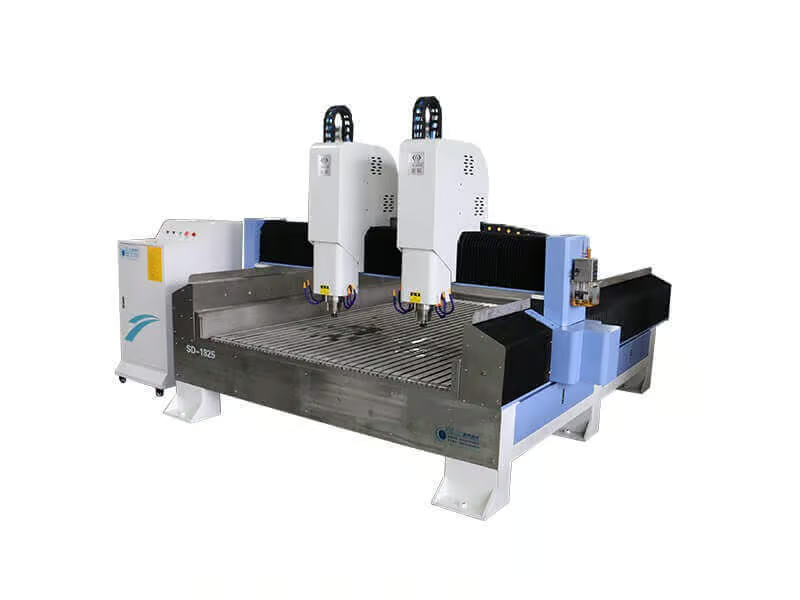 Stone Engraving Machines
 Thin Stone Veneer Saw Machine
 Horizontal Stone Slab Splitting Machine
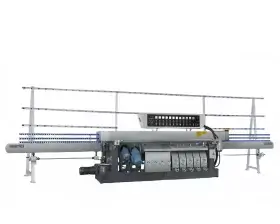 Stone Edge Polishing Profiling Machine
 Stone Auxiliary Equipment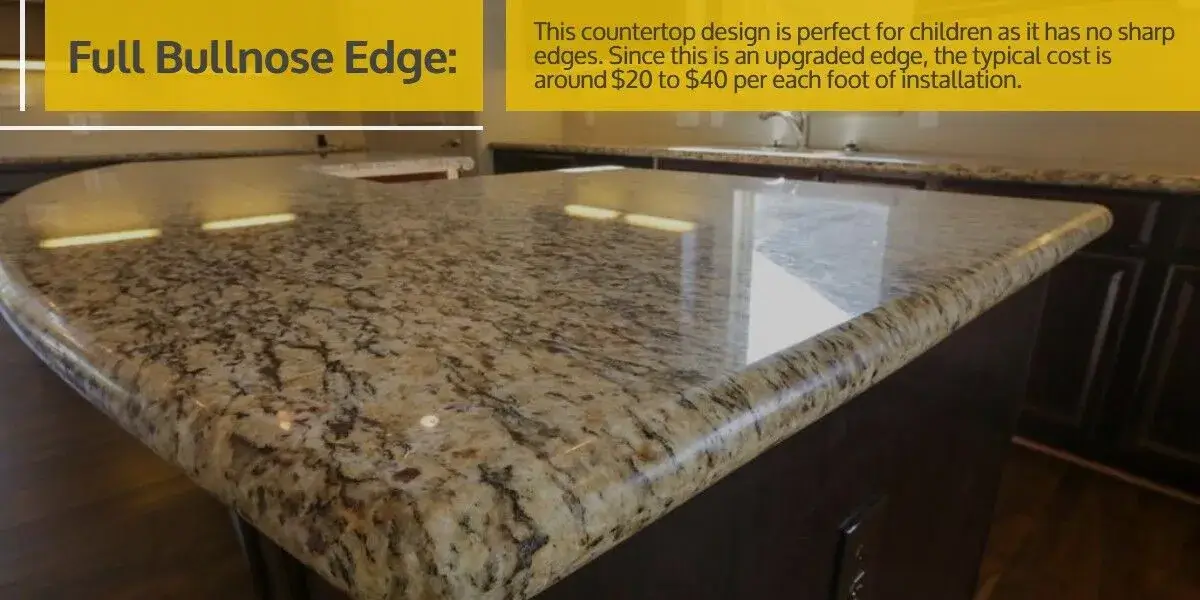
🔬 The Physics of Radial Polishing
Polishing a standard flat edge is mechanically simple because the polishing pad applies 100% vertical, uniform pressure against the stone. However, a Full Bullnose is a 180-degree radial curve. When a flat resin pad is pressed against this convex shape, the center (apex) receives the maximum force, while the pressure drops sharply towards the top and bottom margins of the curve. This differential friction is the physical root cause of “shadows”—dull, under-polished bands along the upper and lower borders of the bullnose profile.
🏗️ Scaling Quality: A Florida Success Story
A premium outdoor stone supplier in Florida was fabricating massive batches of thick granite pool coping with Full Bullnose edges. Their clients repeatedly complained that while the center of the edge was shiny, the critical bottom curve felt rough and lacked gloss. By implementing MosCut’s Differential Pneumatic Calibration, the factory operator learned to slightly over-pressurize the lower swing heads to counteract gravity. The result? They completely eliminated the blind spots, boosting the overall radial gloss meter reading to a uniform 92 degrees and vastly improving customer satisfaction.
The Radial Challenge: Why Curves Lose Gloss
Friction is the source of gloss. Uneven friction creates dull edges.The “shadow” phenomenon is the most common quality control failure in bullnose fabrication. When a polishing head is pushed outward by a pneumatic cylinder, it naturally wants to polish the closest surface—the bulging center of the stone. Because of the receding curvature at the top and bottom of a Full Bullnose, a standard stiff polishing pad cannot physically “wrap” around the entire 180-degree geometry simultaneously.
This is where the engineering of a Horizontal Continuous Edge Polisher provides a massive advantage. Unlike manual routers, an automated horizontal line features independent pneumatic controls for every single polishing head, specifically designed to oscillate and force the resin pads to follow the entire radial contour seamlessly.
Understanding Pneumatic Zones: Top, Apex, and Bottom
Stop using the same air pressure for every polishing head.1. Top Curve Zone
The upper portion of the bullnose benefits from gravity assisting the downward pressure of the oscillating heads. You do not need massive pneumatic force here. Keeping the pressure moderate (around 1.5 – 2.0 Bar) prevents the abrasive pads from “over-polishing” or flattening the delicate top arc of the stone.
2. The Apex Zone
This is the most prominent middle section of the edge. It receives the most direct contact and friction. While it shines the fastest, it is also highly susceptible to burning (especially on quartz) if the pressure is too high. Pressure here must be dialed down significantly in the final grit stages.
3. Bottom Curve Zone
The most difficult zone. To polish the bottom tuck of a Full Bullnose, the machine must push the pad upward, fighting gravity. Therefore, the swing heads responsible for the lower arc require a 0.5 to 1.0 Bar positive compensation compared to the top zone to ensure consistent abrasive friction.
Eliminating “Shadows”: The Differential Pressure Technique
Force the resin pad to wrap around the stone’s full geometry.
Mastering the Control Panel
To eliminate shadows, you must utilize Differential Pressure. Do not set all your pressure regulators to 2.5 Bar and walk away. Stand at the command center and actively observe the pad engagement. Slightly reduce the pressure on the primary horizontal heads hitting the apex, while increasing the pressure on the upper and lower oscillating (swing) heads.
Crucial Tooling Requirement: Pneumatic adjustments are useless if your tooling is rigid. You must equip the machine with Snail-Lock Resin Pads featuring thick rubber backers. The rubber acts as a suspension system, allowing the abrasive pad to physically distort and mold itself around the 180-degree curve under pneumatic load.
The Resin Pad Sequence: From Grit 50 to Buff
Pressure must decrease as the grit becomes finer.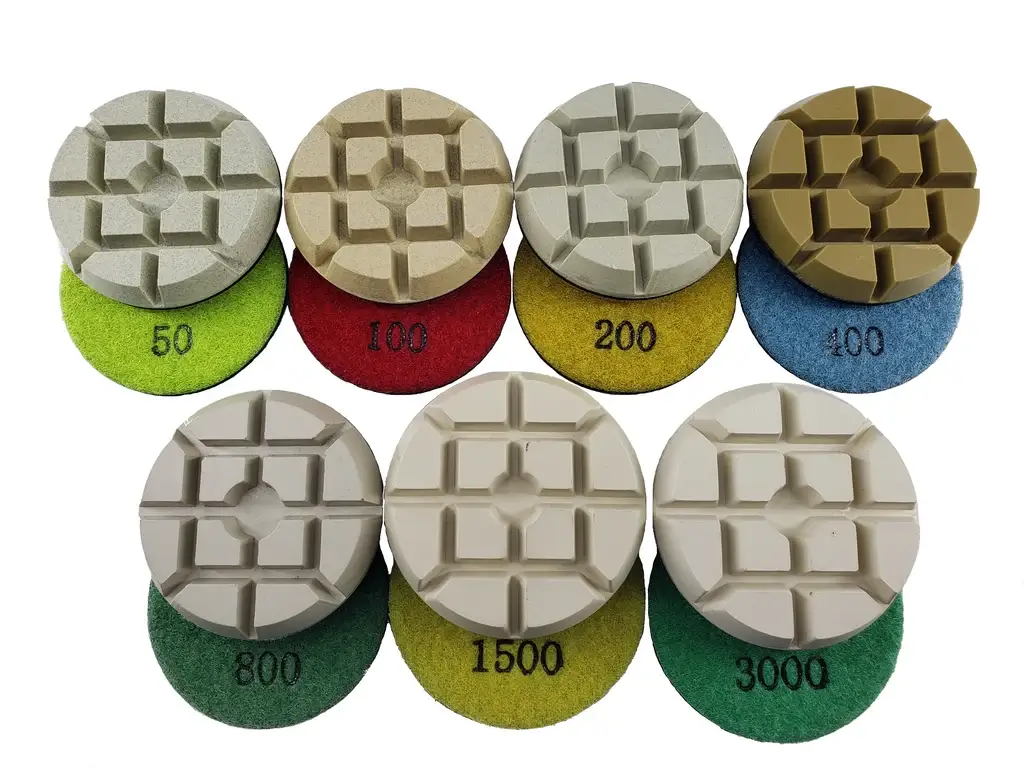
The Micro-Pressure Kiss
There is a golden rule in continuous edge polishing: Pressure is inversely proportional to grit size.
During the early stages (Grit 50#, 100#, 200#), you need higher pneumatic pressure to aggressively erase the deep gouges left by the metal profiling wheels. But as you transition to the finishing stages (800#, 1500#, 3000#, and Buff), you must systematically bleed the air pressure out of the cylinders.
Fine-grit pads generate extreme friction. If pushed too hard, they will scorch the stone resin or melt their own bonding matrix onto the edge. The final buffing pad should employ an ultra-low pressure setting—a gentle “micro-pressure kiss”—letting the speed of the motor and the pad’s chemical compound create a flawless, mirror-like gloss.
Explore the Complete MosCut Edge Polishing Ecosystem
While the Horizontal flatbed dominates complex architectural curves like the Full Bullnose, your shop might require the high-speed straight edge production of our Vertical Line or the extreme flexibility of our Single-Head machines. Browse our full collection to find the exact automated solution tailored to your production volume.
View All Edge Polishing Machines