Stone Cutting Machines
 Stone Polishing Machines
 Bridge Saw Machines
 CNC Stone Wire Saw Machine
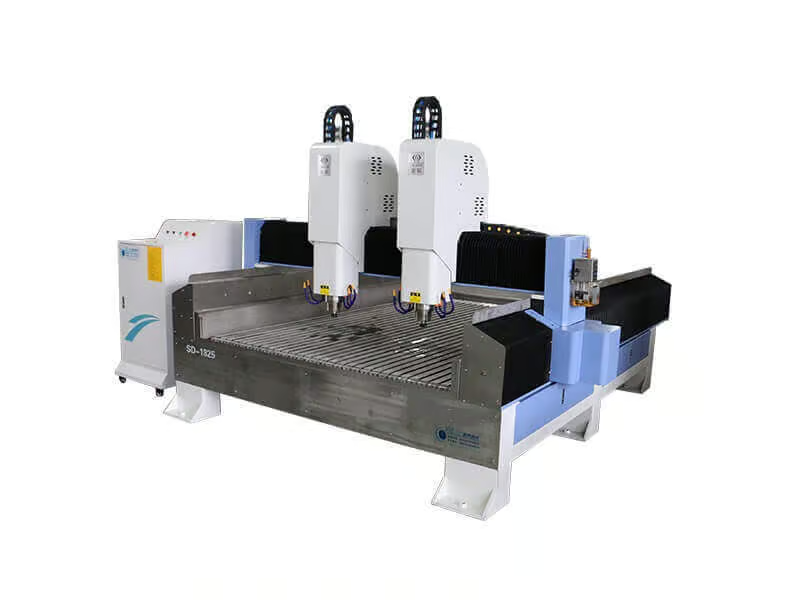 Stone Engraving Machines
 Stone Veneer Saw
 Stone Quarry Machines
 Stone Band Saw Machines
 Stone Edging Beveling Machine
 Other Stone Machines
 Stone Diamond Tools
 Stone Slab Cutting
 Stone Slab Surface Edge Polishing
 Stone Block Slicing
 Stone Quarry Mining
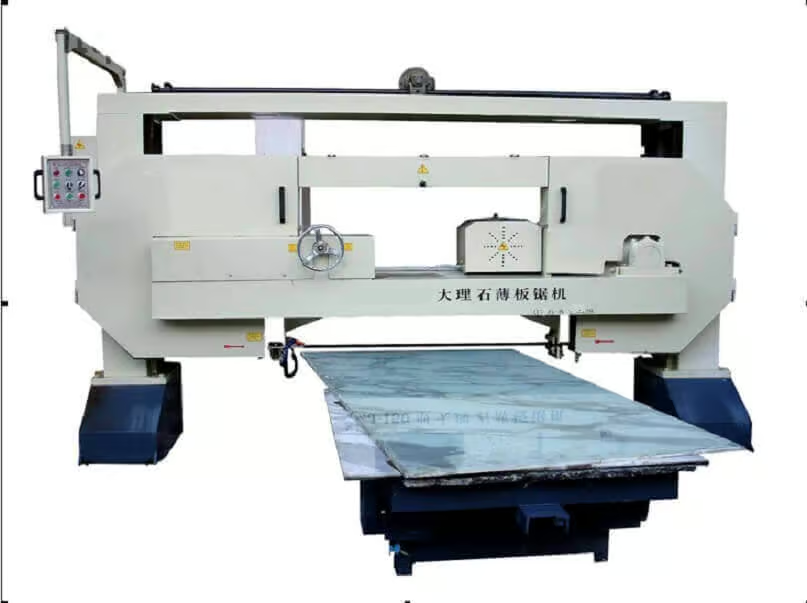 Stone Horizontal Splitting
 Stone Engraving Applications
 CNC Stone Cutting
 Countertop Cutting Polishing
 Other Applications


- 1. Introduction to Gang Saw Blades for Stone Cutting
- 2. What Are Marble Gang Saw Blades?
- 3. How Do Gang Saw Blades Work?
- 4. Blade Construction and Materials
- 5. Types and Variations of Gang Saw Blades
- 6. Suitable Materials: Marble, Limestone and Travertine
- 7. How to Select the Right Gang Saw Blades
- 8. Installation and Mounting Process
- 9. Operation Tips and Best Practices
- 10. Maintenance and Care Guidelines
- 11. Troubleshooting Common Problems
- 12. Technological Advancements in Gang Saw Blades
- 13. Frequently Asked Questions (FAQ)
- 14. Conclusion
1. Introduction to Gang Saw Blades for Stone Cutting
In stone processing operations worldwide, the transformation of massive raw blocks into precisely cut slabs relies on specialized cutting technology. Among the most critical components in this process are Gang Saw Blades, engineered specifically for efficient processing of dimensional stone materials. These industrial-grade blades represent the workhorse solution for mills handling substantial volumes of Marble, Limestone, and Travertine blocks.
Fundamental Role in Stone Transformation
The primary function of these synchronized cutting systems is to convert large quarry blocks into uniform slabs with remarkable precision. When mounted on industrial frame saws, multiple Gang Saw Blades operate in parallel, creating several cuts simultaneously. This synchronized cutting action dramatically increases productivity while maintaining consistent thickness across all slabs. The technology proves particularly effective for processing the distinct characteristics of Marble with its variable hardness, Limestone with its sedimentary composition, and Travertine with its porous structure.
Evolution of Cutting Technology
Modern Gang Saw Blades represent decades of technological refinement in abrasive cutting technology. Early stone processing operations relied on single-blade cutting methods that proved time-consuming and inefficient for high-volume production. The development of synchronized multi-blade systems revolutionized the industry, allowing processors to optimize their output while reducing operational costs. Today’s advanced Gang Saw Blades incorporate sophisticated tooth geometries, specialized steel alloys, and precision engineering to handle the specific cutting requirements of different stone types, whether working with dense Marble, stratified Limestone, or delicate Travertine formations.
The selection of appropriate blade specifications directly impacts operational efficiency, material yield, and finished product quality. Understanding the relationship between blade characteristics and stone properties enables processors to maximize their investment in both equipment and raw materials. As we explore the technical aspects of these essential cutting tools, we’ll examine how proper blade selection and maintenance contribute to successful processing operations for various stone materials including decorative Marble, structural Limestone, and versatile Travertine applications.

2. What Are Marble Gang Saw Blades?
Marble Gang Saw Blades represent a specialized category of cutting tools designed specifically for the high-volume processing of natural stone blocks. Unlike single-blade cutting systems, these industrial blades operate in synchronized formations, typically ranging from 20 to over 100 blades mounted in parallel on a single frame. This configuration allows for the simultaneous transformation of massive Marble blocks into multiple uniform slabs in a single operation cycle.
Core Design Characteristics
The fundamental design of Gang Saw Blades incorporates several critical features that distinguish them from other stone cutting tools. These blades typically feature a continuous rim design with diamond-impregnated segments, engineered to maintain cutting consistency across the entire blade surface. The steel core provides structural integrity while allowing for the flexibility needed to withstand the tremendous forces involved in cutting dense Limestone and other natural stones. Each blade in the system must maintain precise dimensional tolerances to ensure uniform cutting performance throughout the entire gang saw assembly.
Specialized Applications for Different Stone Types
The versatility of modern Gang Saw Blades extends beyond just Marble processing. These cutting systems are precisely engineered to handle the unique characteristics of various natural stones. For softer Travertine with its distinctive porous structure, blades with specific segment formulations prevent excessive material pull-out and ensure clean cutting surfaces. When processing harder Limestone varieties, the blade design incorporates more aggressive diamond concentrations and reinforced cores to maintain cutting efficiency and blade longevity. The adaptability of these blades makes them indispensable in stone processing facilities handling diverse material inventories.
The operational principle behind Marble Gang Saw Blades involves a reciprocating motion combined with controlled downward pressure and abrasive slurry application. This combination allows multiple blades to work in harmony, efficiently converting raw stone blocks into precisely dimensioned slabs. The synchronized movement ensures consistent cutting rates across all blades, whether processing delicate Travertine or dense crystalline Marble formations. This harmonious operation is what enables the high production rates that make gang saw technology the preferred choice for volume processing of dimensional stone materials.
Understanding the specific design elements and operational parameters of Gang Saw Blades is essential for optimizing cutting performance and maximizing material yield. The relationship between blade specifications and stone characteristics directly impacts production efficiency, operational costs, and finished product quality across all applications involving Marble, Limestone, and Travertine materials.

3. How Do Gang Saw Blades Work?
The operational mechanism of Gang Saw Blades represents a sophisticated interplay of mechanical motion, abrasive action, and precision engineering. These cutting systems function through a coordinated reciprocating movement where multiple blades work in unison to slice through massive stone blocks. The fundamental principle involves a back-and-forth motion combined with gradual downward feed pressure, allowing the synchronized blades to progressively cut through Marble, Limestone, and Travertine blocks with remarkable efficiency.
Reciprocating Motion and Cutting Action
The core operational principle of Gang Saw Blades centers on their reciprocating cutting motion. Unlike circular blades that rotate continuously, these blades move back and forth in a straight-line pattern. This oscillating movement, typically ranging from 60 to 120 strokes per minute, creates a scraping action that efficiently removes stone material. The specific stroke length and frequency are carefully calibrated based on the stone type being processed – whether it’s the crystalline structure of Marble, the sedimentary layers of Limestone, or the porous formation of Travertine.
Abrasive Slurry System and Cooling Mechanism
A critical component in the operation of Gang Saw Blades is the abrasive slurry system that facilitates the actual cutting process. This mixture typically consists of water mixed with abrasive materials like steel grit or silicon carbide, which is continuously fed into the cutting area. The slurry acts as both a cooling agent and cutting medium, with the abrasive particles doing the actual work of grinding away the stone material. The composition and flow rate of this slurry are precisely controlled to match the specific characteristics of the stone being processed, whether it’s hard Marble, medium-density Limestone, or soft Travertine.
The synchronized downward feed mechanism represents another crucial aspect of how Gang Saw Blades operate. As the blades reciprocate, they gradually descend into the stone block at a controlled rate, typically ranging from 2 to 10 centimeters per hour depending on the stone hardness. This gradual feeding ensures consistent cutting pressure across all blades and prevents excessive stress on individual blades. The feed rate is carefully adjusted based on the specific properties of the material being processed, with softer Travertine allowing faster cutting rates than dense Marble or compact Limestone formations.
Synchronized Blade Operation and Tension Control
The effectiveness of Gang Saw Blades relies heavily on perfect synchronization between all blades in the system. Each blade must maintain identical tension and alignment to ensure uniform cutting performance. Modern gang saw systems incorporate sophisticated tensioning mechanisms that maintain consistent blade tension throughout the cutting cycle. This synchronization is particularly important when processing variable materials like Marble with its veining patterns, Limestone with its sedimentary layers, or Travertine with its cavity formations, as any inconsistency in blade performance could result in uneven slab thickness or surface imperfections.
The complete operational cycle of Gang Saw Blades demonstrates a remarkable balance of mechanical precision and material science. From the initial blade engagement with the raw stone block to the final emergence of perfectly cut slabs, every aspect of the process is carefully engineered to maximize efficiency and quality. This sophisticated operational principle enables stone processors to achieve optimal results with various materials, whether working with premium Marble for architectural applications, durable Limestone for construction projects, or distinctive Travertine for decorative purposes.

4. Blade Construction and Materials
The structural integrity and cutting performance of Gang Saw Blades are directly determined by their sophisticated construction and material composition. These industrial cutting tools are engineered with precision to withstand the extreme demands of continuous stone processing while maintaining cutting accuracy across diverse materials including Marble, Limestone, and Travertine. The multi-layer construction combines strength, flexibility, and cutting efficiency in a single integrated design.
Steel Core and Base Material Composition
At the heart of every Gang Saw Blade lies the steel core, typically manufactured from high-carbon spring steel or specialized alloy steels. This core material is selected for its exceptional combination of tensile strength and flexibility, allowing the blade to withstand the constant reciprocating stresses while maintaining dimensional stability. The thickness of the steel core varies based on application requirements, with thicker cores used for dense Marble processing and slightly thinner profiles for softer Travertine applications. The steel undergoes precise heat treatment processes to achieve the optimal balance between hardness and elasticity.
Diamond-Impregnated Segments and Cutting Edges
The cutting capability of Gang Saw Blades is primarily determined by the diamond-impregnated segments brazed or laser-welded to the steel core. These segments contain synthetic diamond crystals uniformly distributed within a metal matrix, typically composed of cobalt, tungsten carbide, or specialized alloys. The diamond concentration, grit size, and matrix hardness are carefully calibrated based on the target material – with finer grits and softer matrices for delicate Travertine, medium specifications for standard Limestone, and coarser diamonds with harder matrices for dense Marble varieties.
Segment design varies significantly based on application requirements. For processing abrasive Limestone with high silica content, segments feature reinforced bonding systems to prevent premature wear. When cutting soft Marble or porous Travertine, segment designs prioritize free-cutting characteristics and efficient debris removal. The segment height and width are precisely calculated to optimize cutting life while maintaining consistent cutting width throughout the blade’s service life.
Tensioning Mechanisms and Blade Stability
A critical aspect of Gang Saw Blade construction involves the tensioning system that ensures operational stability. Most blades incorporate precision tensioning through specialized rolling or stretching processes that create controlled internal stresses within the steel core. This pre-tensioning allows the blade to maintain flatness and resist deformation during the cutting process. The tension level is carefully calibrated based on blade diameter and intended application – with higher tension requirements for blades processing hard Marble compared to those used for softer Travertine or medium-hardness Limestone.
Specialized Coatings and Surface Treatments
Advanced Gang Saw Blades often feature specialized coatings and surface treatments that enhance performance and longevity. Anti-friction coatings reduce heat buildup and prevent material adhesion, particularly important when processing sticky Limestone varieties. Corrosion-resistant treatments protect the steel core from the aggressive cutting slurry environment. Some premium blades incorporate nickel or chrome plating on non-cutting surfaces to reduce wear and extend service life. These surface enhancements are particularly valuable in high-production environments processing large volumes of Marble, Limestone, and Travertine.
The comprehensive construction of Gang Saw Blades represents a perfect marriage of materials science and mechanical engineering. From the carefully selected steel core to the precisely formulated diamond segments, every component works in harmony to deliver optimal cutting performance. This sophisticated construction enables these blades to handle the unique challenges presented by different stone types, whether cutting through dense crystalline Marble, layered sedimentary Limestone, or porous volcanic Travertine, ensuring consistent results and maximum productivity in stone processing operations.

5. Types and Variations of Gang Saw Blades
The diverse requirements of stone processing have led to the development of various specialized Gang Saw Blades, each engineered to address specific cutting challenges and material characteristics. Understanding the different blade types is crucial for optimizing performance when processing materials ranging from soft Travertine to dense Marble and abrasive Limestone. The industry has evolved multiple blade categories based on cutting mechanism, segment design, and application-specific requirements.
Diamond Segmented Blades for Hard Materials
Diamond segmented blades represent the most advanced category of Gang Saw Blades, featuring synthetic diamond crystals embedded in a metal matrix. These blades are further classified into hard-bond and soft-bond variations based on their matrix composition. Hard-bond blades utilize cobalt or tungsten-based matrices that slowly release diamonds, making them ideal for processing dense crystalline Marble and hard Limestone where prolonged blade life is essential. The robust matrix composition ensures consistent performance even when encountering variable hardness within the same stone block.
Spring Steel Blades with Abrasive Slurry
Traditional spring steel Gang Saw Blades operate on a different principle, relying on the continuous application of abrasive slurry rather than embedded diamond segments. These blades feature flexible steel bodies that work in conjunction with abrasive mixtures containing steel shot or silicon carbide. This system proves particularly effective for processing soft to medium-hardness materials like porous Travertine and certain varieties of Limestone. The continuous abrasive feed ensures consistent cutting action while allowing for cost-effective blade replacement when compared to diamond segment alternatives.
The selection between diamond segmented and spring steel blades often depends on production volume and material characteristics. High-volume operations processing consistent Marble types typically favor diamond blades for their speed and precision, while facilities handling diverse materials including softer Travertine may prefer the versatility of spring steel systems. Each blade type offers distinct advantages in terms of cutting speed, operational costs, and finished surface quality.
Specialized Blade Designs for Specific Applications
Beyond the basic categorization, specialized Gang Saw Blades have been developed to address unique processing challenges. Ultra-thin blades minimize kerf loss when cutting premium Marble where material conservation is critical. Reinforced-core blades provide additional stability when processing large blocks of dense Limestone that generate significant cutting resistance. Anti-vibration blades incorporate damping technologies to reduce harmonic oscillations when cutting vein-filled Travertine with irregular internal structures.
Hybrid and Custom Blade Configurations
Modern stone processing facilities increasingly utilize hybrid blade configurations that combine different blade types within the same gang saw frame. This approach allows processors to optimize cutting performance when handling mixed material inventories. A typical hybrid setup might include diamond blades for hard Marble sections while using spring steel blades for softer Travertine areas within the same processing cycle. Custom blade configurations can also be developed for specific stone varieties, such as blades with enhanced cooling channels for heat-sensitive Limestone or specialized segment geometries for highly abrasive materials.
The evolution of Gang Saw Blades continues to address the changing demands of the stone industry, with new variations emerging to improve efficiency, reduce environmental impact, and enhance cutting precision. Whether processing delicate Travertine for decorative applications, structural Limestone for building projects, or premium Marble for luxury installations, the appropriate blade selection remains fundamental to achieving optimal results in stone processing operations worldwide.

6. Suitable Materials: Marble, Limestone and Travertine
The selection of appropriate cutting materials is fundamental to the successful application of Gang Saw Blades in stone processing operations. These specialized blades are engineered to handle specific geological characteristics found in various natural stones, with Marble, Limestone, and Travertine representing the primary materials processed using this technology. Understanding the unique properties of each stone type enables operators to optimize blade selection and cutting parameters for maximum efficiency and quality.
Marble: Crystalline Structure and Cutting Considerations
Marble presents unique challenges and opportunities for Gang Saw Blades due to its metamorphic crystalline structure. Formed from recrystallized carbonate minerals, marble typically features variable hardness patterns and distinctive veining that can affect cutting consistency. The interlocking calcite or dolomite crystals require blades with specific diamond concentrations and bond strengths to ensure clean cutting without damaging the delicate veining patterns. Different marble varieties, from soft white Carrara to harder colored marbles, demand customized blade specifications to achieve optimal results.
The cutting parameters for Marble must account for its relative softness compared to granite but potential abrasiveness from secondary mineral content. Successful processing requires blades with medium-hard bonds that gradually release diamonds to maintain sharp cutting edges throughout the operation. The presence of silica or other hard minerals in some marble varieties necessitates blades with enhanced wear resistance to prevent premature segment erosion and maintain consistent cutting performance.
Limestone: Sedimentary Composition and Processing Techniques
Limestone processing with Gang Saw Blades requires careful consideration of its sedimentary origin and variable composition. Composed primarily of calcite with varying amounts of clay, silt, and other minerals, limestone can range from soft and porous to dense and compact. The blade specifications must be matched to the specific limestone variety, with softer bonds typically used for dense, homogeneous limestone and harder bonds for more abrasive, silica-rich formations. The layered structure of many limestone deposits demands blades that can maintain cutting precision through potential hardness variations.
The abrasive nature of some Limestone varieties presents particular challenges for Gang Saw Blades. High-silica content can accelerate blade wear, requiring segments with reinforced diamond retention and specialized matrix compositions. For softer, more porous limestone, blades with faster-cutting characteristics and enhanced debris removal capabilities prevent loading and maintain efficient cutting rates. The cutting slurry composition also plays a critical role in limestone processing, with specific abrasive mixtures developed to complement the blade action for different limestone types.
Travertine: Porous Structure and Specialized Handling
The distinctive porous and often cavity-filled structure of Travertine demands specialized approaches when using Gang Saw Blades. Formed through rapid precipitation of calcium carbonate from mineral springs, travertine features characteristic holes and voids that can cause cutting instability if not properly managed. Blades for travertine processing typically employ softer bond matrices that allow for more aggressive cutting action while minimizing the risk of material break-out around cavities. The segment design often incorporates enhanced flushing channels to ensure efficient removal of cutting debris from the porous structure.
Processing Travertine with Gang Saw Blades requires careful control of cutting forces to prevent damage to the delicate structure. The blade tension and feed rate must be calibrated to accommodate the material’s lower density and structural variability. Specialized blade designs with vibration-damping characteristics help maintain cutting stability when encountering cavities or density variations within the stone. The finished surface quality demands blades that can produce clean cuts without tearing or excessive surface damage, particularly important for premium travertine used in decorative applications.
The successful application of Gang Saw Blades across these three primary stone categories demonstrates the importance of matching blade technology to material characteristics. From the crystalline structure of Marble to the sedimentary layers of Limestone and the porous formation of Travertine, each material presents unique challenges that require specialized blade solutions. Understanding these material-specific requirements enables stone processors to select the optimal blade configurations, cutting parameters, and operational techniques to maximize productivity and quality in their specific applications.

7. How to Select the Right Gang Saw Blades
Choosing the appropriate Gang Saw Blades is a critical decision that directly impacts production efficiency, operational costs, and finished product quality in stone processing operations. The selection process requires careful consideration of multiple factors, from material characteristics to production requirements and equipment specifications. A systematic approach to blade selection ensures optimal performance whether processing Marble, Limestone, or Travertine materials.
Material Hardness and Abrasiveness Analysis
The primary consideration in selecting Gang Saw Blades involves analyzing the hardness and abrasiveness of the stone material. For dense crystalline Marble with high compressive strength, blades with hard-bond matrices and coarse diamond grits provide the necessary cutting aggression and longevity. Medium-hardness Limestone typically requires balanced blade specifications with medium-hard bonds that can handle moderate abrasiveness while maintaining cutting efficiency. Soft, porous Travertine demands blades with soft-bond matrices and finer diamond grits that prevent excessive material pull-out and ensure clean cutting surfaces.
Beyond basic hardness classification, the mineral composition of the stone significantly influences blade selection. Marble with high quartz content requires different blade specifications than pure calcite marble due to increased abrasiveness. Similarly, silica-rich Limestone varieties demand blades with enhanced wear resistance compared to pure calcium carbonate formations. Understanding the complete mineral profile ensures the selected Gang Saw Blades can handle the specific abrasive challenges presented by each stone type.
Production Volume and Cutting Speed Requirements
The operational context plays a crucial role in selecting the right Gang Saw Blades for specific applications. High-volume production facilities processing consistent Marble blocks typically prioritize blade longevity and require premium segments with high diamond concentrations and reinforced bond systems. Smaller operations handling diverse materials including Limestone and Travertine may favor versatile blade configurations that offer good performance across multiple stone types, even if sacrificing some specialized efficiency.
Cutting speed requirements directly influence blade selection decisions. Operations focusing on maximum throughput for standard Marble or Limestone applications typically select blades with aggressive segment designs that prioritize cutting speed over ultimate blade life. Conversely, facilities processing premium or delicate materials like figured Travertine often choose blades that emphasize cutting quality and surface finish, even if this means accepting slightly slower cutting rates. The balance between speed, quality, and cost must be carefully evaluated based on specific operational priorities.
Equipment Compatibility and Technical Specifications
The technical specifications of the gang saw equipment impose important constraints on blade selection. Blade diameter, bore size, and mounting system compatibility must match the equipment manufacturer’s requirements. The machine’s power capacity, tensioning system capabilities, and stroke characteristics influence whether specific Gang Saw Blades can perform optimally. Older equipment processing Limestone might have different blade requirements compared to modern computerized saws handling premium Marble blocks.
The cooling and slurry systems available on the equipment also impact blade selection. Machines with advanced slurry filtration and recycling systems can support blades with specific segment designs that require consistent abrasive flow for optimal performance. Equipment with limited cooling capacity may necessitate blades with enhanced heat dissipation characteristics, particularly important when processing dense Marble that generates significant cutting heat. Understanding these equipment limitations ensures the selected blades will function effectively within the available operational parameters.
Economic Considerations and Total Cost Analysis
Beyond technical performance, economic factors play a decisive role in selecting Gang Saw Blades. The initial blade cost must be evaluated against expected service life, cutting efficiency, and maintenance requirements. Premium blades with higher diamond concentrations might have a higher upfront cost but deliver lower cost per square meter when processing hard Marble over extended periods. Conversely, economy-grade blades might offer better value for operations processing softer Travertine where extreme durability is less critical.
The total cost of ownership analysis should include peripheral factors such as energy consumption, labor requirements for blade changes, and potential impact on other consumables. Blades that reduce cutting time for dense Limestone can significantly lower electricity costs while increasing overall production capacity. Similarly, blades that maintain consistent performance with minimal adjustments reduce operator intervention time and associated labor costs. A comprehensive economic evaluation ensures the selected Gang Saw Blades deliver optimal value across the entire operational lifecycle.
The blade selection process represents a balancing act between technical requirements, operational constraints, and economic considerations. By systematically evaluating material characteristics, production needs, equipment capabilities, and cost factors, stone processors can identify the ideal Gang Saw Blades for their specific applications. Whether optimizing for maximum throughput with Marble, superior surface quality with Travertine, or cost-effective processing of Limestone, the right blade selection forms the foundation for successful and profitable stone processing operations.

8. Installation and Mounting Process
Proper installation of Gang Saw Blades is a critical procedure that directly impacts cutting performance, blade longevity, and operational safety. The mounting process requires precision and attention to detail, whether setting up blades for processing dense Marble, abrasive Limestone, or delicate Travertine. Following established installation protocols ensures optimal blade alignment, tension distribution, and operational stability throughout the cutting cycle.
Pre-Installation Inspection and Preparation
Before mounting Gang Saw Blades, thorough inspection and preparation are essential for successful installation. Each blade should be carefully examined for shipping damage, manufacturing defects, or storage-related issues. The inspection process includes verifying blade flatness, checking for segment integrity, and ensuring proper blade identification matches the intended application for Marble, Limestone, or Travertine processing. The mounting surfaces on the gang saw frame must be cleaned of all debris, residual stone particles, and corrosion to ensure proper blade seating and tension distribution.
Preparation also involves organizing blades according to their position in the cutting sequence and verifying that all necessary mounting hardware is available and in good condition. For operations processing mixed materials, such as transitioning from hard Marble to softer Travertine, additional preparation may include adjusting tension settings and verifying blade compatibility with the upcoming stone type. Proper preparation minimizes installation errors and ensures consistent performance across all blades in the system.
Blade Positioning and Alignment Procedures
Precise positioning and alignment of Gang Saw Blades are crucial for achieving uniform cutting performance and preventing operational issues. The installation process begins with mounting the guide blades at each end of the frame, which serve as reference points for the remaining blades. Each subsequent blade is positioned using precision spacers that maintain consistent blade-to-blade distance, ensuring uniform slab thickness whether processing Marble, Limestone, or Travertine. The alignment process requires verifying that all blades are parallel and perpendicular to the cutting plane.
Advanced gang saw systems incorporate laser alignment tools or digital measurement systems to verify blade positioning accuracy. The alignment process must account for potential frame deflection under load, particularly important when setting up for dense Marble blocks that generate significant cutting resistance. Proper alignment ensures that all blades engage the stone material simultaneously and maintain consistent cutting pressure throughout the operational cycle, preventing uneven wear and potential blade damage.
Tensioning Techniques and Verification
Correct tensioning represents one of the most critical aspects of installing Gang Saw Blades. Each blade must be tensioned according to manufacturer specifications, with adjustments based on the specific stone material being processed. Blades for dense Marble typically require higher tension settings to maintain stability under heavy cutting loads, while blades for softer Travertine may use slightly lower tension to accommodate the material’s porous structure. The tensioning process involves using calibrated tensioning tools to apply precise force while verifying blade flatness and harmonic characteristics.
Tension verification employs specialized equipment such as tension meters or acoustic testing devices that measure blade vibration frequency, which correlates directly with tension levels. Consistent tension across all blades is essential for uniform cutting performance and preventing individual blades from carrying disproportionate loads. The tensioning process may require multiple adjustments and verifications, particularly when setting up new blades or transitioning between different stone types like moving from abrasive Limestone to crystalline Marble.
Final System Checks and Operational Readiness
Following blade installation and tensioning, comprehensive system checks ensure operational readiness before commencing cutting operations. These checks include verifying blade clearance throughout the full stroke range, confirming proper engagement with the stone block, and ensuring adequate clearance between blades and machine components. The cooling and slurry systems are tested to confirm proper flow distribution across all blades, with particular attention to blades in the center of the frame where coolant distribution can be challenging.
The final verification process includes a test run without stone load to identify any unusual vibrations, noises, or alignment issues. For operations processing premium materials like figured Marble or delicate Travertine, additional precision checks may be performed to ensure the blade setup will produce the required surface quality and dimensional accuracy. Documentation of installation parameters, including tension settings, blade positions, and alignment data, provides valuable reference for future maintenance and blade replacement cycles.
The meticulous installation and mounting process for Gang Saw Blades establishes the foundation for successful stone processing operations. Whether configuring blades for hard Marble, abrasive Limestone, or porous Travertine, proper installation ensures optimal performance, maximizes blade service life, and minimizes operational disruptions. By following established installation protocols and verification procedures, stone processors can achieve consistent cutting results and maintain production efficiency across diverse material applications.

9. Operation Tips and Best Practices
Optimizing the operation of Gang Saw Blades requires implementing proven techniques and following established best practices that enhance cutting efficiency, extend blade life, and ensure consistent results across different stone types. Whether processing dense Marble, abrasive Limestone, or porous Travertine, proper operational protocols significantly impact productivity and cost-effectiveness in stone processing facilities.
Optimal Cutting Parameter Selection
Establishing the correct cutting parameters is fundamental to successful operation of Gang Saw Blades. The stroke rate, feed pressure, and cutting speed must be carefully calibrated based on the specific stone characteristics. For dense crystalline Marble, higher stroke rates with moderate feed pressure typically yield the best results, while softer Travertine benefits from slower strokes with reduced pressure to prevent material break-out. The cutting parameters should be adjusted gradually during the initial cutting phase to allow blades to stabilize and achieve optimal cutting performance.
Monitoring cutting performance through established metrics enables operators to fine-tune parameters for maximum efficiency. Key indicators include cutting rate consistency, blade wear patterns, and finished surface quality. When processing variable materials like veined Marble or layered Limestone, operators should be prepared to adjust parameters in response to changing stone characteristics encountered during the cutting cycle. Documenting optimal parameters for different stone types creates valuable reference data for future operations.
Slurry Management and Cooling Optimization
Effective slurry management is crucial for maintaining optimal performance of Gang Saw Blades. The slurry composition, flow rate, and distribution must be precisely controlled based on the stone material being processed. For abrasive Limestone with high silica content, slurry with specific abrasive characteristics and proper viscosity ensures efficient cutting while controlling blade wear. When processing soft Travertine, the slurry formulation should prevent excessive material removal from porous areas while maintaining adequate cooling and lubrication.
Regular monitoring of slurry condition and temperature prevents operational issues and maintains cutting efficiency. The slurry system should include adequate filtration to remove stone particles and maintain consistent abrasive concentration. For operations processing premium Marble, maintaining clean slurry prevents surface staining and ensures high-quality finished slabs. The slurry flow should be evenly distributed across all blades, with particular attention to blades in the center of the frame where flow restrictions can occur.
Vibration Control and Stability Maintenance
Minimizing vibration during operation significantly extends the service life of Gang Saw Blades and improves cutting quality. Vibration control begins with proper blade tensioning and alignment during installation, but operational practices also play a critical role. When processing large blocks of dense Marble, ensuring even block support and proper clamping prevents shifting that can induce vibration. For materials with internal variations like Travertine with cavities or Limestone with hard inclusions, reducing feed pressure when encountering these areas helps maintain cutting stability.
Regular monitoring of vibration levels using appropriate instrumentation allows operators to identify developing issues before they cause significant problems. Unusual vibration patterns often indicate blade tension problems, segment damage, or alignment issues that require immediate attention. Implementing vibration-damping techniques, such as adjusting stroke parameters or modifying slurry flow, can significantly improve cutting stability and finished surface quality, particularly important when processing premium materials for architectural applications.
Performance Monitoring and Quality Control
Continuous performance monitoring ensures optimal operation of Gang Saw Blades throughout the cutting cycle. Key performance indicators include cutting rate consistency, power consumption patterns, and blade wear progression. Establishing baseline performance metrics for different stone types, such as expected cutting rates for specific Marble varieties or standard blade life for particular Limestone formations, enables early detection of operational issues. Regular inspection of cut surfaces provides immediate feedback on cutting quality and blade condition.
Quality control procedures should include periodic measurement of slab thickness, surface finish assessment, and edge quality evaluation. When processing materials with specific aesthetic requirements like figured Marble or distinctive Travertine, visual inspection for surface defects becomes particularly important. Documenting quality issues and correlating them with operational parameters helps identify improvement opportunities and refine operational practices for different material types.
Implementing these operational tips and best practices for Gang Saw Blades significantly enhances processing efficiency and product quality across all stone types. From parameter optimization for dense Marble to specialized handling techniques for delicate Travertine, attention to operational details ensures maximum return on investment in cutting technology. Consistent application of these practices, combined with ongoing performance monitoring, establishes a foundation for continuous improvement in stone processing operations.

10. Maintenance and Care Guidelines
Proper maintenance and systematic care of Gang Saw Blades are essential for ensuring consistent performance, extending service life, and maximizing return on investment in stone processing operations. Implementing comprehensive maintenance protocols tailored to specific stone types—whether hard Marble, abrasive Limestone, or porous Travertine—significantly reduces operational costs and minimizes production disruptions.
Regular Inspection and Performance Monitoring
Establishing a systematic inspection routine is fundamental to maintaining optimal performance of Gang Saw Blades. Daily visual inspections should include checking for segment damage, verifying blade tension consistency, and examining for signs of uneven wear. When processing abrasive Limestone, more frequent inspections are recommended due to accelerated wear patterns. Weekly comprehensive assessments should document blade condition, measure segment wear progression, and verify alignment accuracy across all blades in the system.
Performance monitoring extends beyond visual inspection to include tracking cutting rates, power consumption patterns, and surface finish quality. For operations processing premium Marble, maintaining detailed performance logs helps identify subtle changes in blade behavior that may indicate developing issues. Advanced monitoring techniques, such as vibration analysis and thermal imaging, can detect problems before they become critical, allowing for proactive maintenance interventions that prevent costly downtime and blade damage.
Cleaning Procedures and Contamination Prevention
Regular cleaning is crucial for maintaining the cutting efficiency of Gang Saw Blades and preventing performance degradation. After each cutting cycle, blades should be thoroughly cleaned to remove stone residues, slurry buildup, and metal particles. For blades used in processing porous Travertine, specialized cleaning solutions may be necessary to remove embedded particles from the segment matrix. High-pressure water systems with appropriate nozzles effectively remove debris without damaging blade surfaces or segment bonds.
Preventing contamination during storage and handling represents another critical aspect of blade maintenance. Blades should be stored in dry, temperature-controlled environments with proper support to prevent warping or tension loss. When transitioning between different stone types—such as moving from Limestone to Marble processing—additional cleaning protocols ensure that abrasive residues don’t contaminate subsequent cutting operations. Implementing contamination control measures preserves blade integrity and ensures consistent cutting performance across all material types.

Tension Management and Re-tensioning Protocols
Maintaining proper blade tension is essential for optimal performance and longevity of Gang Saw Blades. Regular tension verification using calibrated tension meters should be conducted according to manufacturer recommendations and operational intensity. Blades processing dense Marble typically require more frequent tension checks due to higher cutting forces, while those used for softer Travertine may maintain tension for longer periods. Documenting tension readings over time helps identify patterns and predict when re-tensioning will be necessary.
The re-tensioning process requires precision equipment and trained personnel to ensure consistent results across all blades. When re-tensioning blades used for abrasive Limestone processing, additional considerations include accounting for segment wear that may affect blade dynamics. Proper re-tensioning procedures involve gradual adjustment with verification at each stage, ensuring blades achieve the specified tension without over-stressing the steel core. Maintaining tension consistency across all blades prevents individual blades from carrying disproportionate loads and extends overall system life.
Segment Maintenance and Wear Management
Proactive segment maintenance significantly extends the service life of Gang Saw Blades and maintains cutting efficiency. Regular segment inspection should document wear patterns, identify damaged segments, and monitor diamond exposure levels. For blades processing hard Marble, segment wear tends to be more uniform, while blades used for variable Limestone may exhibit irregular wear patterns that require corrective action. Establishing wear rate benchmarks for different stone types enables predictive maintenance planning and optimal blade replacement scheduling.
When segments show significant wear or damage, timely intervention prevents further deterioration and potential blade failure. For operations processing premium materials like figured Marble or decorative Travertine, even minor segment issues should be addressed immediately to maintain surface quality. Some blade systems allow for individual segment replacement, while others require complete blade replacement when segments reach their wear limits. Understanding the economic balance between segment maintenance and blade replacement optimizes maintenance costs while ensuring consistent cutting performance.
Storage Best Practices and Long-term Preservation
Proper storage practices are essential for preserving Gang Saw Blades during periods of non-use or between production cycles. Blades should be stored vertically in designated racks that support the blade properly and prevent sagging or distortion. The storage environment must be controlled for humidity and temperature to prevent corrosion, particularly important for blades used in processing Limestone where slurry residues may accelerate corrosion if not properly cleaned before storage.
Long-term preservation of Gang Saw Blades involves additional protective measures, including application of corrosion inhibitors and periodic rotation of stored blades to prevent permanent set formation. For operations maintaining multiple blade sets for different materials—such as specialized blades for Marble, Limestone, and Travertine—clear labeling and organized storage ensure quick identification and proper blade selection for specific applications. Implementing systematic storage protocols preserves blade investment and ensures ready availability when production requirements demand.
Comprehensive maintenance and care protocols for Gang Saw Blades represent a critical investment in operational efficiency and cost management. From regular inspections and proper cleaning to tension management and optimal storage, each aspect contributes to extended blade life and consistent cutting performance. Whether processing dense Marble, abrasive Limestone, or delicate Travertine, disciplined maintenance practices ensure that Gang Saw Blades deliver maximum value throughout their service life while maintaining the quality standards demanded by today’s stone processing industry.
11. Troubleshooting Common Problems
Effective troubleshooting of Gang Saw Blades requires systematic analysis and targeted solutions to address operational challenges that arise during stone processing. Understanding common problems and their underlying causes enables operators to quickly restore optimal performance when processing Marble, Limestone, and Travertine materials. This comprehensive troubleshooting guide addresses the most frequent issues encountered in gang saw operations.
Uneven Blade Wear and Cutting Inconsistencies
Uneven wear patterns on Gang Saw Blades often indicate underlying issues with blade alignment, tension distribution, or operational parameters. When blades show significantly different wear rates, the first step involves verifying blade tension consistency across all blades in the system. For operations processing dense Marble, uneven tension can cause individual blades to carry excessive loads, accelerating wear on specific blades. Regular tension verification using calibrated equipment helps identify and correct these disparities before they impact cutting performance.
Cutting inconsistencies, such as variable slab thickness or wavy cutting surfaces, typically stem from alignment issues or blade stability problems. When processing soft Travertine, improper blade guidance can cause deflection that results in uneven cutting surfaces. The solution involves comprehensive alignment checks, verifying blade guide condition and adjustment, and ensuring proper block support throughout the cutting cycle. Implementing regular alignment verification protocols prevents these issues from developing and maintains consistent cutting quality across all processed materials.
Excessive Vibration and Operational Instability
Vibration issues in Gang Saw Blades can significantly impact cutting quality and equipment longevity. Excessive vibration often manifests as poor surface finish, accelerated blade wear, and increased noise levels. When processing hard Marble varieties, vibration problems may indicate incorrect tension settings or blade harmonic issues. The troubleshooting process involves systematic tension verification, blade-by-blade inspection for damage or irregularities, and evaluation of mounting system integrity.
Operational instability during Limestone processing often relates to equipment foundation issues or drive system problems. Comprehensive vibration analysis should include checking machine leveling, verifying foundation integrity, and inspecting drive components for wear or misalignment. For persistent vibration issues, modifying operational parameters such as stroke rate or feed pressure can often provide immediate improvement while underlying mechanical issues are addressed. Implementing vibration monitoring systems enables proactive identification of developing problems before they impact production quality.
Reduced Cutting Rates and Efficiency Loss
Significant reductions in cutting rates indicate potential issues with Gang Saw Blades or operational parameters. When processing times increase unexpectedly, the troubleshooting process should begin with blade condition assessment. For blades used in abrasive Limestone applications, segment glazing or improper diamond exposure can dramatically reduce cutting efficiency. Visual inspection of segment surfaces, combined with cutting performance analysis, helps identify whether blades require dressing, re-tensioning, or replacement.
Efficiency loss during Travertine processing often relates to slurry system issues or improper operational parameters. Inadequate slurry flow, incorrect abrasive concentration, or poor distribution can significantly reduce cutting rates without obvious visual indicators. The troubleshooting process should include slurry system performance verification, abrasive quality assessment, and flow distribution checks across all blades. Documenting cutting rate patterns relative to operational parameters helps identify correlations and implement corrective measures that restore optimal efficiency.
Segment Damage and Premature Blade Failure
Segment damage on Gang Saw Blades represents a serious issue that requires immediate attention to prevent cascading failures. Common segment problems include cracking, chipping, or complete detachment from the blade core. When processing dense Marble, segment damage often results from excessive feed pressure, impact with hard inclusions, or tension-related stress. The troubleshooting process involves detailed segment inspection, identification of damage patterns, and correlation with operational events to determine root causes.
Premature blade failure during Limestone processing typically relates to abrasive wear exceeding design parameters or operational issues accelerating normal wear patterns. Comprehensive analysis should include wear rate measurement, comparison with expected service life, and evaluation of stone characteristics relative to blade specifications. For operations experiencing repeated premature failures, reassessing blade selection criteria and verifying stone compatibility with chosen blade types often reveals opportunities for improvement. Implementing segment wear monitoring and establishing replacement thresholds prevents unexpected failures and optimizes blade service life.
Surface Quality Issues and Finish Problems
Surface quality problems with processed stone slabs indicate issues with Gang Saw Blades or operational parameters. Common finish problems include excessive surface roughness, chipping along cut edges, or visible blade marks. When processing premium Marble for architectural applications, surface imperfections can significantly impact material value and usability. Troubleshooting should begin with blade condition assessment, focusing on segment sharpness, diamond exposure, and wear uniformity.
Finish problems during Travertine processing often relate to blade vibration, improper feed rates, or slurry-related issues. The porous nature of travertine makes it particularly susceptible to surface damage if cutting parameters are not optimized. The solution typically involves parameter adjustment, blade maintenance, or in some cases, blade replacement with specifications better suited to the material’s characteristics. Establishing surface quality standards and regular inspection protocols enables early detection of finish problems before they affect significant production volumes.
Systematic Problem-Solving Approach
Effective troubleshooting of Gang Saw Blades requires a systematic approach that addresses both symptoms and root causes. The process begins with comprehensive data collection, including operational parameters, blade performance metrics, and quality indicators. For operations processing multiple stone types like Marble, Limestone, and Travertine, maintaining separate performance records for each material type facilitates pattern recognition and problem identification.
Implementing corrective actions should follow a prioritized approach, addressing safety-related issues first, then production-critical problems, and finally preventive measures. Documentation of troubleshooting activities, including problems encountered, solutions implemented, and results achieved, creates valuable reference material for future issues. Training operators in systematic troubleshooting techniques ensures consistent response to operational challenges and promotes continuous improvement in gang saw performance across all processed materials.
Proactive troubleshooting and preventive maintenance of Gang Saw Blades significantly enhance operational reliability and cost-effectiveness. Whether addressing wear issues with abrasive Limestone, vibration problems during Marble processing, or surface quality concerns with delicate Travertine, systematic problem-solving ensures optimal performance and maximizes return on investment in cutting technology. By understanding common problems and their solutions, stone processors can minimize downtime, maintain quality standards, and achieve consistent results across diverse material applications.

12. Technological Advancements in Gang Saw Blades
The stone processing industry has witnessed remarkable technological evolution in Gang Saw Blades, with continuous innovations enhancing cutting efficiency, precision, and operational economics. These advancements span materials science, manufacturing processes, and digital integration, collectively transforming how processors handle diverse materials including Marble, Limestone, and Travertine. Understanding these technological developments enables stone processors to leverage cutting-edge solutions for competitive advantage.
Advanced Diamond Segment Technologies
Recent breakthroughs in diamond segment technology have significantly enhanced the performance characteristics of Gang Saw Blades. The development of engineered diamond crystals with controlled shapes and surface treatments has improved cutting efficiency while extending segment life. For processors working with dense Marble varieties, these advanced diamond formulations provide more consistent cutting rates and reduced power consumption. The precise control over diamond distribution within the segment matrix ensures optimal diamond exposure throughout the segment’s service life.
Innovations in metal bond formulations represent another significant advancement in segment technology. Customized bond systems now available for specific stone types enable processors to optimize blade performance for particular materials. For abrasive Limestone applications, specialized bond compositions provide enhanced wear resistance while maintaining consistent diamond release rates. When processing porous Travertine, advanced bond systems prevent excessive segment wear while ensuring clean cutting through the material’s variable density. These tailored bond technologies maximize cutting efficiency while minimizing operational costs across diverse stone processing applications.
Precision Manufacturing and Quality Control
Modern manufacturing technologies have revolutionized the production precision and consistency of Gang Saw Blades. Computer-controlled laser welding has replaced traditional brazing methods, creating stronger, more reliable bonds between segments and steel cores. This advancement significantly reduces segment detachment failures, particularly important when processing dense Marble that generates substantial cutting forces. Automated tensioning systems ensure precise and consistent blade tension, eliminating the variability associated with manual tensioning processes.
Advanced quality control systems incorporating laser measurement and automated inspection technologies guarantee dimensional accuracy and performance consistency. For blades destined for premium Marble processing, these systems verify critical parameters including flatness, tension distribution, and segment alignment. Statistical process control throughout manufacturing ensures that each Gang Saw Blade meets exacting specifications, providing processors with reliable performance whether cutting hard Limestone or delicate Travertine. These manufacturing advancements have significantly reduced performance variability between blades, ensuring consistent cutting results across entire gang saw installations.
Digital Integration and Smart Blade Technologies
The integration of digital technologies represents the frontier of innovation in Gang Saw Blades. Smart blade systems incorporating embedded sensors provide real-time performance data, enabling processors to optimize operational parameters and predict maintenance needs. These systems monitor critical parameters including blade temperature, vibration levels, and cutting forces, providing valuable insights for optimizing Marble, Limestone, and Travertine processing. The data collected enables predictive maintenance scheduling, preventing unexpected downtime and maximizing blade service life.
Advanced monitoring systems now available for Gang Saw Blades utilize artificial intelligence algorithms to analyze performance patterns and recommend operational adjustments. These systems can detect subtle changes in cutting behavior that may indicate developing issues, allowing for proactive intervention before problems impact production. For operations processing multiple stone types, these smart technologies automatically adjust parameters when transitioning between materials like dense Marble and soft Travertine, ensuring optimal performance across diverse applications. The integration of these digital technologies represents a significant step toward fully automated, optimized stone processing operations.
Environmental and Sustainability Innovations
Environmental considerations have driven significant innovations in Gang Saw Blades and associated processing technologies. The development of water-reduction and recycling systems has dramatically decreased water consumption in stone processing operations. Advanced slurry management systems now efficiently separate and reuse abrasive materials, reducing consumption and waste generation. These innovations are particularly valuable for processors working with water-sensitive materials like some Limestone varieties, where controlled water application prevents staining and preserves material quality.
Energy efficiency represents another focus area for technological advancement in Gang Saw Blades. Improved blade designs reducing cutting resistance have significantly decreased power consumption, particularly important when processing hard Marble varieties. Advanced segment formulations that maintain sharpness longer reduce the frequency of blade changes and associated energy consumption. For operations processing delicate Travertine, optimized blade designs minimize material waste, enhancing sustainability while improving economic performance. These environmental innovations align with growing industry emphasis on sustainable stone processing practices.
Specialized Blade Designs for Emerging Applications
The evolving requirements of stone processing have driven development of specialized Gang Saw Blades for emerging applications. Ultra-thin blade designs have been developed to minimize kerf loss when processing premium Marble, maximizing yield from expensive raw material. Composite core blades incorporating vibration-damping materials provide exceptional stability when cutting delicate Travertine with extensive cavity structures. These specialized designs address specific processing challenges, enabling processors to achieve results previously considered unattainable with conventional blade technology.
Hybrid blade systems represent another innovative approach to addressing diverse processing requirements. These systems combine different blade types within the same gang saw frame, allowing processors to optimize performance for specific sections of a stone block. When processing mixed materials or blocks with variable characteristics, hybrid systems ensure optimal cutting efficiency throughout the operation. The continued development of specialized Gang Saw Blades demonstrates the industry’s commitment to innovation and continuous improvement in stone processing technology.
The ongoing technological advancements in Gang Saw Blades continue to redefine performance standards in stone processing. From diamond segment innovations to digital integration and environmental improvements, these developments enhance efficiency, quality, and sustainability across diverse applications. Whether processing premium Marble for architectural masterpieces, durable Limestone for construction projects, or distinctive Travertine for decorative applications, these technological advancements ensure that Gang Saw Blades remain at the forefront of stone processing innovation, delivering ever-improving results for the global stone industry.
13. Frequently Asked Questions (FAQ)
This comprehensive FAQ section addresses the most common questions and concerns regarding Gang Saw Blades for processing Marble, Limestone, and Travertine. Drawing from extensive industry experience and technical expertise, these answers provide practical guidance for stone processors seeking to optimize their operations and maximize blade performance across diverse applications.
Blade Selection and Compatibility Questions
Q: Can the same gang saw blades be used for cutting marble, limestone, and travertine?
A: While some general-purpose blades can handle multiple stone types, optimal results require blades specifically engineered for each material’s characteristics. Marble typically needs blades with medium-hard bonds, Limestone requires blades that can handle abrasiveness, and Travertine benefits from softer-bond blades that prevent material pull-out. Using specialized blades for each stone type ensures better cutting efficiency, longer blade life, and superior surface quality.
Q: How do I choose between diamond segmented blades and spring steel blades?
A: Diamond segmented Gang Saw Blades generally offer higher cutting speeds and precision for dense materials like hard Marble and abrasive Limestone. Spring steel blades with abrasive slurry work well for softer stones like Travertine and are more cost-effective for operations with frequent blade changes. The choice depends on your production volume, material mix, and quality requirements.
Operation and Performance Questions
Q: What is the typical lifespan of gang saw blades when processing marble?
A: The lifespan varies significantly based on Marble hardness, blade quality, and operational parameters. Premium diamond blades can typically process 10,000-15,000 square meters of medium-hard marble before requiring replacement. Regular maintenance, proper tensioning, and optimal cutting parameters significantly extend blade life. Softer Travertine generally allows for longer blade life, while abrasive Limestone may reduce it.
Q: How often should gang saw blades be re-tensioned during their service life?
A: Re-tensioning frequency depends on operational intensity and stone type. For continuous operation with hard Marble, blades may require re-tensioning every 2-3 months. For softer stones like Travertine, this interval can extend to 4-6 months. Regular tension verification using calibrated equipment helps determine the optimal re-tensioning schedule for your specific application.
Maintenance and Troubleshooting Questions
Q: What are the primary signs that gang saw blades need replacement?
A: Key indicators include significantly reduced cutting rates, increased power consumption, inconsistent slab thickness, poor surface finish, and visible segment wear beyond manufacturer recommendations. For blades processing abrasive Limestone, accelerated wear may necessitate earlier replacement. Regular performance monitoring helps identify replacement needs before quality is compromised.
Q: How can I prevent vibration issues when cutting travertine with cavities?
A: Travertine’s porous structure requires specific approaches to prevent vibration. Use blades with vibration-damping characteristics, ensure proper tensioning, reduce feed pressure when encountering cavities, and maintain optimal slurry flow to stabilize the cutting process. Regular blade inspection and prompt replacement of damaged blades also helps minimize vibration problems.
Technical and Specification Questions
Q: What is the difference between hard-bond and soft-bond blades?
A: Hard-bond blades feature metal matrices that slowly release diamonds, making them ideal for dense materials like hard Marble and abrasive Limestone. Soft-bond blades allow faster diamond exposure and are better suited for softer materials like Travertine and some soft limestone varieties. The bond hardness must match the stone’s abrasiveness and hardness for optimal performance.
Q: How does marble hardness affect blade selection and performance?
A: Marble hardness significantly influences blade specifications. Soft marbles require blades with softer bonds and finer diamond grits to prevent excessive material removal and maintain surface quality. Hard marbles need blades with harder bonds, coarser diamonds, and reinforced segments to maintain cutting efficiency. Understanding the specific hardness characteristics of your marble enables optimal blade selection.
Cost and Efficiency Questions
Q: What are the most common mistakes that reduce gang saw blade life?
A: Common errors include improper tensioning, incorrect blade selection for the stone type, excessive feed pressure, inadequate slurry flow, poor alignment, and insufficient maintenance. For operations processing multiple materials like Marble, Limestone, and Travertine, failing to adjust parameters when switching between stone types significantly reduces blade life and performance.
Q: How can I calculate the true cost per square meter for gang saw blades?
A: True cost calculation should include initial blade cost, installation labor, operational costs (power consumption, slurry, maintenance), and blade life in square meters processed. For accurate comparison between different blades, track these metrics specifically for each stone type (Marble, Limestone, Travertine) as performance varies significantly. Premium blades often deliver lower cost per square meter despite higher initial investment due to extended service life and better efficiency.
This FAQ section provides essential guidance for optimizing Gang Saw Blade performance across various stone processing applications. However, specific operational conditions may require customized solutions. Consulting with blade manufacturers and technical experts can provide additional insights tailored to your particular processing requirements for Marble, Limestone, and Travertine materials.
14. Conclusion
The comprehensive exploration of Gang Saw Blades throughout this guide underscores their critical role in modern stone processing operations. These specialized cutting tools represent the backbone of efficient slab production, enabling processors to transform raw stone blocks into precisely dimensioned slabs with remarkable consistency and quality. The versatility of modern Gang Saw Blades across different stone types—from dense Marble to abrasive Limestone and porous Travertine—demonstrates the significant technological advancements achieved in stone cutting technology.
The journey through blade construction, operational principles, and maintenance protocols reveals the sophisticated engineering behind these essential tools. From the precision manufacturing of diamond-impregnated segments to the advanced tensioning systems that ensure cutting stability, every aspect of Gang Saw Blades has been optimized through decades of industry experience and technological innovation. The continued evolution of blade technology ensures that stone processors can meet the growing demands for efficiency, quality, and sustainability in today’s competitive market.
Key Takeaways for Optimal Performance
Successful implementation of Gang Saw Blades requires careful consideration of multiple factors, beginning with proper blade selection matched to specific stone characteristics. The distinct requirements of Marble, with its crystalline structure; Limestone, with its sedimentary composition; and Travertine, with its porous formation, demand customized blade specifications for optimal results. Understanding these material-specific requirements forms the foundation for efficient and cost-effective stone processing operations.
Beyond initial selection, consistent maintenance practices and proper operational protocols significantly impact blade performance and longevity. Regular inspection, appropriate tension management, and systematic troubleshooting ensure that Gang Saw Blades deliver maximum value throughout their service life. The implementation of best practices in blade installation, operation, and maintenance not only extends blade life but also enhances overall processing efficiency and finished product quality across all stone types.
Future Outlook and Industry Evolution
The future of Gang Saw Blades continues to evolve with emerging technologies and changing industry demands. The integration of digital monitoring systems, advanced materials science, and automated optimization algorithms promises even greater efficiency and precision in stone processing. As sustainability becomes increasingly important, developments in blade technology will likely focus on reducing environmental impact through improved energy efficiency, reduced water consumption, and enhanced material utilization.
The ongoing specialization of Gang Saw Blades for specific applications, including ultra-thin blades for premium Marble, reinforced blades for abrasive Limestone, and vibration-damped blades for delicate Travertine, demonstrates the industry’s commitment to continuous improvement. These specialized solutions enable processors to achieve results that maximize material value while minimizing waste and operational costs. The collaboration between blade manufacturers, equipment producers, and stone processors will continue to drive innovation and performance enhancements in gang saw technology.
Strategic Importance in Stone Processing
The strategic importance of Gang Saw Blades in the global stone industry cannot be overstated. These essential tools form the critical link between raw stone blocks and finished slab products, directly impacting production efficiency, material yield, and economic viability. The proper selection, operation, and maintenance of Gang Saw Blades represent a significant competitive advantage for stone processors seeking to optimize their operations and maximize returns in a challenging market environment.
As the stone industry continues to evolve, the role of Gang Saw Blades remains central to processing operations worldwide. From architectural Marble applications to structural Limestone projects and decorative Travertine installations, these blades enable the transformation of natural stone into the beautiful and functional materials that enhance our built environment. The continued advancement of gang saw blade technology ensures that this ancient material remains relevant and valuable in modern construction and design applications.
In conclusion, Gang Saw Blades represent a perfect synergy of materials science, mechanical engineering, and practical application knowledge. Their ongoing development and optimization continue to push the boundaries of what’s possible in stone processing, enabling more efficient, precise, and sustainable transformation of natural stone resources. By understanding and applying the principles outlined in this comprehensive guide, stone processors can achieve exceptional results with Marble, Limestone, and Travertine materials, ensuring their continued success in the dynamic and demanding stone industry.