
 Stone Cutting Machines
 Stone Polishing Machines
 Bridge Saw Machines
 Stone Quarry Cutting Machines
 Stone Block Cutter Machine
 CNC Stone Wire Saw Machine
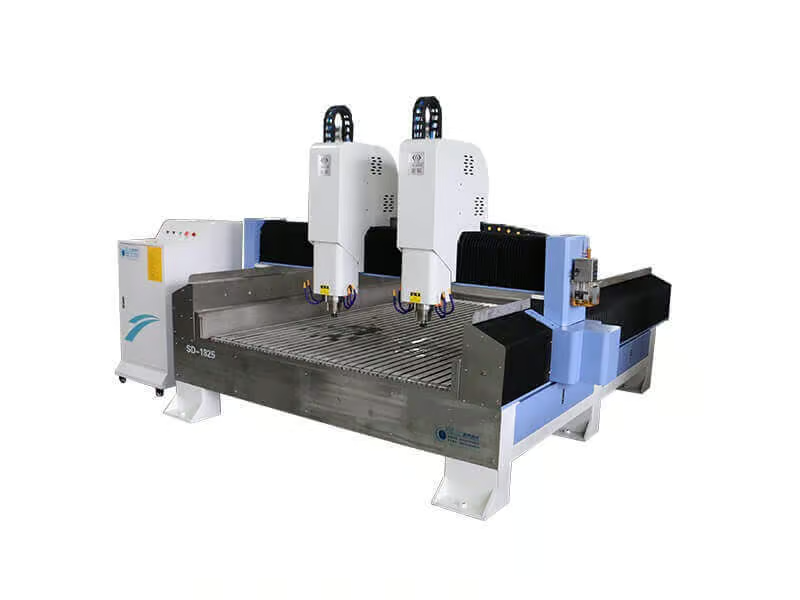 Stone Engraving Machines
 Stone Veneer Saw
 Stone Band Saw Machines
 Stone Edging Beveling Machine
 Stone Auxiliary Equipment
PCD, CBN & Carbide Chain Inserts
In the aggressive environment of soft-rock quarrying, the efficiency of a chain saw machine is dictated by the metallurgy of its teeth. According to abrasive wear and fracture mechanics research published by the Society for Mining, Metallurgy & Exploration (SME), chain saw inserts endure extreme thermo-mechanical cycles. As the teeth drag through solid marble or limestone at high velocity, they generate intense frictional heat that can carbonize standard diamond tools. MosCut solves this through a Tier-1 Superabrasive Matrix: utilizing Tungsten Carbide for impact absorption, Polycrystalline Diamond (PCD) for extreme abrasion resistance, and Cubic Boron Nitride (CBN) for unparalleled thermal stability in high-friction environments.
A massive travertine and limestone quarry in Turkey recently faced an operational bottleneck. Utilizing budget-grade carbide inserts, their Fantini-style machines required a full tooth rotation every 20 square meters of cutting, resulting in crippling labor costs and machine downtime. MosCut technicians performed a geological audit and recommended a hybrid configuration of our 8-edge indexable PCD and CBN inserts. The results were transformative: individual edge lifespan skyrocketed by 800%, machine uptime increased by 40%, and the quarry’s total cost-per-square-meter for extraction plummeted by 55%, proving that superior metallurgy is the ultimate cost-saving measure.
Solving Critical Extraction Pain Points
Every minute your chain saw is stopped for dull teeth is lost profit. We engineered the downtime out of the equation.Extreme Wear Resistance
Our PCD and CBN inserts feature a thick, high-density superabrasive layer vacuum-sintered to a carbide substrate. They provide wear resistance dozens of times higher than conventional alloys.
Zero Edge Chipping
Utilizing nano-grade micro-grain tungsten carbide as the base, MosCut inserts possess the fracture toughness required to survive impacts with fissures and hard nodules without catastrophic cracking.
Absolute Precision Fit
Every insert is micron-ground for dimensional perfection, ensuring a seamless fit into the tool holders of leading European brands like Fantini, Garrone, and Benetti, eliminating vibration.
Maximized Tool ROI
Our innovative indexable design means you don’t discard a tool when an edge dulls. Simply rotate the insert to reveal a brand-new cutting face, effectively multiplying your tool value by 4 to 8 times.
The Superabrasive Matrix: PCD, CBN, or Carbide?
There is no single “best” material. The right insert depends entirely on the thermal and abrasive nature of your quarry’s geology.PCD (Diamond)
The Abrasive Killer: The hardest material on earth. Engineered specifically for marble and limestone with high silica content.
- Extreme Hardness
- Low Friction Coefficient
- Best for Uniform Strata
CBN (Boron Nitride)
The Thermal Champion: Second only to diamond in hardness, but vastly superior in heat stability. Won’t carbonize at high friction temps.
- Extreme Heat Resistance
- Chemical Inertness
- Best for Hard, Ferrous Rock
Tungsten Carbide
The Impact Absorber: Lower hardness than PCD/CBN but incredible toughness. Absorbs massive mechanical shocks.
- High Fracture Toughness
- Economical Performance
- Best for Fractured Rock
Indexable Technology: Multi-Edge Longevity
Stop throwing away perfectly good material. Multiply your cutting life by simply turning a screw.Traditional stone cutting tools are often static, requiring the entire tool to be discarded when the edge dulls. MosCut’s indexable technology revolutionizes quarry consumables. By utilizing geometric shapes like Squares (4 edges) and Octagons (8 edges), we provide multiple independent cutting points on a single piece of hardware.
When the active edge begins to wear, the operator simply uses a torque wrench to loosen the central fixing screw, rotates the insert 45 degrees, and re-tightens. Within seconds, the machine is equipped with a fresh, sharp edge, drastically thinning the procurement cost per square meter extracted.
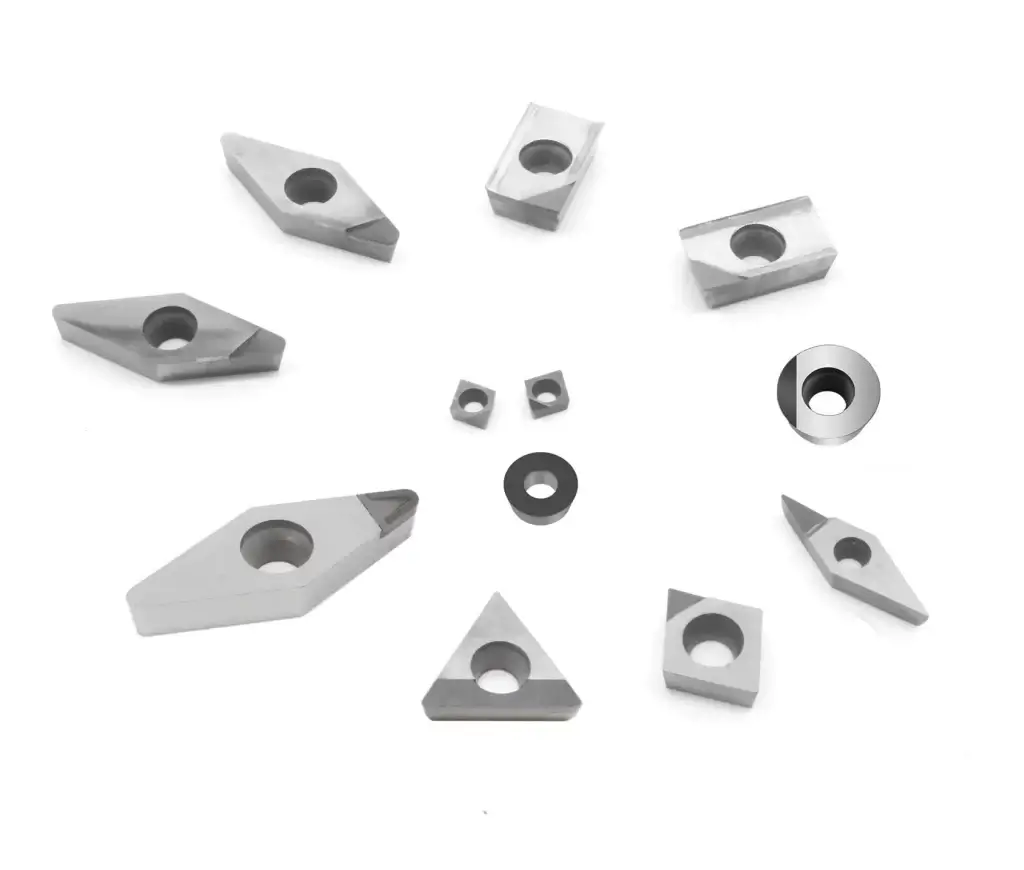
Geometric advantage: An octagonal MosCut insert provides 8 times the operational life of a single-edge tool, significantly reducing machine downtime.
Technical Specifications: Cutting Parameters
MosCut PCD and CBN inserts are precision-machined to achieve optimal material removal rates in both non-ferrous and ferrous rock formations.| Material Type | Rock/Workpiece | Cutting Speed (m/min) | Feed Rate (mm/rev) | Cutting Depth (mm) |
|---|---|---|---|---|
CBN (Cubic Boron Nitride) Formulations | ||||
| CBN | Gray Cast Iron / Hard Rock | 500 – 1500 | 0.1 – 0.4 | 0.1 – 1.5 |
| CBN | Ductile Iron / Abrasive Rock | 200 – 400 | 0.1 – 0.4 | 0.1 – 1.5 |
| CBN | Alloy Cast Iron | 150 – 300 | 0.05 – 0.4 | 0.1 – 1.5 |
| CBN | Iron-based Alloy | 50 – 150 | 0.05 – 0.4 | 0.05 – 0.5 |
| CBN | Hardened Steel / Nodules | 80 – 200 | 0.05 – 0.2 | 0.05 – 0.2 |
| CBN | Heat-resistant Alloy | 50 – 200 | 0.05 – 0.2 | 0.05 – 0.2 |
PCD (Polycrystalline Diamond) Formulations | ||||
| PCD | Marble & Limestone | 200 – 3000 | 0.05 – 0.5 | 0.05 – 0.1 |
| PCD | Non-Ferrous Deposits | 100 – 500 | 0.05 – 0.5 | 0.05 – 0.1 |
| PCD | Cemented Carbide / Hard Rock | 20 – 30 | 0.05 – 0.2 | 0.05 – 0.2 |
The Perfect Synergy: Marble Chain Saw Machines
Premium Teeth Demand a Powerful Jaw
MosCut PCD and CBN inserts are the critical cutting component of the Marble Chain Saw Machine. These massive rail-guided machines utilize a rotating chain arm to create deep, vertical, or horizontal cuts with laser precision. By equipping your machine with MosCut’s micro-ground inserts, you ensure the smoothest possible block surface and the highest material recovery rate.
Explore MosCut Marble Chain Saw Machines →
SOP: Safe Rotation & Installation
Improper installation will shatter a PCD or CBN insert instantly. Protect your investment with this 3-step protocol.🧼 1. Clean the Pocket
Before rotating an insert, use a high-pressure air gun and brush to meticulously clear all stone dust from the tool holder pocket. Even a single grain of sand under the insert will create an uneven pressure point, causing the brittle PCD to shatter when tightened.
🗜️ 2. The Torque Rule
Never tighten insert screws by feel or with pneumatic tools. Always use a calibrated Torque Wrench set to the manufacturer’s specification (usually 3-5 Nm). Under-tightening causes inserts to fly out; over-tightening crushes the insert core.
📏 3. Pattern Verification
Chain saws follow a strict “Left-Center-Right” tooth arrangement. After rotating an entire chain, verify that the protrusion angle of every new edge matches the original pattern to ensure the chain tracks straight and doesn’t wander in the cut.
Machine in Action: Working Video
Watch MosCut indexable inserts deliver silent, powerful, and chip-free cutting in a premium marble quarry.Global Customer Success Stories
Dominating extraction output across the world’s premier soft-rock and limestone deposits.
Italy: Carrara Marble Precision
Upgraded their cutting fleet to MosCut octagonal PCD inserts, achieving perfectly flat block faces, eliminating secondary squaring costs, and doubling daily output metrics.

Turkey: High-Heat Limestone
Transitioned from standard carbide to a hybrid CBN configuration, successfully overcoming extreme frictional heat and protecting edges from carbonization in water-scarce extraction zones.

Egypt: Gritty Sandstone Armor
Deployed our tungsten-carbide reinforced hard-bond inserts to combat violent silica sand-washing, completely halting premature teeth stripping and extending chain life by 300%.

India: Abrasive Serpentine Yield
Conquered highly fractured and uneven green marble strata by configuring our heavy-duty micro-grain carbide base inserts, blending fracture toughness with sharp, clean cuts.
Technical Insights & Maintenance Guides
Master the metallurgy of high-frequency cutting to maximize your chain saw uptime.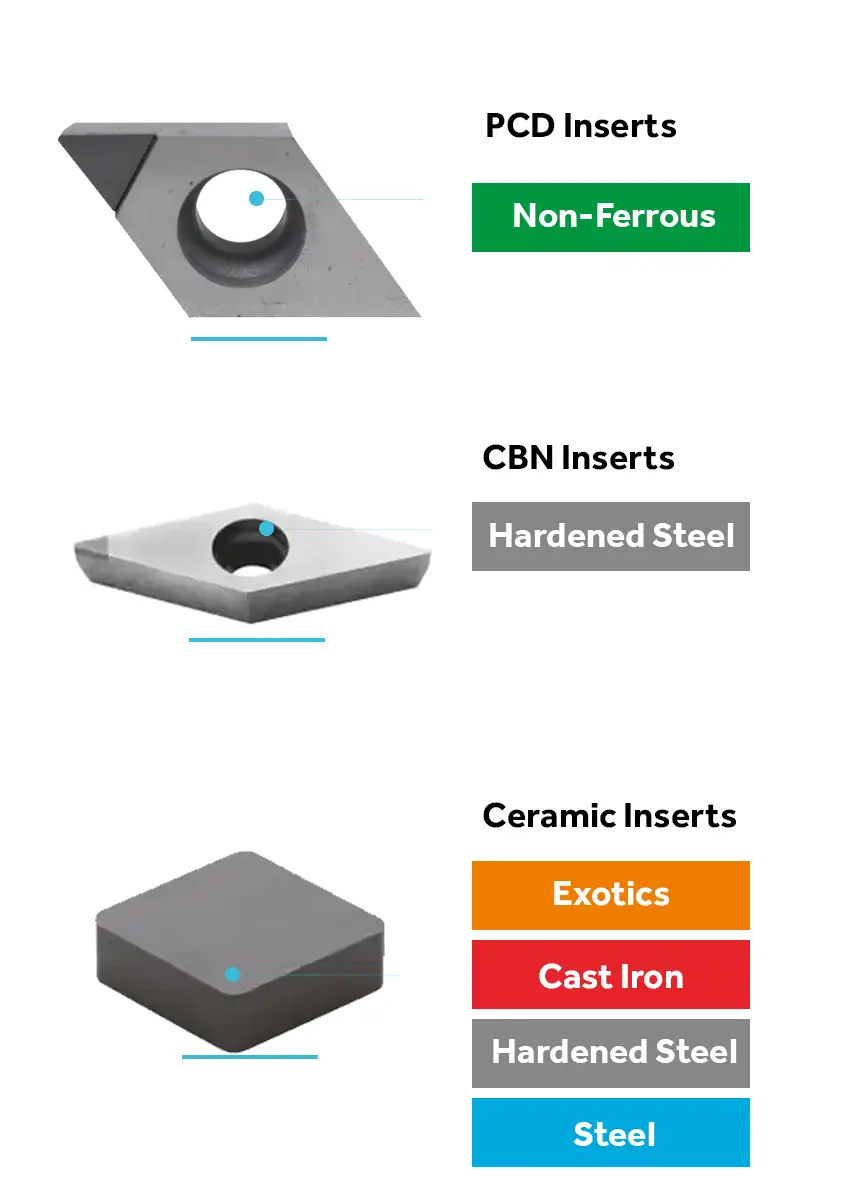
PCD vs. CBN vs. Carbide: The Matrix
Understand the molecular differences that dictate tool survival in different rock types.
Read More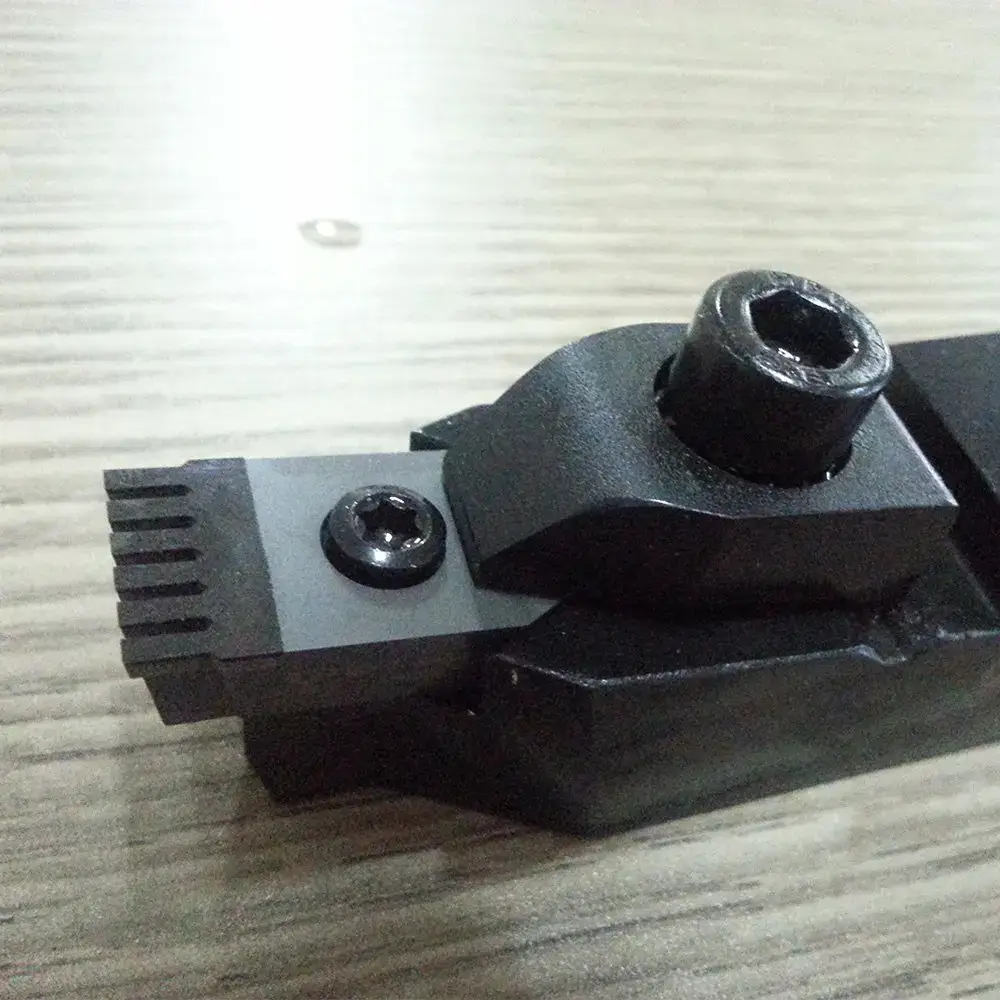
Why Do Chain Saw Inserts Chip?
Identify the root causes of insert fracture, from excessive feed rates to holder contamination.
Read More
Quarry Chain Saw Arm Maintenance
A deep dive into protecting your cutting arm and chain links from the abrasive slurry.
Read More
The Importance of Proper Torque
Why using a pneumatic drill instead of a calibrated torque wrench will instantly shatter your PCD inserts.
Read MoreMaximize Your Quarry’s Output Today
Stop halting production for frequent tool changes. Drive down your square-meter extraction cost and maximize uptime with MosCut’s premium, ultra-durable PCD, CBN, and Carbide inserts.
View All Accessories & ToolsFrequently Asked Questions About PCD, CBN & Carbide Chain Inserts
1. Can PCD or CBN inserts be re-sharpened once all edges are worn?
No. The PCD and CBN superabrasive layers are extremely thin (typically 0.5-0.8mm) and vacuum-sintered to the tungsten carbide base. Attempting to re-sharpen them usually removes the superabrasive layer entirely. The indexable design (4 or 8 edges) is intended to provide maximum life before the insert is simply recycled.
2. Is it safe to mix PCD and standard Carbide inserts on the same chain?
It is possible but requires precise load balancing. Because PCD cuts much cleaner and lasts longer, the carbide teeth will dull faster. This forces the PCD teeth to eventually take the entire mechanical load of the chain, which often leads to the brittle PCD inserts shattering under extreme stress. We strongly recommend uniform material sets.
3. Why choose CBN over PCD for stone extraction?
CBN is the mandatory choice when the rock cut generates extreme heat (over 700°C) or contains ferrous/iron-based minerals. PCD (Diamond) carbonizes and becomes soft at high temperatures and reacts chemically with iron. CBN maintains its structural hardness and chemical integrity even in extreme friction heat.
4. What is the standard size for a quarry chain saw insert?
The global industry standard for modern European chain saws is the 12.7 x 12.7 x 4.76 mm square or octagonal insert. MosCut provides this standard dimension alongside custom sizes and center-hole diameters for older machine models.
5. How can I tell if my insert is CBN or PCD just by looking at it?
Under a bright inspection light, the PCD layer usually appears dark grey or black and slightly crystalline. The CBN layer often has a more brownish, amber, or solid black tint, depending on the specific binder used. MosCut inserts are laser-etched with material codes on the bottom for easy identification.
6. Do I need to use a specific type of screw to hold the indexable inserts?
Yes. You must always use high-tensile, heat-treated Torx or Allen screws provided by the tool manufacturer. Standard hardware store screws will stretch under the immense cutting forces, causing the insert to vibrate loose and instantly shatter inside the cut.
7. What happens if the tool holder pocket on the chain is worn out?
If the steel pocket is damaged, dented, or worn unevenly, it cannot provide 100% flat support for the carbide base. The insert will sit at a micro-angle. The moment the machine applies cutting pressure, the unsupported PCD or CBN insert will snap in half. Worn tool holders must be replaced before installing new inserts.
8. Can I use cooling water with PCD and CBN inserts?
Yes, copious amounts of water are highly recommended. While CBN is highly heat-resistant, high-pressure water flushes away the abrasive stone slurry. This prevents premature wear on the insert’s carbide base and protects the chain links and guide rails from being ground down by rock dust.
9. What is the difference between a square insert and an octagonal insert in cutting performance?
Square inserts (4 edges) have a longer, straight cutting face, which is very aggressive but requires more machine horsepower and generates more vibration. Octagonal inserts (8 edges) have angled corners, reducing the initial impact force and cutting more smoothly, while doubling the lifespan through more indexable turns.
10. How tight should the fixing screw be when rotating an insert?
The standard tightening torque is usually between 3.5 Nm and 5.0 Nm depending on the screw thread size. You must use a calibrated torque wrench. Over-tightening physically induces stress fractures in the brittle PCD/CBN layer, while under-tightening allows the insert to fly out.