
 Stone Cutting Machines
 Stone Polishing Machines
 Bridge Saw Machines
 Stone Quarry Cutting Machines
 Stone Block Cutter Machine
 CNC Stone Wire Saw Machine
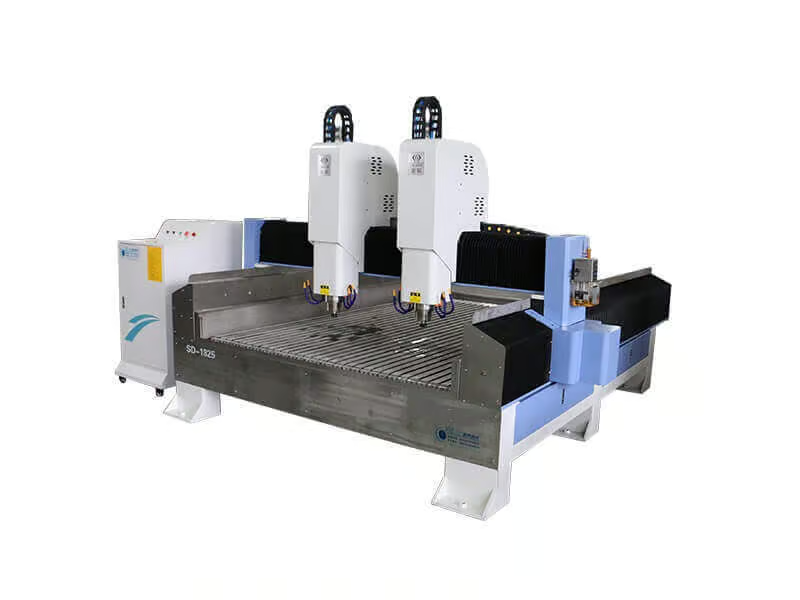 Stone Engraving Machines
 Thin Stone Veneer Saw Machine
 Horizontal Stone Slab Splitting Machine
 Stone Edge Polishing Profiling Machine
 Stone Auxiliary Equipment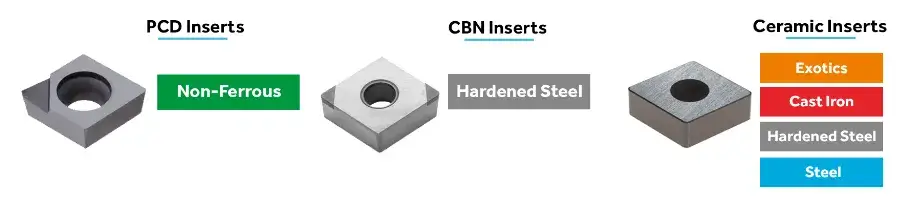
In the heavy industrial sector of dimensional stone extraction, there is a dangerous misconception that purchasing the “hardest possible cutting tool” will solve all operational problems. According to tribological studies published in the International Journal of Refractory Metals and Hard Materials, tool survival under extreme thermo-mechanical loads is not dictated by hardness alone. It requires a precise balance of three metallurgical properties: Knoop Hardness (resistance to scratching), Fracture Toughness (ability to absorb impact without shattering), and Oxidation Temperature (the thermal threshold before chemical breakdown). Ignoring this triangle results in catastrophic insert failure, turning expensive superabrasives into useless dust.
A prestigious marble quarry in Portugal recently learned a highly expensive lesson regarding thermal physics. To maximize the lifespan of their chain saw machines, management authorized a complete upgrade to ultra-premium PCD (Diamond) inserts. Initially, cutting pure white marble, the PCD performed flawlessly. However, as the machines cut into a deep red geological seam rich in iron oxide (Hematite), the diamond inserts began failing spectacularly. The intense friction heat catalyzed a chemical reaction between the carbon in the diamond and the iron in the rock, causing the PCD to “graphitize” and melt away in minutes. MosCut’s metallurgical team audited the site and formulated a customized CBN + Carbide hybrid insert configuration. The CBN’s chemical inertness perfectly resisted the iron and high heat, while the Carbide absorbed the shock of the transition zones. The quarry resumed full-speed extraction, saving thousands of dollars in ruined tools.
The Hardness Illusion: Physics vs. Thermodynamics
Buying the hardest tool on the market is the easiest way to bankrupt your consumable budget if you ignore thermal physics.Before selecting your chain saw inserts, you must understand two contradictory forces governing material science in the quarry:
- Hardness vs. Toughness: In metallurgy, extreme hardness comes at the cost of brittleness. Glass is extremely hard, but it shatters if you tap it with a hammer. If you use an ultra-hard tool in a highly fractured, uneven rock face, the physical shock-loads will instantly chip and destroy the cutting edge.
- Thermal Degradation: Friction creates heat. Some materials may be the hardest on Earth at room temperature, but once the cutting friction pushes the temperature past a critical threshold, their molecular structure breaks down, or they chemically react with the rock’s minerals and burn away.
Tungsten Carbide: The Impact Absorber
The undisputed heavy-duty workhorse of the extraction industry.🔬 The Metallurgy
Solid Tungsten Carbide inserts are manufactured by sintering extremely hard tungsten carbide powder with a soft cobalt metal binder. They achieve a Knoop Hardness of approximately 1500 to 2000 HK.
🛡️ The Superpower
Extreme Fracture Toughness. When the chain saw suddenly hits a hidden cavity, a hard quartz nodule, or a dense geological transition, carbide has the elasticity to absorb the kinetic shock without shattering into pieces.
⚠️ The Achilles Heel
It lacks extreme abrasion resistance. If you cut pure, highly abrasive sandstone, the silica slurry acts like sandpaper, rapidly grinding down the carbide edge and forcing frequent machine stops to rotate the indexable inserts.
PCD (Polycrystalline Diamond): The Abrasive Killer
When the stone is pure, uniform, and highly abrasive, nothing outlasts the hardest material on Earth.The Metallurgy: PCD is created by sintering synthetic diamond micro-particles at extreme temperatures and pressures onto a carbide backing. It boasts an astronomical Knoop Hardness of over 7000 HK.
The Superpower: Absolute abrasion dominance. In clean, uniform limestone or marble, a PCD insert can outlast a standard carbide insert by 50 to 100 times. It slices through abrasive silica effortlessly, delivering a perfectly smooth, mirror-like finish on the extracted block.
The Thermal Limit (The Fatal Flaw): Diamond is pure carbon. When cutting friction exceeds 700°C, or if the rock contains catalytic metals like iron, cobalt, or nickel, the diamond undergoes Graphitization. It chemically transforms back into soft graphite (pencil lead) and practically vanishes from the tool holder.

🔥 CBN (Cubic Boron Nitride): The Thermal Champion
The Metallurgy: CBN is the second hardest material known to humanity (Knoop Hardness ~4500 HK). However, its true value lies in its molecular heat stability.
The Superpower: While diamonds burn at 700°C, CBN can easily withstand sustained cutting infernos up to 1300°C without suffering thermal degradation. More importantly, CBN is chemically inert to iron. If you are cutting hard rock intertwined with iron ore (ferrous minerals), or operating in a dry quarry where water cooling is insufficient, CBN will survive and cut aggressively where PCD will instantly melt and fail.
The Ultimate Selection Matrix
Match your geological strata to the correct molecular structure.| Material Type | Hardness (HK) | Thermal Limit | Fracture Toughness | Best Suited For | Avoid When |
|---|---|---|---|---|---|
| Solid Carbide | 1500 – 2000 | High | Excellent | Fractured rock, mixed strata, heavy vibrations. | Cutting highly abrasive, pure silica sandstone. |
| PCD (Diamond) | 7000+ | Low (~700°C) | Poor (Brittle) | Uniform marble, limestone, high-abrasion silica rock. | Cutting iron-rich rock or high-heat dry cutting. |
| CBN (Boron Nitride) | 4500 | Extreme (~1300°C) | Moderate | Ferrous (iron-bearing) rock, dry cutting, hard nodes. | Heavy shock-loading environments with loose rocks. |
Stop Guessing and Start Optimizing
Stop risking machine downtime and ruined tools on mismatched metallurgy. Equip your chain saw machines with MosCut’s precision-engineered PCD, CBN, and Carbide inserts, tailored exactly to your quarry’s geology.
View MosCut Superabrasive Inserts