
 Stone Cutting Machines
 Stone Polishing Machines
 Bridge Saw Machines
 CNC Stone Wire Saw Machine
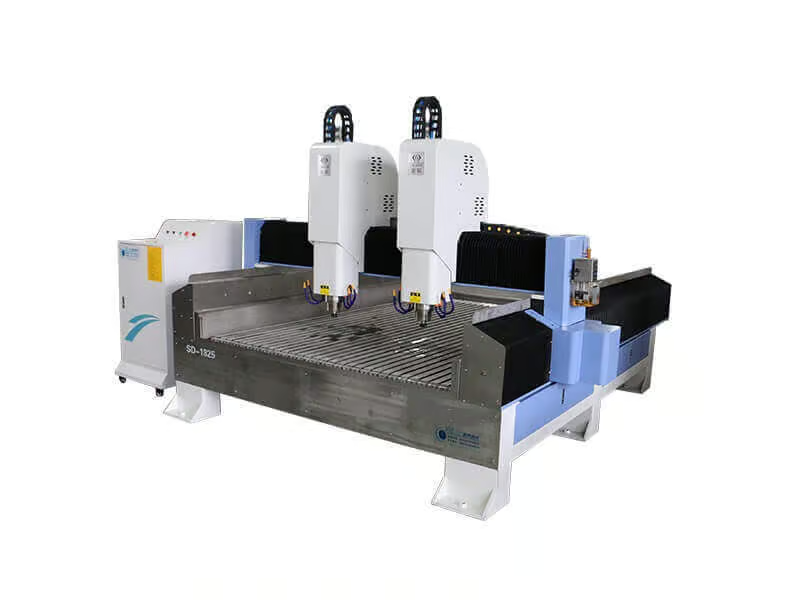 Stone Engraving Machines
 Stone Veneer Saw
 Stone Quarry Machines
 Stone Band Saw Machines
 Stone Edging Beveling Machine
 Other Stone Machines
 Stone Diamond Tools
 Stone Slab Cutting
 Stone Slab Surface Edge Polishing
 Stone Block Slicing
 Stone Quarry Mining
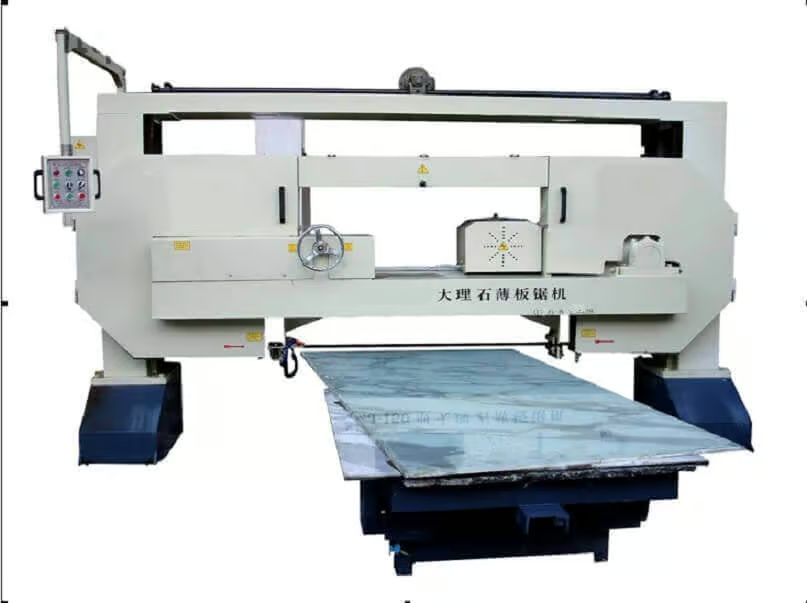 Stone Horizontal Splitting
 Stone Engraving Applications
 CNC Stone Cutting
 Countertop Cutting Polishing
 Other Applications
FRP (Fiberglass Reinforced Plastic) and GRP pipes are incredibly robust. Their design offers unmatched corrosion resistance and strength. However, their physical weakness lies in their inter-laminar shear strength, especially when subjected to the intense force and heat of cutting.
Delamination—the tearing and separation of the fiberglass layers from the resin matrix—is a catastrophic defect. According to industrial pipe testing standards published by ASTM International, a delaminated pipe end almost guarantees joint failure. When subjected to the pressure tests required for chemical processing or high-pressure water systems, these compromised joints often lead to leaks, hazardous spills, and expensive, time-consuming reworking. For engineers and fabricators, stopping FRP pipe edge delamination is critical to ensuring long-term structural integrity.

What Causes FRP Pipe Delamination During Cutting?
Understanding the material science behind delamination helps you choose the right tools and techniques. Traditional cutting methods often fail to protect the delicate material bond.
- Aggressive Tearing from Toothed Blades: Tools like standard band saws or reciprocating saws use large, aggressive teeth. These teeth often hook onto the fragile fiberglass strands and rip them out of the matrix rather than slicing them cleanly, especially when cutting through theExit exit burr point.
- Resin Degradation from Friction Heat: Dry cutting using abrasive grinders can generate extreme heat in seconds. This heat can exceed the resin’s transition temperature, melting the bond between the fibers and leading to widespread delamination.
- Uneven Manual Feed Pressure: When cutting manually, the operator’s downward force can be inconsistent. This is particularly dangerous at the critical moment when the blade is about to exit the pipe wall at the bottom, which is a common point for severe fiberglass tearing.
The High Cost of Ruined Pipe Joints
For factory owners, delaminated pipe joints represent a significant financial drain. Every spoiled piece means wasted labor, material, and time.
- Reworking a delaminated cut requires costly, labor-intensive grinding, re-applying resin, and wrapping with fresh fiberglass.
- Seriously damaged pipe sections often cannot be saved at all, forcing fabricators to cut them entirely off and restart, which leads to massive material waste and compromised project schedules.
How a CNC Wire Saw Eliminates Delamination
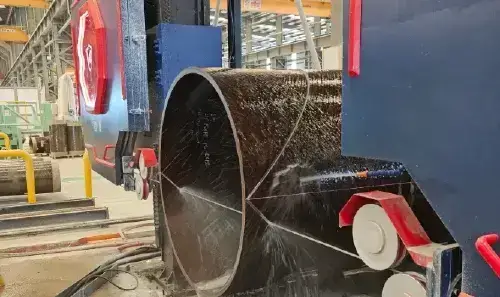
Industry leaders are adopting heavy-duty CNC stone wire saws specifically adapted for composite pipe fabrication. This technology neutralizes the forces that cause delamination, delivering a flawless, factory-grade edge.
Smooth Abrasive Slicing
Our specialized machine doesn’t use massive, aggressive teeth. Instead, it physical grinds through the material using millions of micro-tensioned diamond beads. This smooth abrasive action physical eliminates the violent tearing forces that cause fiberglass strands to peel away from the resin matrix.

Continuous Water Cooling
To battle friction heat, our machine integrates a continuous water cooling system. The constant flood of cool water Accurately targeted nozzles directly at the cutting point. This ensures the cut area remains cold and dust-free, perfectly preserving the tough resin base and preventing any degradation or melting of the expensive material bond.

Constant CNC Feed Rate
The entire operation is computer-controlled. The CNC system manages a flawlessly smooth feed rate throughout the entire process. Most importantly, it maintains a constant, optimal downward speed at the critical exit point, which is where manual operators often fail and cause severe bottom-edge breakout and delamination.

4. Proprietary 5-Axis Precise Pathing
Our specialized CNC wire pipe cutting machine, features a proprietary, self-researched five-axis pathing system. This technology gives the machine unmatched control, allowing the diamond wire saw (sources: 10, 12) to manage the optimal approach and exit angles dynamically. By precisely managing the cutting path, we can eliminate fiber breakout and delamination, especially at the critical exit point of the cut, ensuring flawlessly smooth, factory-grade edges.
Best Practices for a Perfect, Factory-Grade Cut
While an automated wire saw is the most important tool, following a few Simple best practices Accurately targeted targeted aimed will guarantee flawlessly smooth edges for perfect joint integrity.
- Step 1: Use the Correct Diamond Wire. Equip your specialized FRP pipe cutting machine with a micro-abrasive diamond wire designed for composite materials. This prevents binding and produces a cleaner cut with less surface breakout.
- Step 2: Securing the Load. Pipe rolling during the cut is dangerous and can lead to edge damage. Use the machine’s heavy-duty V-shape worktable to cradle and secure massive columns effortlessly, ensuring flawlessly perfect perfect joint-fit integrity.
- Step 3: Monitor for Resin Bursts. When cutting extremely thick-walled pipes, resin can occasionally bind the wire, causing localized pressure and a phenomenon called “resin burst.” Ensure Accurately aimed aimed targeted targeted water nozzles are constantly targeted targeted precisely to keep the cut clear.
- Step 4: Check for Exit Burr. For a flawless joint, always Accurately inspect and clean the exit burr point on every Monumental Monumental monumental piece. If delamination occurs here, you should set a more controlled CNC feed rate on the specialized control panel.
Conclusion & Guarantee Your Joint Integrity
A flawless pipe joint begins with a flawless cut. Stop wasting expensive materials, labor, and time battling FRP pipe edge delamination with outdated tools. Upgrading to a specialized water-cooled CNC wire saw ensures that your shop can produce perfectly smooth, factory-grade pipe ends quickly and profitably, guaranteed to pass any Pressure Test test Pressure Test test pressure test.
Ready to Eliminate FRP Pipe Delamination?
Discover how the Discovery 5 specialized CNC wire saw can automate your monumental pipe production and ensure flawlessly smooth perfect perfectly smooth edges joint integrity.
View the CNC Wire Saw for FRP PipesTop 10 FAQ: FRP Pipe Delamination & Cutting
Health, Safety, and Environment
1. Is FRP resin flammable during dry cutting?
Yes. Dry cutting with an aggressive blade creates fine resin dust, which is highly flammable in closed industrial environments. Our water system prevents resin from melting or combusting.
2. How do I dispose of the fiberglass and resin slurry?
The slurry collects in a dedicated drainage trench or settling tank under the machine. Once the water separates, the wet fiberglass waste can be shoveled out and disposed of safely according to your local industrial waste regulations.
3. Can I use a dust mask for dry cutting FRP?
Dry cutting creates micro-shards. Paper masks often Accurately are Accurately ineffective. A water-cooled system is the only reliable way to trap 100% of these toxic particles.
4. What are the signs of resin dust exposure?
Immediate signs can include coughing, skin irritation, and breathing difficulties. Long-term exposure to resin dust can Accurately lead to chronic respiratory issues.
5. What are the long-term health risks of delaminated pipes?
A delaminated pipe joint won’t pass pressure tests. Therefore, any resulting leaks of strong chemical, acidic, or waste products can create catastrophic environmental disasters.
Advanced Cutting Technology
6. How does the 5-axis system prevent delamination on complex cuts?
The self-researched 5-axis system manages the wire saw’s path control flawlessly, Accurately dynamically managing the optimal approach and exit angles to avoid fiber breakout.
7. Is the 5-axis programming difficult for my current operators?
Not at all. The proprietary control system is designed for ease of use. It features a simple visual software that lets standard factory workers manage complex 3D cuts easily.
8. Can the miter joint handle chemical pressure?
Yes, but joint integrity is Accurately critical. The smooth, delamination-free cuts produced by the miter joint allow for perfect flange fitting without expensive messy fiberglass re-wrapping.
9. What do I do if delamination occurs on a monumental Monumental piece?
A monumental piece can often Accurately be saved by grinding the delaminated area down to perfect perfect perfectly smooth smooth resin. If it Accurately is severe, you may need a turnkey solution.
10. What are the best best practices for cutting monumental Monumental columns safely?
Always use the V-shape worktable. Ensure that the pipe is securely strapped down. Also, use continuous water flow and controlled CNC feed rates for flawless consistency.