
 Stone Cutting Machines
 Stone Polishing Machines
 Bridge Saw Machines
 Stone Quarry Cutting Machines
 Stone Block Cutter Machine
 CNC Stone Wire Saw Machine
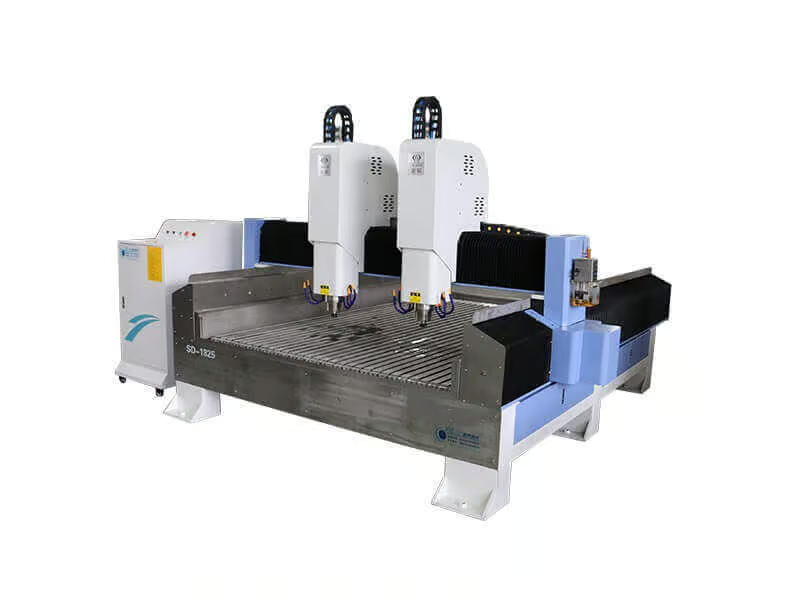 Stone Engraving Machines
 Thin Stone Veneer Saw Machine
 Horizontal Stone Slab Splitting Machine
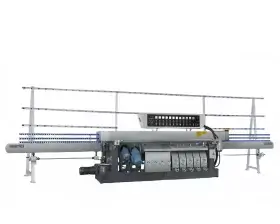 Stone Edge Polishing Profiling Machine
 Stone Auxiliary Equipment
🔬 The True Cost of Neglect
In the peak season of stone fabrication, a single day of machine downtime can cost thousands of dollars in delayed commercial orders. Horizontal edge polishers operate in an extremely hostile environment—a relentless combination of high-pressure water, abrasive silica dust, and severe high-torque vibration. Without a strict daily Standard Operating Procedure (SOP), metal-on-metal friction will destroy spindle bearings and pneumatic cylinders within months. However, dedicating just 15 minutes at the end of every shift to standardized cleaning and lubrication can extend your machine’s mechanical lifespan by over 300%.
🏗️ The Italian Longevity Success Story
A multi-generational marble fabrication plant in Carrara, Italy, operates a MosCut horizontal continuous polisher that is over 8 years old, yet it still delivers the precise architectural profiles of a brand new machine. Their secret is not magic; it is unyielding discipline. The head operator enforces a strict Daily 3-Step Protocol (Flush, Drain, Grease). By treating the machine’s maintenance with the same precision as their stone cutting, they have completely eliminated unexpected mechanical failures. We are sharing their exact maintenance blueprint below.
The Slurry Hazard: End-of-Shift Cleaning
Stone slurry isn’t just dirt; it turns into solid concrete overnight.During heavy milling, the mixture of cooling water and stone dust creates a thick abrasive slurry. If left overnight, this slurry dries and hardens into a concrete-like crust. This crust can paralyze the machine’s moving parts. It will clog the friction grooves of the vulcanized conveyor belt (causing severe slab slippage), jam the delicate limit switches, and blind the optical sensors.
The Golden Rule: 10 minutes before the end of every shift, power off all spindle motors but keep the water pumps running. Use a high-pressure water hose to thoroughly flush the entire conveyor belt, the inside of the stainless steel splash guards, and all exposed pneumatic cylinder rods. Never allow slurry to dry on your machine.
The Lubrication Protocol: Grease is Life
Metal-on-metal friction under heavy loads will destroy your machine in weeks.⚙️ Spindle Bearings
The front heavy-duty milling spindles (Positions 1-3) take massive punishment. Due to the constant bombardment of water, the grease inside the waterproof bearing seals gradually washes away. Operators must use a grease gun to inject High-Temp Lithium Grease into the spindle grease nipples weekly to prevent bearing seizure and catastrophic burnout.
🛤️ Slide Tracks & Screws
The dovetail grooves and linear guide rails responsible for adjusting the Y and Z axes must remain silky smooth. Before turning the machine on each morning, wipe down the exposed lead screws and spray them with a premium rust-inhibiting lubricating oil. This prevents rust binding and ensures effortless micro-calibrations.
🔄 Conveyor Rollers
The massive drive and tail rollers support tons of downward pneumatic pressure and raw stone weight. The heavy-duty pillow block bearings housing these rollers must be pumped with Extreme Pressure (EP) Grease bi-weekly to maintain smooth rotation and prevent the main drive motor from overheating.
Pneumatic System Care: Water is the Enemy of Air
Protect your cylinders. Drain the water from your air lines daily.
The Silent Cylinder Killer
Stone fabrication shops are inherently humid environments. Air compressors naturally condense this moisture, sending water vapor through your high-pressure air lines straight into the machine. When water enters the precision pneumatic cylinders and solenoid valves that control your polishing heads, it causes internal springs to rust and O-rings to degrade. This results in sticky, stuttering polishing heads that bounce on the stone.
The Daily Habit: The very first thing the operator must do every morning is locate the Air Filter Regulator (油水分离器) at the machine’s air intake. Press the release valve at the bottom of the clear bowl to purge all accumulated condensation. Also, check the adjacent lubricator bowl to ensure it has sufficient pneumatic oil to mist into the lines.
Electrical Protection: Guarding the Brain
Dust and moisture are the silent assassins of electrical contactors.
Routine Cabinet Maintenance
While MosCut electrical cabinets are rated IP65 for extreme dust and water resistance, opening and closing the door over time will inevitably allow microscopic quartz dust to infiltrate. When this conductive dust settles on contactors or clogs the cooling fans of the Variable Frequency Drives (VFDs), it can cause shorts or thermal overheating.
Weekly Blow-Out: Once a week, a qualified technician should disconnect the main power breaker, open the cabinet, and use dry, low-pressure compressed air to gently blow out all dust. Following this, the technician should use an insulated screwdriver to verify that all terminal blocks and wire connections are tight, as machine vibration can slowly loosen them, leading to dangerous electrical arcing.
Invest in Machinery Built for the Long Haul
Stop losing money to unexpected breakdowns. The MosCut Horizontal Continuous Edge Polisher is engineered with easily accessible lubrication points, centralized pneumatics, and heavy-duty IP65 shielding to make daily maintenance effortless and drastically prolong your machine’s industrial lifespan.
View the Horizontal Polisher