
 Stone Cutting Machines
 Stone Polishing Machines
 Bridge Saw Machines
 Stone Quarry Cutting Machines
 Stone Block Cutter Machine
 CNC Stone Wire Saw Machine
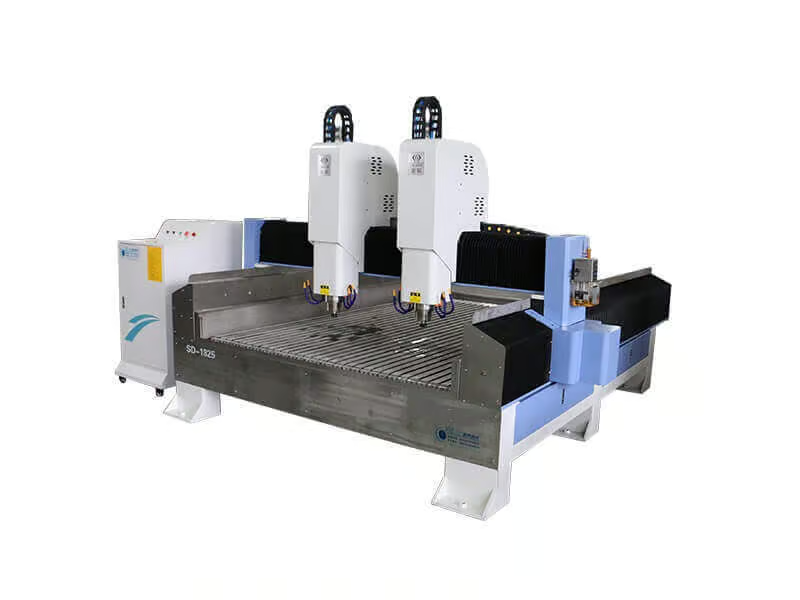 Stone Engraving Machines
 Thin Stone Veneer Saw Machine
 Horizontal Stone Slab Splitting Machine
 Stone Edge Polishing Profiling Machine
 Stone Auxiliary Equipment
In the field of diamond tool manufacturing, the high-carbon steel core provides the tensile strength, and the sintered diamond beads provide the cutting bite. However, it is the polymer coating that determines whether the tool survives the extreme environment of a quarry face. According to industrial wear and dynamic friction standards published by ASTM International, synthetic polymers subjected to high-velocity rock abrasion and thermal loading must be precisely matched to their operational variables. The coating’s job is not merely to space the beads apart; it must actively dampen high-frequency vibrations, completely seal the steel from abrasive silica penetration, and prevent the diamond beads from stripping off under immense dynamic loads.
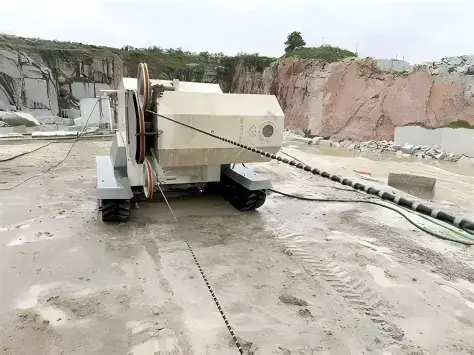
A large-scale granite quarry in Portugal recently suffered a devastating financial blow due to a misunderstanding of polymer science. Attempting to reduce consumable budgets, procurement purchased a massive batch of cheap, plastic-injected diamond wire originally designed for soft marble. When deployed on dense, Class 4 granite, the violent cutting vibrations and extreme friction heat caused the rigid plastic coating to rapidly soften, shatter, and peel away. Exposed to the abrasive granite slurry, the raw steel core snapped repeatedly within the first few hours of cutting. After MosCut engineers conducted a site audit, they transitioned the quarry to our Heavy-Duty Vulcanized Rubber (R/R+S) wire. The flexible rubber perfectly absorbed the destructive granite shockwaves. Wire snapping plummeted to zero, and the lifespan of the wire doubled, thoroughly reversing their operational losses.
The Physics of the Armor
The steel core provides the strength. The diamond beads provide the bite. But the polymer coating dictates the survival of both.Before comparing the materials, it is crucial to understand the three life-saving functions the polymer coating performs while the wire travels at 30 meters per second:
- Bead Retention (Locking): Diamond beads undergo immense lateral and torsional drag as they grind through solid rock. Without a high-adhesion polymer firmly bonding the inner diameter of the bead to the steel wire, the beads would slide down the cable, bunch together, and fly off like bullets.
- Abrasive Sealing: Quarry slurry is filled with microscopic, razor-sharp quartz and silica particles. If this abrasive paste penetrates the gaps between the steel strands, it will grind the wire apart from the inside out. The coating acts as a waterproof, impenetrable armor.
- Shock Absorption (Vibration Dampening): Rock is rarely homogenous. It contains fissures, hard nodules, and shifting densities. When a bead hits a hard spot, it bounces. The polymer coating acts as a continuous micro-suspension system, absorbing these high-frequency shockwaves before they can fatigue and snap the steel core.
Vulcanized Rubber Coating: The Granite Specialist
Engineered for extreme vibration and highly abrasive slurry. The undisputed king of hard rock.Material Properties: Vulcanized rubber is a highly elastic, heat-resistant elastomer. Through an intense pressure and high-temperature vulcanization process, the rubber chemically bonds to the steel core and the beads, forming an incredibly resilient matrix.
Why It Dominates Granite: Granite (Mohs hardness 6-7) is brutally hard. Cutting it generates intense, violent chatter along the wire. Rubber’s unparalleled flexibility allows it to act like a heavy-duty shock absorber, dampening these destructive vibrations and protecting the steel core from snapping. Furthermore, vulcanized rubber possesses exceptional resistance to abrasive wear, defending the wire against the aggressive, sandpaper-like qualities of granite slurry.
Injected Plastic Coating: The Marble Speedster
Rigid, aerodynamic, and built for blistering cutting speeds in softer sedimentary rock.Material Properties: Injected plastic (typically high-strength polyurethane) is much more rigid and rigid than rubber. It holds its aerodynamic shape impeccably under high-speed rotation and creates a very tight, solid bond with the steel.
Why It Dominates Marble: Marble, limestone, and travertine are significantly softer (Mohs hardness 3-4). Because they generate very little vibration, extreme shock absorption is not necessary. Instead, the priority is Speed. To clear soft rock slurry efficiently, the wire must run at very high speeds (30-38 m/s). Plastic coating maintains its streamlined profile at these speeds without “ballooning” or distorting like rubber might, ensuring a perfectly straight cut and blistering square-meter output.

The Ultimate Selection Matrix
Stop guessing. Use this engineering matrix to perfectly match the coating to your specific geological deposit.| Performance Metric | Vulcanized Rubber (R/R+S) | Injected Plastic (Polyurethane) |
|---|---|---|
| Target Rock Type | Granite, Quartzite, Basalt, Hard Rock | Marble, Limestone, Travertine |
| Shock Absorption | Excellent (High elasticity) | Low (Rigid structure) |
| Abrasive Resistance | Very High (Withstands silica sand) | Moderate |
| Optimal Wire Speed | 22 m/s to 28 m/s (Moderate) | 30 m/s to 38 m/s (Very Fast) |
| Flexibility over Pulleys | Extremely Flexible | Stiffer |
| Water Flow Requirement | High (To prevent rubber melting) | Moderate |
⚠️ The Danger of Mismatching: A Costly Mistake
Using the right wire on the wrong rock will destroy your consumables and stall your production.
1. Using Plastic Wire on Granite: This is a catastrophic mismatch. The rigid plastic cannot absorb the violent vibrations of granite. Within hours, the high-frequency impact and extreme heat will cause the plastic to shatter, melt, and peel completely off the steel wire. The naked steel will snap shortly after, and the beads will fly off into the cut.
2. Using Rubber Wire on Marble: While not immediately dangerous, this is highly inefficient and not economical. Marble generates a thick, sticky slurry. Rubber naturally has higher surface friction than slick plastic. If you run a rubber wire at the extreme speeds required for marble, the rubber can overheat, drag, and slow down your overall cutting efficiency. Use plastic for speed, rubber for survival.
Match Your Tools to Your Geology
Don’t compromise your production metrics or risk dangerous wire snaps with the wrong consumables. Partner with MosCut to perfectly match our premium vulcanized rubber or plastic-injected diamond wire to your exact quarry conditions.
Explore MosCut Diamond Wire