
 Stone Cutting Machines
 Stone Polishing Machines
 Bridge Saw Machines
 Stone Quarry Cutting Machines
 Stone Block Cutter Machine
 CNC Stone Wire Saw Machine
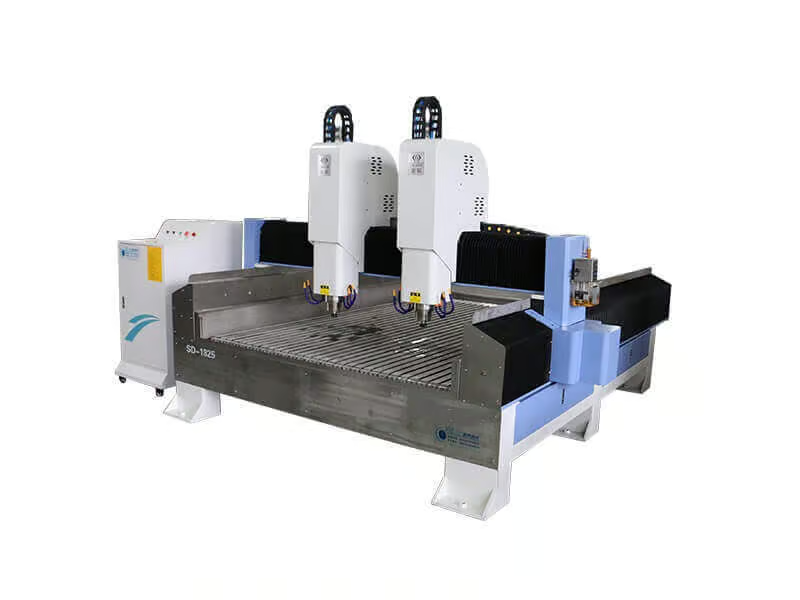 Stone Engraving Machines
 Thin Stone Veneer Saw Machine
 Horizontal Stone Slab Splitting Machine
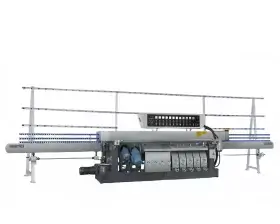 Stone Edge Polishing Profiling Machine
 Stone Auxiliary Equipment
In the high-stakes environment of a dimension stone quarry, a snapped diamond wire is more than just a costly operational delay—it is a critical safety hazard. When a wire moving at 30 meters per second breaks under hundreds of kilograms of tension, it rapidly recoils. According to severe hazard alerts regarding “Snap-Back Zones” published by the Occupational Safety and Health Administration (OSHA), the kinetic energy released by a fracturing steel cable can be instantly lethal to nearby operators. Many quarry managers mistakenly blame the manufacturer for “cheap wire” whenever a break occurs. In reality, metallurgical failure is rarely a raw material defect. Wire snapping is a systemic failure typically triggered by poor splicing techniques, uncontrolled machine shock-loading, or catastrophic thermal degradation due to coolant starvation.
A high-production marble quarry in Turkey found themselves trapped in a costly cycle, experiencing over a dozen wire snaps per month. Convinced they were purchasing defective consumables, they contacted MosCut engineering for an urgent field audit. Our technical team discovered the root cause within minutes: the operators were discarding their hydraulic crimping tools and manually smashing the copper joints with a heavy steel hammer. This primitive method crushed and severed the internal steel strands, reducing the wire’s breaking load by over 60% before it even entered the cut. By retraining the crew on MosCut’s strict Splicing Standard Operating Procedure (SOP) and upgrading to our aerospace-grade vulcanized wire, their snapping rate plummeted by an incredible 95%, driving their machine uptime to record highs.
The Weakest Link: Improper Splicing & Jointing
90% of wire breaks do not happen in the middle of the wire; they happen exactly at the crimp.A diamond wire is a continuous loop, meaning it relies entirely on the strength of its weakest point: the copper joint (crimp). If your wire consistently breaks right at or directly adjacent to the metal connector, human error during splicing is almost certainly to blame.
- Dirty Stripping: Before inserting the steel ends into the copper crimp, the rubber or plastic coating must be completely stripped and cleaned. If any polymer residue remains on the steel, the crimp will grip the slippery rubber instead of the metal. Under high tension, the wire simply pulls out of the joint (de-gloving).
- Over-Crimping: Using excessively high pressure on the hydraulic crimping tool—or using the wrong die size—will crush the internal steel strands. This creates a severe stress riser, effectively cutting the steel core in half before the machine is even turned on.
- Crooked Joints: The two ends of the wire must be perfectly parallel inside the crimp. If the joint is angled or bent, the wire will suffer violent bending fatigue every single time it passes over the machine’s small guide pulleys, snapping within hours.

⚠️ Shock-Loading: The Tension Problem
High-carbon aerospace wire is designed for smooth, continuous, and extreme pulling tension. What it cannot survive is Shock-Loading. If your quarry is using an older, outdated wire saw machine lacking an advanced “Inverter Constant Tension Control System,” you are at severe risk. When a high-speed diamond wire suddenly hits a dense quartz nodule or a hard anomaly inside the rock, the friction spikes dramatically. A modern machine will instantly sense this resistance and automatically slow down the pull-back tension to protect the wire. An outdated machine will simply keep yanking backward blindly. This sudden, violent jerk (shock-load) exceeds the ultimate breaking strength of the steel core in milliseconds, snapping the wire like a dry twig.
Thermal Degradation: The Water Cooling Failure
Friction heat is the absolute enemy of vulcanized rubber and high-carbon steel.Cutting through solid granite at 25 meters per second generates enough friction heat to melt metal. The only thing preventing the wire from disintegrating is a massive, continuous flow of cooling water directly into the cut slot.
If the water supply is briefly interrupted, or if the cut is so deep that the water cannot reach the active cutting zone at the bottom, temperatures inside the rock will skyrocket to hundreds of degrees within seconds. This extreme heat causes a cascading failure:
- The vulcanized rubber or plastic coating melts away, exposing the bare steel core to abrasive rock dust.
- The heat destroys the metallurgical “temper” of the steel cable, turning flexible, high-tensile steel into a brittle, glass-like state.
- The diamond beads, no longer supported by the rubber, slide loosely along the bare wire, bunching together and immediately snapping the brittle core.

Geological Pinching: The “Guillotine” Effect
Sometimes, the wire didn’t fail mechanically. The mountain simply crushed it.🪨 Shifting Quarry Blocks
As a wire saw nears the end of a deep horizontal or vertical cut, the structural integrity of the mountain changes. If the massive stone block is not perfectly balanced, or if the bedrock floor has hidden fissures, the block can suddenly shift or settle by just a few millimeters. When a 300-ton block shifts, the microscopic 11mm gap closes instantly, pinching the high-speed wire like a guillotine and snapping it instantly.
🛡️ Prevention Tactics
Experienced operators never allow a cut to close on their wire. As the cut progresses, operators must systematically drive steel wedges into the top of the cut gap. For large, unstable blocks, the safest and most professional prevention method is inserting ultra-thin Pneumatic Pushing Bags into the top of the kerf. Inflating these bags provides active, massive support, completely preventing the rock from settling and trapping the wire.
Core Quality: Not All Wire is Created Equal
Sometimes, the problem really is the wire. Stop trusting your multi-million dollar harvest to inferior consumables.If your machine tension is perfect, your water flow is excellent, your splicing is flawless, and your cuts are wedged open—but the wire still snaps—then the core material is sub-standard.
Many cheap diamond wires on the market utilize low-grade elevator cables that are not designed for extreme dynamic fatigue and torsional stress. MosCut Diamond Wire is engineered differently. We utilize imported, aerospace-grade multi-strand steel cables (7×19 or 7×31 configurations) encased in high-performance vulcanized rubber. This creates a highly flexible, incredibly tensile-resistant core that effortlessly absorbs shock-loads and resists the torsional whipping that destroys standard wire.
Experience Unstoppable Cutting Power
Stop halting your production to fish for broken wire. Upgrade to MosCut’s ultra-durable, vulcanized diamond wire and transform your extraction metrics with zero snapping and maximized square-meter output.
View Premium Diamond Wire