
 Stone Cutting Machines
 Stone Polishing Machines
 Bridge Saw Machines
 Stone Quarry Cutting Machines
 Stone Block Cutter Machine
 CNC Stone Wire Saw Machine
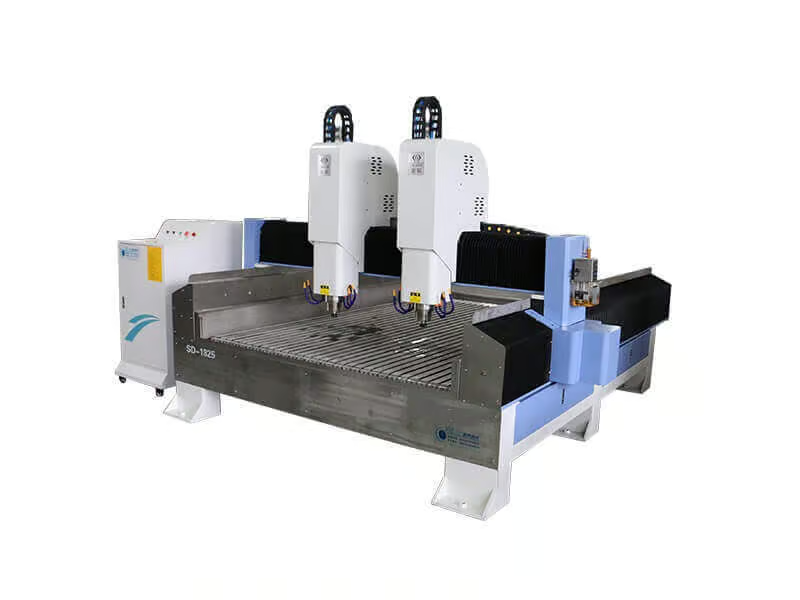 Stone Engraving Machines
 Thin Stone Veneer Saw Machine
 Horizontal Stone Slab Splitting Machine
 Stone Edge Polishing Profiling Machine
 Stone Auxiliary Equipment
MosCut Pushing Bags are engineered with ballistic-grade aramid fibers (Kevlar) capable of withstanding immense pneumatic and hydrostatic expansion forces. However, understanding the tribology of high-pressure flexible vessels is critical. According to safety inspection protocols for synthetic lifting and jacking equipment outlined by the Occupational Safety and Health Administration (OSHA), even the strongest synthetic fibers are highly susceptible to “Fiber Severing” when subjected to extreme surface pressure against sharp, abrasive materials. In a quarry, the crystalline silica left behind by a diamond wire saw acts like microscopic surgical scalpels. If a pushing bag inflates against this uncleaned grit, the crushing tonnage will physically force the sharp shards through the vulcanized rubber jacket, severing the Kevlar skeleton and causing premature, catastrophic equipment failure.
A major Black Galaxy Granite quarry in India recently experienced the financial sting of ignoring these physics. Operators were hurriedly shoving new pushing bags directly into freshly cut, mud-filled wire saw gaps without any cleaning. Because granite contains incredibly sharp quartz crystals, their expensive new cushions were suffering fatal punctures and blowouts after only 15 uses. Following an urgent intervention, MosCut service engineers retrained the extraction crew on the strict “Flush & Shield” Standard Operating Procedure. By simply washing the cuts and utilizing basic metal friction shields, the lifespan of their replacement bags skyrocketed to over 200 toppling cycles, completely eliminating their non-warranty attrition costs and maximizing their operational ROI.
The Physics of Punctures: The Silica Enemy
Kevlar can stop a bullet, but under 300 tons of static pressure, a sharp granite chip acts like a scalpel.To maximize the lifespan of your pushing bags, you must respect the environment they work in. When a diamond wire saw cuts through rock, it creates a thick slurry of water and stone dust. When the water drains away, what remains on the rock walls is a layer of highly abrasive, razor-sharp crystalline silica and jagged rock chips.
As the pushing bag inflates to 8 Bar, it presses aggressively against these rock walls. If those sharp chips are still present, the immense expansion force traps them against the bag’s surface. The pressure literally embeds the sharp silica deep into the vulcanized rubber coating. As the block begins to tip and shift, the bag slides slightly against the rock, causing those embedded chips to slice directly through the structural Kevlar fibers. The result is a loud, fatal blowout.
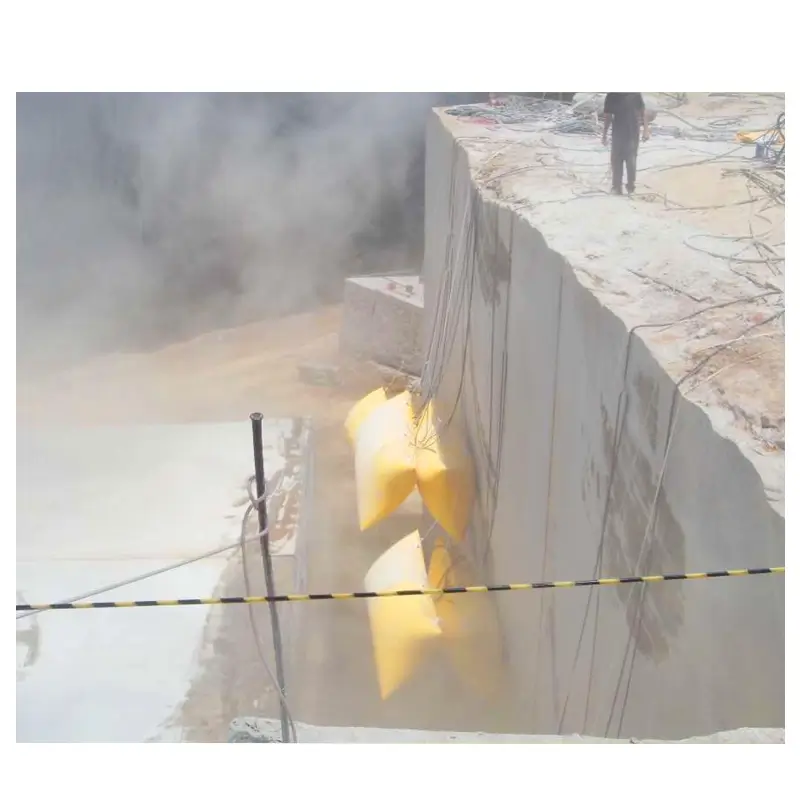
The Cut Prep SOP: Flush and Clear
Never insert a pushing bag into a dirty cut. Follow this strict 2-step protocol every single time.🚿 Step 1: High-Pressure Flush
Immediately after the wire saw finishes its cut, take a high-pressure water hose or an air compressor blow-gun with a long extension wand. Starting from the top, violently blast the entire inside of the narrow gap. Wash away all mud, abrasive slurry, and loose gravel down to the quarry floor. The internal rock faces should be completely clean and smooth to the touch.
👀 Step 2: Visual & Tactile Clear
Look down into the cut with a flashlight. Pay special attention to the bottom. Sometimes, fist-sized chunks of rock fall into the gap. If an inflating bag expands on top of a loose, hard rock chunk, it will create extreme localized point-loading that will punch a hole straight through the bag. Use a long steel rod to hook and clear any debris from the bottom.
The Shielding Technique: Armor for Extreme Stone
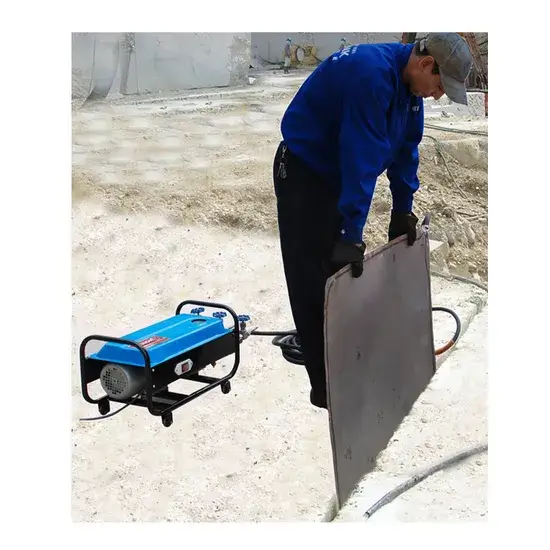
When quarrying highly abrasive rock like quartzite or granite, give your bags an extra layer of armor.Even with thorough washing, some geological materials (like deeply fractured granite or quartzite) inherently feature jagged, uneven cut faces. To completely neutralize the risk of punctures in these extreme environments, veteran quarry operators employ the “Physical Shielding” technique.
- Galvanized Steel Sheets: Obtain two thin (1mm to 2mm) sheets of galvanized steel or aluminum. Sandwich the deflated MosCut pushing bag between these two metal sheets and slide the entire assembly into the gap. As the bag inflates, it pushes against the smooth metal, while the metal takes 100% of the destructive friction from the jagged rock wall.
- Used Conveyor Belting: If the wire saw gap is slightly wider (15mm+), inserting strips of heavy-duty, discarded rubber conveyor belts on either side of the bag provides phenomenal puncture resistance and extends bag life indefinitely.
⚠️ Vulcanized Repair: What Can and Cannot Be Fixed
Knowing when to repair and when to discard a pushing bag is a matter of life and death on the quarry face. Can Be Repaired (Pinhole Leaks): If a bag sustains minor surface abrasion that wears through the outer rubber, causing a tiny pinhole air leak, it can be saved. As long as the yellow Kevlar fibers inside are intact, you can use heavy-duty vulcanized tire patches and heat-sealing rubber cement to restore airtightness. MUST Be Discarded (Severed Fibers): If you see a deep slash, and you can visibly see that the internal yellow Kevlar threads have been cut, frayed, or broken, the bag must be immediately destroyed. The structural integrity is gone. Re-inflating a structurally compromised bag will result in a catastrophic, explosive seam failure under pressure.
Storage and Longevity: Beating UV and Creases
Improper storage destroys more pushing bags than quarry rock ever will. Treat your equipment with respect.UV Degradation (Dry Rot): The outer jacket of a pushing bag is made of specialized vulcanized rubber. If you leave bags lying out on the open quarry bench for weeks under the harsh summer sun, intense Ultraviolet (UV) radiation will bake the rubber. It will lose its elasticity, turn grey, and develop thousands of microscopic “dry rot” cracks. Always store bags in a shaded shed or covered container when not actively pushing blocks.
Hard Creasing (Fatigue): Never fold a pushing bag tightly like a blanket and place heavy toolboxes on top of it. Creating a sharp, permanent fold in the thick rubber creates a severe stress point. Over time, the rubber at that crease will weaken and eventually split when pressurized. The correct storage protocol is to either lay the bags completely Flat on a shelf, or roll them Loosely into a wide cylinder.

Protect Your Extraction Investments
Protect your investments with the right prep protocols. Need to replace worn-out equipment or upgrade to a safer system? Browse MosCut’s ultra-durable, Kevlar-reinforced Air & Hydro Pushing Bags today.
View MosCut Pushing Bags