
 Stone Cutting Machines
 Stone Polishing Machines
 Bridge Saw Machines
 Stone Quarry Cutting Machines
 Stone Block Cutter Machine
 CNC Stone Wire Saw Machine
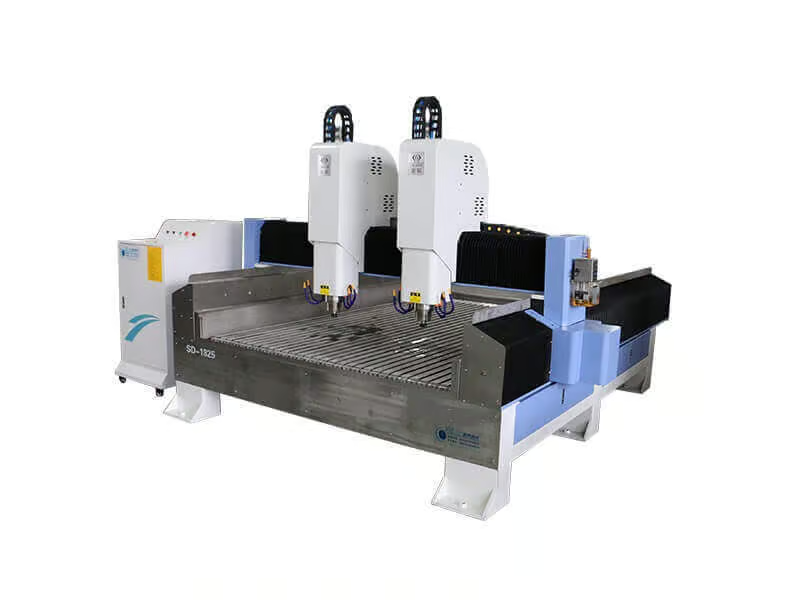 Stone Engraving Machines
 Thin Stone Veneer Saw Machine
 Horizontal Stone Slab Splitting Machine
 Stone Edge Polishing Profiling Machine
 Stone Auxiliary Equipment
In high-torque rock drilling, the threaded joints of your drill string endure a punishing combination of immense rotational shear and severe vertical percussion. According to industrial manufacturing standards published by the American Petroleum Institute (API) regarding rotary drill stem elements, failing to apply specialized extreme-pressure thread compounds leads directly to metallurgical ‘galling’. Galling occurs when massive torque forces raw steel against raw steel, destroying the microscopic surface boundary and causing the two pieces to literally cold-weld together. Once a threaded joint is galled in a deep borehole, removing the rod becomes impossible without applying catastrophic, destructive force.
A hard rock quarry in South Africa experienced the financial devastation of thread seizure firsthand. Attempting to reduce operational costs, their drilling crew substituted expensive thread compound with cheap automotive chassis grease. While drilling a 20-meter vertical hole, the intense friction heat at depth completely incinerated the cheap grease. The raw threads of the drill pipes fused together solidly. The operators were forced to use an oxy-acetylene torch to cut the drill string apart, destroying several pipes and a premium DTH hammer. By transitioning to MosCut’s friction-welded drill rods and enforcing a strict Standard Operating Procedure (SOP) utilizing only 30% copper-flake thread grease, the quarry eliminated thread lock completely, tripling the functional lifespan of their entire drill string inventory.
The Anatomy of a Joint: Friction Welding
The steel tube takes the impact, but the threaded joints take the torque. A drill rod is only as strong as its weakest weld.To understand how to protect a drill rod, you must understand how it is built. Cheap, low-quality drill pipes are often manufactured by simply machining threads directly onto the ends of a standard steel tube. Because the tube wall is thin, these threads lack depth and structural mass, making them highly susceptible to snapping under torque.
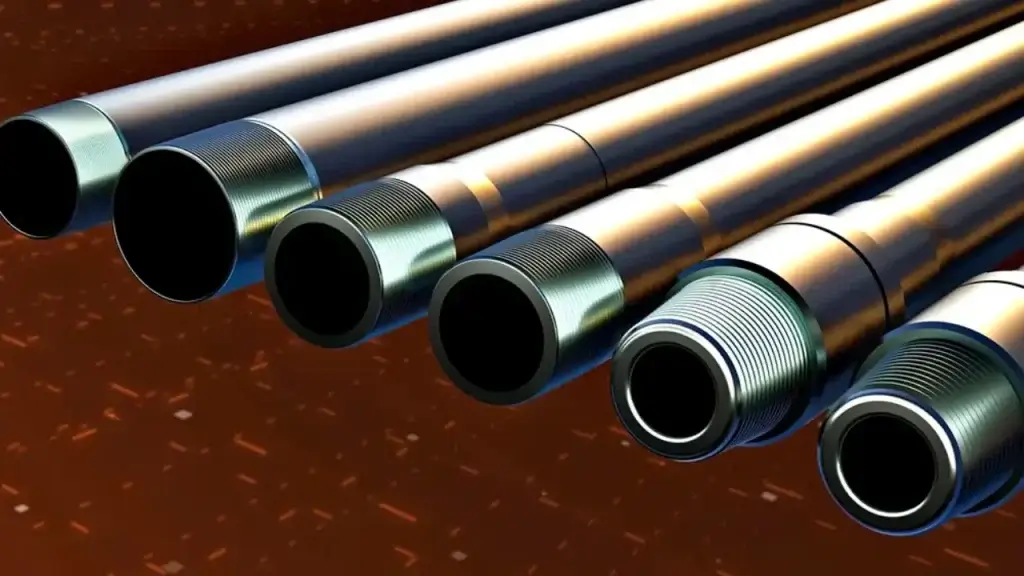
Premium MosCut DTH drill rods are manufactured using advanced Friction Welding. The main body is a thick-walled seamless steel tube, but the threaded ends (the Tool Joints) are forged from specialized, high-density alloy steel. A massive lathe spins the tool joint against the seamless tube under immense pressure until the friction generates enough heat to melt and fuse the two metals together seamlessly. This process guarantees that the threaded pin (male) and box (female) possess the absolute maximum tensile strength possible.

The Enemy: What is Thread Galling?
When steel grinds against steel under extreme pressure, it tries to become one piece of metal again.When a DTH rig applies several thousand Newtons of rotational torque to the drill string, the threaded flanks push against each other with crushing force. Galling (or Heat Seizure) is a form of severe adhesive wear.
If there is no protective lubricating barrier, the microscopic peaks on the steel surface of the pin and the box grind together. The intense friction generates localized flashes of extreme heat, causing these peaks to instantly micro-weld themselves together. When the operator reverses the rig’s rotation to unscrew the pipe, these welded peaks are violently torn apart. This leaves deep gouges, tears, and missing chunks of metal on the thread flanks. Once a thread is severely galled, it will cross-thread and jam permanently the next time it is used.

The Solution: Extreme-Pressure Thread Grease
Standard chassis grease burns away at 150°C. Only metallic thread compounds survive the deep hole.The single greatest operational error a drilling crew can make is lubricating drill rod threads with standard mechanical grease, engine oil, or hydraulic fluid. Deep inside a 20-meter borehole, the combination of percussive friction and rock abrasion creates ambient temperatures that instantly vaporize standard petroleum-based lubricants.
To prevent galling, operators must exclusively use Copper-based or Zinc-based Thread Compounds (commonly called ‘Thread Dope’). These specialized pastes contain thousands of microscopic metallic flakes suspended in grease. Even when the heat incinerates the grease carrier, the pure copper or zinc flakes remain trapped between the thread flanks. These flakes act like millions of microscopic ball bearings, keeping the steel surfaces physically separated and allowing the joint to unscrew smoothly, even after weeks of punishing drilling.
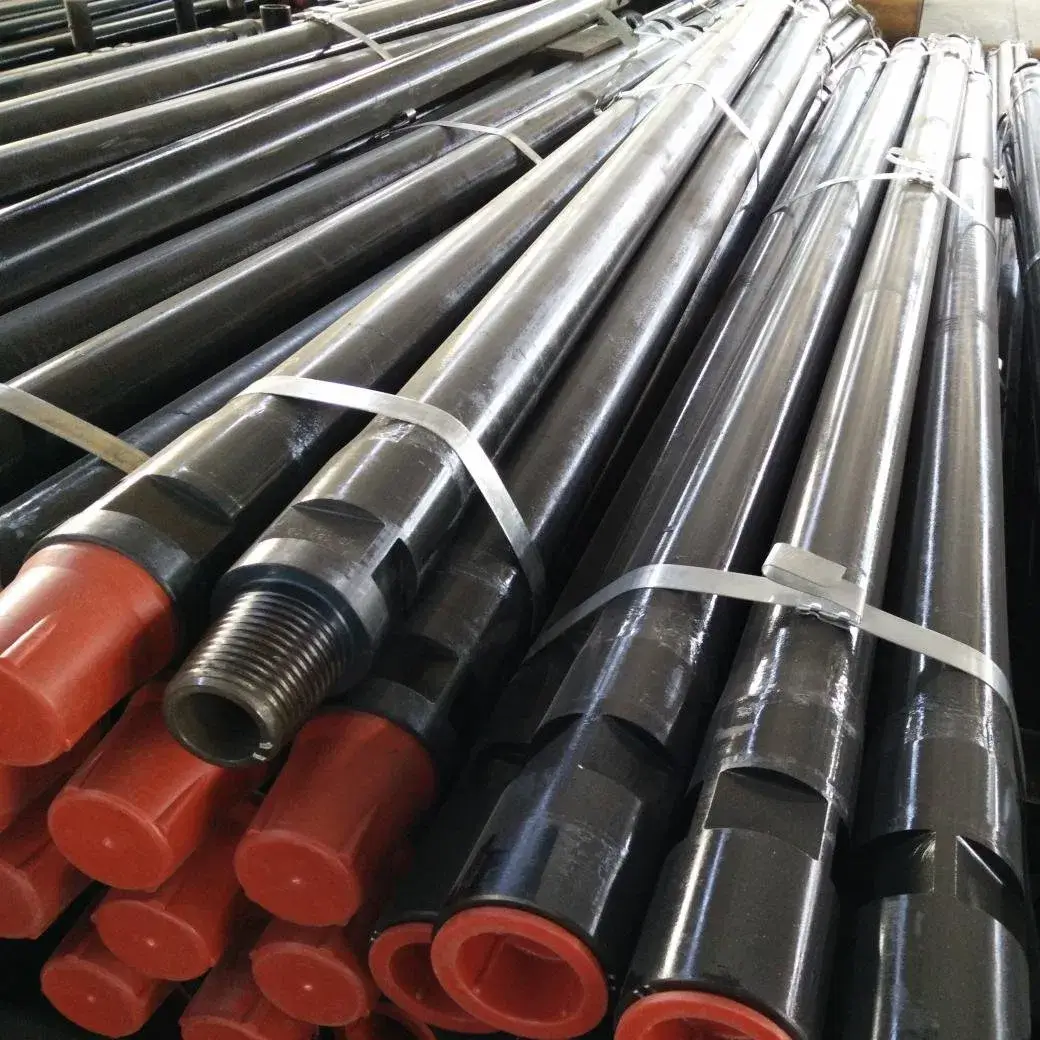
Proper Make-Up Torque: Shouldering the Joint
Loose threads destroy the joint from the inside out. Proper tightening is non-negotiable.📏 The ‘Shoulder-to-Shoulder’ Rule
API threads are tapered, but they rely on the flat end-faces (the shoulders) to transfer percussive energy. When connecting two rods, the male pin must be screwed into the female box until both shoulders make absolute, rigid contact. If a gap remains, the violent percussive shockwave from the hammer will bypass the thick shoulder and travel directly through the thin thread flanks, instantly snapping the pin off inside the box.
⚙️ Controlled Make-Up (Low RPM)
Never allow an operator to connect drill rods by spinning the rig motor at maximum RPM and slamming the threads together. High-speed make-up drastically increases the chance of cross-threading and generates instant friction heat before the thread compound can distribute evenly. Rods must always be threaded together at a very low, controlled rotational speed until the shoulders firmly kiss.
Inspection and Storage Protocols
Thread care doesn’t stop when the drilling stops. Dirt is liquid sandpaper to an API thread.Applying fresh copper grease over old, dirty grease is worse than applying no grease at all. The old grease is heavily contaminated with abrasive rock silica and microscopic steel shavings. If you do not clean it off, you are essentially lubricating your joints with grinding paste.
The Maintenance SOP: Before connecting, operators must use a stiff wire brush to aggressively scrub the pin and box threads clean. Inspect the crests (the peaks) of the threads. If the crests have become razor-sharp rather than flat, the thread is severely worn and the rod must be retired; otherwise, it will damage the female threads on your DTH hammer. Finally, whenever rods are disconnected and stored, always screw on high-impact plastic Thread Protectors to prevent the threads from being crushed against the rocky quarry floor.
Secure Your Drilling Investment
Stop breaking pipes and losing hammers in the hole. Upgrade to MosCut’s ultra-durable friction-welded API drill rods and experience unbreakable operational reliability.
View MosCut Drill Rigs & Rods