
 Stone Cutting Machines
 Stone Polishing Machines
 Bridge Saw Machines
 Stone Quarry Cutting Machines
 Stone Block Cutter Machine
 CNC Stone Wire Saw Machine
 Stone Engraving Machines
 Thin Stone Veneer Saw Machine
 Horizontal Stone Slab Splitting Machine
 Stone Edging Beveling Machine
 Stone Auxiliary Equipment
Quarry DTH Drilling Machine For Marble Granite
In hard rock extraction, drilling deviation is the silent killer of productivity. According to drilling trajectory standards set by the International Association of Drilling Contractors (IADC), a deviation of just 1 degree can lead to a 35cm error at a depth of 20 meters, making wire saw hole intersections impossible. MosCut DTH Driller Machines are engineered to eliminate this mechanical vibration, utilizing a heavy-duty reinforced chassis to provide a stable platform for high-torque pneumatic percussion.
A premier granite mining operation in Saudi Arabia previously struggled with a 30% failure rate in L-shaped intersecting holes using lightweight rigs. After switching to the MosCut MCYGD100, they achieved 100% intersection accuracy on the first attempt across 15-meter deep benches, reducing their diamond wire threading preparation time by 70%.
Solving Critical Quarry Drilling Pain Points
We engineered the MosCut DTH Driller directly from quarry floor feedback to eliminate your most expensive operational bottlenecks and maximize extraction ROI.Zero-Deviation Intersections
Pain Point: Missing wire saw hole intersections due to mast vibration.
Solution: The heavy-duty rack-and-pinion feed completely eliminates trajectory drift. Plumb vertical and horizontal boreholes intersect perfectly on the first attempt, reducing diamond wire threading preparation time by up to 70%.
Eradicating Stuck Drill Rods
Pain Point: Burying expensive DTH hammers and pipes under collapsed rock dust.
Solution: Optimized for high-CFM pneumatic flushing, our rigs generate massive up-hole air velocity. This instantly clears abrasive cuttings and prevents mud rings, virtually eliminating the catastrophic loss of drill strings deep underground.
High-Speed Hard Rock Penetration
Pain Point: Slow drilling progress in high-quartz granite formations.
Solution: Equipped with an oversized, high-torque pneumatic rotation motor, the drill bit never stalls in hard quartz veins. This constant rotational momentum boosts pure penetration speed in abrasive granite by up to 40% compared to standard light rigs.
Lowering Operational Overhead
Pain Point: Fragile chain drives snapping and inefficient air consumption wasting diesel.
Solution: By replacing vulnerable chains with solid steel gears and utilizing efficient air-distribution manifolds, MosCut rigs drastically lower your compressor’s fuel consumption and cut mechanical maintenance downtime by over 15%.
Engineered for the Quarry: Multidimensional Design Driller
From steep granite benches to tight bedrock corners, the MosCut DTH drilling machine is designed with the operational flexibility to conquer any extraction environment.
100% Pneumatic Power: Utilizing compressed air for both percussion and rotation eliminates electrical hazards in wet, abrasive quarry environments.
Pure Pneumatic System: Safe and Relentless
Quarry floors are harsh environments flooded with cooling water and highly conductive metallic dust. The MosCut standard DTH series utilizes a 100% pure pneumatic design. By using compressed air to power both the high-torque rotation motor and the percussive hammer, we eliminate the need for vulnerable high-voltage electrical cables at the rock face.
This design allows you to plug the rig directly into your existing quarry diesel air compressors. It guarantees uncompromised safety during wet weather operations and drastically simplifies mechanical maintenance, as pneumatic motors are inherently resistant to stalling and overloading.

Ultra-Portable: The modular chassis can be quickly disassembled, allowing a small crew to manually carry the rig into steep, inaccessible quarry zones.
Man-Portable Modular Chassis
Valuable stone deposits are rarely flat. Getting heavy crawler rigs to the top of a steep, uneven mountain bench is often impossible without building expensive access roads. The MosCut DTH driller solves this with its ultra-portable, modular construction.
The entire machine can be rapidly disassembled into manageable, lightweight components (chassis base, mast, and motor) using standard hand tools. This allows a crew of just two or three workers to manually carry the drill rig up steep steps, over deep crevices, and into the most isolated corners of your quarry, setting up production where heavy machinery simply cannot reach.
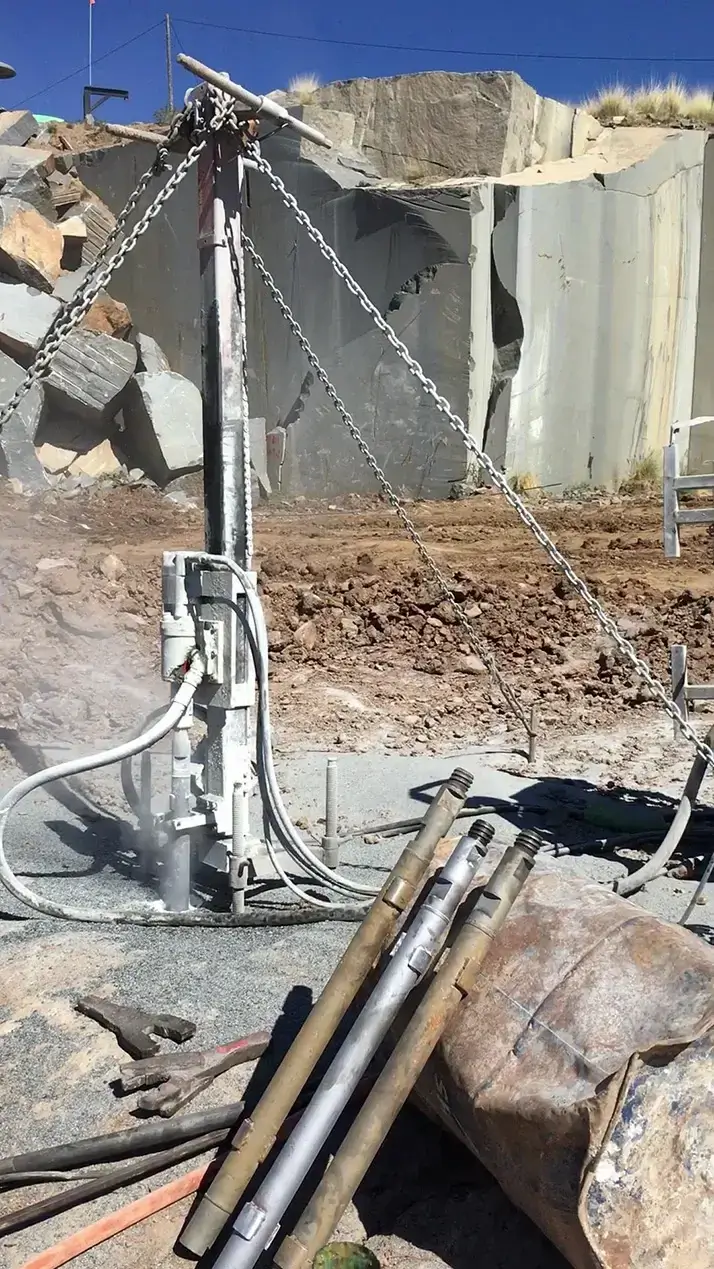
Vertical Dominance: The heavy-duty mast anchors firmly to the ground, providing a rigid guide for deep, zero-deviation vertical pilot holes.
Precision Vertical Deep Drilling
The primary vertical pilot hole is the foundation of wire saw extraction. When positioned upright, the MosCut mast provides a heavy, unyielding track. Bolted securely to the rock surface via heavy-duty anchor jacks, the rig guarantees absolute verticality.
The rack-and-pinion feed ensures the drill string drops straight down under controlled tension. Whether you are drilling 15 meters or pushing to depths of 30 meters, the vertical configuration ensures the hole remains perfectly plumb, setting up the exact trajectory needed for the horizontal intersecting hole.

Low-Clearance Undercutting: The fully articulated base allows the mast to drop parallel to the quarry floor, easily drilling horizontal base holes.
Low-Clearance Horizontal Drilling
Intersecting the vertical hole requires drilling horizontally at the absolute bottom of the stone block (the bedrock floor). The MosCut rig features a fully articulated base joint. By loosening the locking bolts, the entire drilling mast can be rotated 90 degrees and lowered to sit parallel with the ground.
This low-clearance horizontal capability allows operators to drill the critical ‘undercut’ holes just inches above the quarry floor. The stable horizontal footing prevents the drill bit from wandering downwards, ensuring a bullseye intersection with the vertical shaft deep inside the mountain.
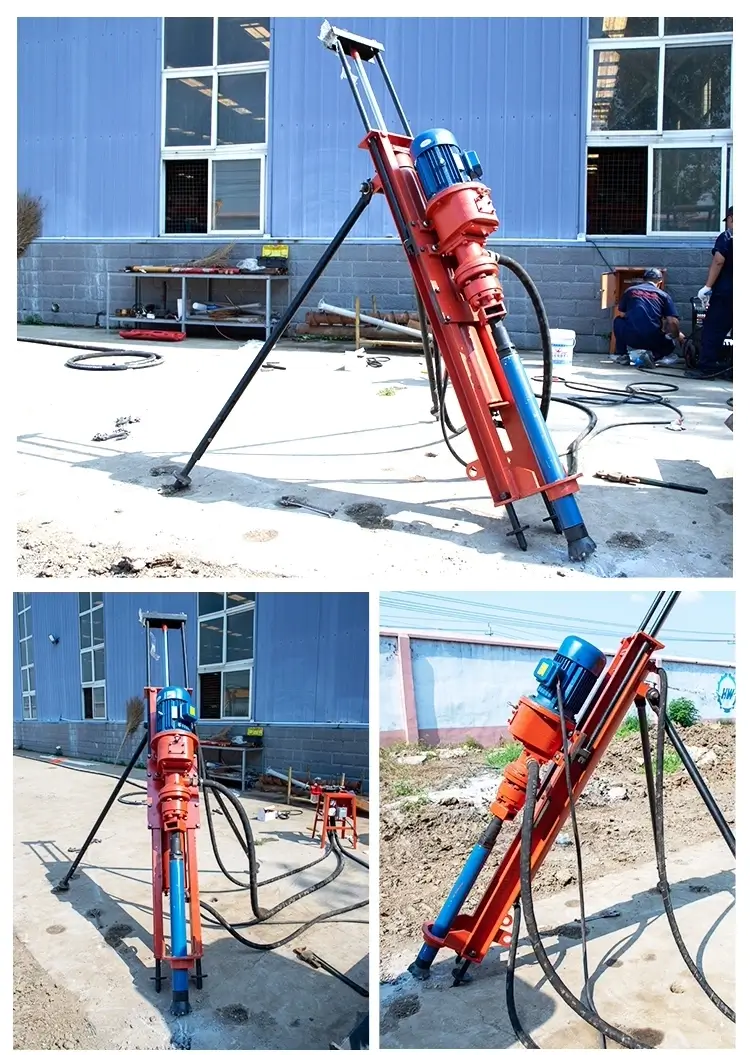
Operator Safety First: The detached control panel keeps the operator out of the high-decibel noise zone and away from abrasive airborne rock dust.
Independent Control Console (Safety Focused)
Standing directly next to a running DTH hammer exposes workers to severe acoustic trauma, intense vibration, and dense clouds of airborne silica dust. We prioritize operator health and safety by utilizing an Independent Pneumatic Control Console.
Connected via durable, extended air hoses, the control panel can be positioned several meters away from the actual drill rig. This allows a single operator to safely manage feed pressure, rotation speed, and air flushing volume while standing in a clean, safe, and quiet zone, maintaining a clear line of sight to the drilling operation without being subjected to the harsh physical environment.
The Intersection Challenge: Why Rigidity is Everything
Precision is not an option; it is a requirement. If your pilot holes miss by even a few inches, your entire extraction schedule halts.Successful wire saw extraction relies on the perfect intersection of a vertical and horizontal borehole at depth. Our rigs utilize a Heavy-Duty Rack and Pinion Feed System instead of cheap chains, ensuring consistent downward pressure without mast flex. The deviation math is absolute: $D = L times tan(theta)$. By reducing mast vibration ($theta$), we guarantee that $D$ (deviation) remains near zero, even at maximum drilling depths of 30 meters.
Technical Specifications
Three specialized models designed to cover every quarry requirement, from lightweight mobility to high-torque deep drilling.| Item / Model | MCYGD70 | MCYGD100 | MCYGQ100 |
|---|---|---|---|
| Drilling Diameter (mm) | 90 – 120 | 90 – 130 | 90 – 130 |
| Drilling Depth (m) | 15 | ≥ 25 | ≥ 25 |
| Drilling Rotate Speed (r/min) | 110 | 110 | 110 |
| Working Air Pressure (Mpa) | 0.5 – 0.7 | 0.5 – 1.0 | 0.5 – 1.0 |
| Air Consumption (m³/min) | 4 | 6 | 12 |
| Propulsion Stroke (mm) | 1070 | 1070 | 1070 |
| Max Propelled Force (N) | 3600 | 9600 | 9600 |
| Electric Motor Power (KW) | 3 | 4 | 4 |
| Weight (kg) | 280 | 470 | 450 |
Wide Application Scenarios: Mastering Every Geology For Stone Quarry
One rig, total versatility. The MosCut DTH system is engineered to adapt its percussive and rotational parameters to the world’s most valuable, yet challenging, dimensional stone deposits.
Preserving commercial value: Smooth feed control ensures pilot holes are drilled perfectly straight without inducing micro-fractures in the delicate premium marble crystal structure.
Premium Marble Quarries: Preserving Integrity
Extracting high-grade ornamental marble requires a delicate balance of power and precision. While marble is softer than granite, its crystalline structure is highly susceptible to micro-fracturing if subjected to violent, uncontrolled mechanical vibrations.
The MosCut DTH Driller utilizes its heavy-duty rack-and-pinion feed system to maintain a completely uniform downward pressure. This eliminates the ‘bouncing’ and mast-shaking typical of lighter chain-driven rigs. The result is a surgically precise, clean entry hole that protects the surrounding commercial stone and guarantees a flawless intersection for wire saw threading.

Conquering extreme hardness: High-torque pneumatic rotation motors prevent the bit from jamming when encountering dense quartz veins inside solid granite formations.
Granite Extraction: Conquering High Quartz
Granite is the ultimate test of a quarry machine. Its extreme hardness and high quartz content act to rapidly blunt drill bits and violently twist the drill string. Navigating natural faults and dense geological bands requires unrelenting rotational force.
By upgrading to the MCYGQ100 model, operators leverage an oversized, high-torque pneumatic rotation motor. This ensures that even when the tungsten carbide bit encounters an exceptionally hard quartz vein, the rotation speed remains constant, preventing the hammer from stalling or jamming. The heavy chassis mass absorbs the brutal percussive kickback, ensuring the hole remains perfectly plumb deep into the bedrock.

Defeating abrasive sludge: Exceptional up-hole air velocity guarantees that fine limestone powder is instantly evacuated, completely preventing the formation of fatal mud rings.
Limestone Pits: Defeating Abrasive Sludge
Sedimentary rocks like limestone cut fast, but they present a unique hidden danger: massive volumes of fine, highly abrasive dust. When this massive volume of powder mixes with natural ground moisture or morning dew, it transforms into a sticky, cement-like sludge.
This sludge forms ‘mud rings’ around the drill pipe, sealing off the airflow and burying the DTH hammer. MosCut rigs are optimized to handle massive air consumption requirements (up to 12 m³/min). This High-Volume Air Flushing capability creates a violent up-hole velocity, instantly blasting the heavy limestone powder out of the 20-meter deep hole before it ever has the chance to settle and pack around your expensive consumables.

Managing geological voids: The rigid gear-driven feed mechanism provides absolute hold-back tension, preventing the heavy drill string from plunging into hidden natural air pockets.
Travertine Formations: Managing Voids
Travertine is geologically characterized by its highly porous structure, often containing hidden natural voids, caves, and air pockets. When a standard gravity-fed or loose-chain drill rig breaks through solid rock into a hidden void, the entire heavy drill string suddenly ‘plunges’ downward in freefall.
This violent drop causes the DTH hammer to ‘blank fire’ without resistance, which can instantly shatter the internal piston and destroy the pneumatic valves. The MosCut gear-driven feed mechanism provides absolute hold-back tension. It physically locks the drill string’s descent rate, ensuring that when a void is struck, the hammer descends smoothly and safely, protecting your internal pneumatic components from catastrophic damage.
Pneumatic DTH Driller: Good Helper For Quarry Wire Saw Machines
Your intersecting pilot holes are perfectly plumb. Now, execute the primary cut with relentless pulling power and intelligent tension control.
The ultimate extraction synergy: Once the DTH driller pioneers the path, the MosCut Wire Saw takes over, slicing through massive mountain faces with high-torque vector control.
Complete Your Extraction Ecosystem
The DTH drilling machine and the Diamond Wire Saw exist in a critical symbiotic relationship. While the driller prepares the precise path, the wire saw machine delivers the massive, sustained kinetic energy required to pull diamond wire through solid bedrock.
Engineered with advanced Dual-Inverter VFD technology, MosCut Quarry Wire Saws automatically adapt their backward track-feed speed to the exact tension of the cutting wire. This intelligent PLC system guarantees that your expensive diamond wire never snaps under sudden stress when hitting hard quartz veins.
From compact 37KW models for block squaring to massive 75KW machines designed for primary mountain face separation, equip your quarry with the ultimate cutting partner.
Explore MosCut Wire Saw MachinesHigh-Performance Consumables: The Edge of Extraction
The drilling rig provides the raw pneumatic power, but the consumables take the brutal physical punishment. We forge our bits and pipes for maximum operational lifespan.
Engineered for impact: Premium tungsten carbide spherical buttons press-fitted into a high-alloy steel matrix, designed to crush hard rock without shattering.
Lifespan: 300m – 1000m+
Tungsten Carbide DTH Drilling Bits
The DTH bit is the tip of the spear. MosCut bits are constructed from military-grade high-alloy steel bodies, engineered to withstand millions of high-frequency percussive shockwaves without metal fatigue. The cutting face is armed with premium Tungsten Carbide (TC) spherical and ballistic buttons.
Unlike cheap bits that lose their buttons or shatter upon hitting quartz veins, our proprietary press-fit manufacturing ensures the carbide stays locked in the matrix. In extremely abrasive, high-quartz granite, operators can expect a reliable drilling lifespan of 300 to 500 meters before requiring a button re-grind. In softer, uniform ornamental marble, a single bit can easily exceed 1,000 meters of cumulative penetration, drastically lowering your cost-per-meter.

Unbreakable torque: Friction-welded joints and thickened seamless steel tube walls guarantee the drill string will not snap under extreme torsional stress deep underground.
Lifespan: Cumulative Kilometers
Friction-Welded Seamless Drill Pipes
When you are 30 meters deep into a solid bedrock bench, a snapped drill rod is a catastrophic financial loss. MosCut DTH drill rods are manufactured from thick-walled seamless steel tubes, prioritizing extreme rigidity to prevent bending and hole deviation.
To eliminate the weak point typical in standard pipes, our threaded end-joints are attached to the main tube using an advanced Friction Welding process, creating a metallurgical bond that is stronger than the parent steel. Equipped with high-precision API threads, these rods are built to endure intense rotational torque and severe side-clearance scraping against abrasive rock walls. When maintained with proper copper-based thread grease and consistent air flushing, these rods will deliver thousands of meters of reliable service.
Drilling Efficiency by Stone Type
Penetration speed directly dictates your square-meter production capacity. See how we perform across different geology.| Stone Type | Rock Hardness (Protodyakonov) | Average Penetration Rate |
|---|---|---|
| Ornamental Marble | f = 6 – 10 | 10 – 15 Meters / Hour |
| Limestone (Hard) | f = 8 – 12 | 8 – 12 Meters / Hour |
| Granite (Grey/Red) | f = 12 – 18 | 6 – 9 Meters / Hour |
| Travertine / Tuff | f = 3 – 6 | 12 – 18 Meters / Hour |
Machine in Action: Working Video
Watch the MCYGD100 effortlessly penetrate solid rock with absolute stability and high-velocity rock dust evacuation.Global Customer Success Stories
Proven on the world’s toughest quarry floors, from the deserts of Arabia to the mountains of Brazil.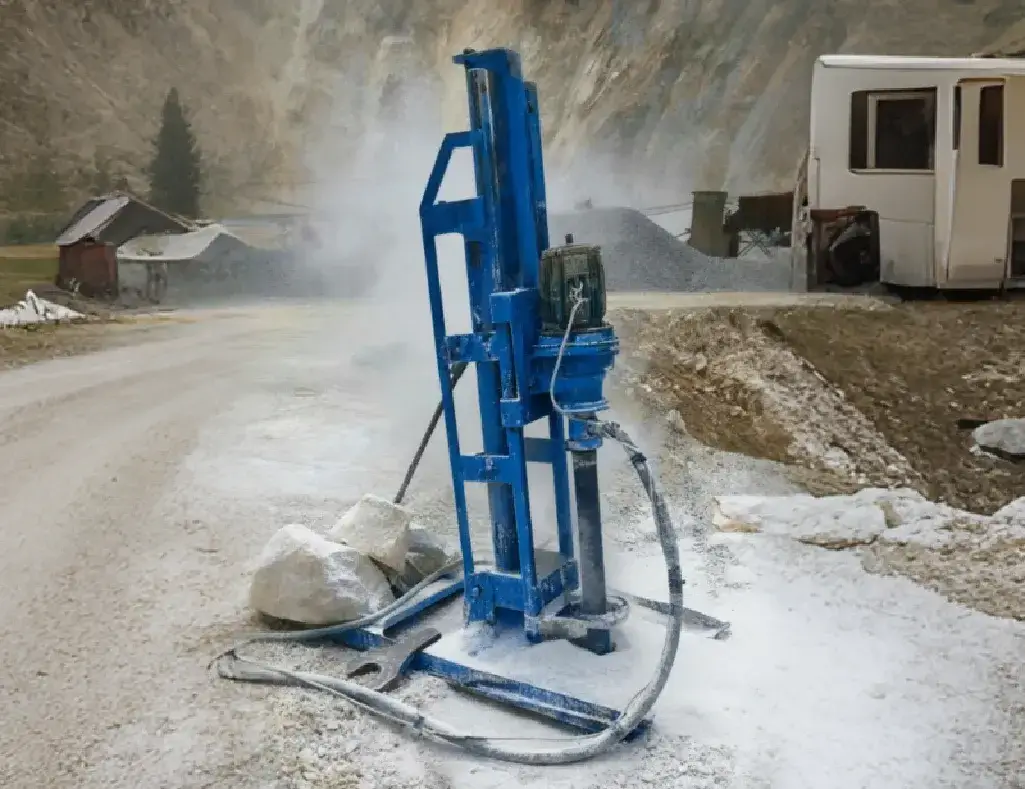
Brazil: 100% Intersection Record
By utilizing our heavy-mast system, this granite quarry achieved a flawless intersection record for six consecutive months without a single missed hole.

India: Doubling Penetration Speed
Transitioning from manual drilling to the MCYGD100 increased their daily hole-meters by 115% while reducing pneumatic air consumption costs.

Italy: Precision Marble Tapering
In high-grade Carrara marble, our rigs provided the surgical precision needed to drill intersecting channels without damaging the surrounding block integrity.

Egypt: Heat Resistant Performance
Operating in 45°C ambient temperatures, our IP65-rated electrical motors and heavy duty seals performed flawlessly during 24/7 limestone extraction.
Related Insights & Maintenance Guides
Master your quarrying tools with our in-depth engineering and maintenance guides.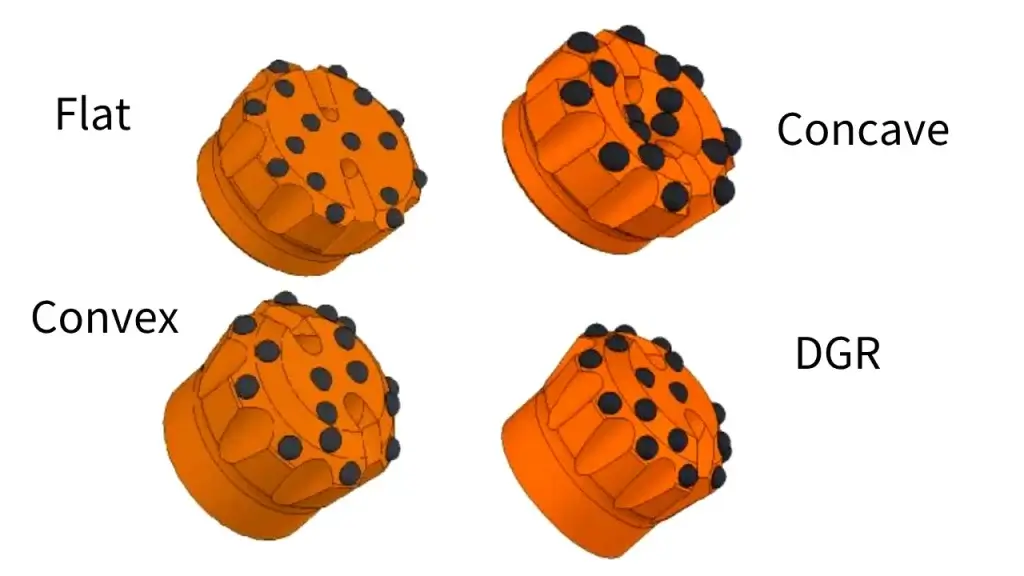
DTH Drilling Bit Face Stype Design
Stop using the wrong rock bit for your quarry. Learn how to choose between concave, convex, and flat DTH drill bit face designs to maximize your penetration rate..
Read More
The Science of RPM in Quarry Drilling
Balancing rotational speed with downward feed pressure is the only way to maximize the life of your carbide drill buttons.
Read More
Air Compressor Pairing Guide
Understand the critical difference between PSI and CFM to properly power your DTH hammer for deep hole extraction.
Read More
Thread Maintenance for Drill Rods
Why using copper-based thread grease is mandatory for preventing heat-seizure in high-vibration drilling environments.
Read MoreEliminate Borehole Deviation Today
Guarantee perfect wire saw intersections and eliminate costly quarry downtime. Request a technical quote for the MosCut DTH Drilling Machine series.
Get a Quote & SpecsFrequently Asked Questions
1. Can the MCYGD100 drill horizontal holes at the base of the quarry?
Yes. The mast system features an articulated base that can be tilted 90 degrees to drill horizontal holes for wire saw threading at the bedrock floor level.
2. Does this rig require a water supply for drilling?
No. DTH (Down-The-Hole) drilling is a pure pneumatic process. Using water can create mud rings and cause the drill rods to get stuck. Air volume is used to flush rock dust.
3. What size of air compressor is required for the MCYGQ100?
We recommend a diesel air compressor delivering at least 12m³/min at 1.0 MPa (10 Bar) to ensure sufficient uphole velocity for deep rock cuttings.
4. How often should I sharpen the carbide buttons on the drill bit?
In abrasive stone like granite, bits should be checked every 50-100 meters. Sharpening as soon as the buttons show flat spots prevents excessive vibration and energy loss.
5. What is the maximum drilling depth of the heavy MCYGD100 model?
While rated for 25-30 meters in standard conditions, with optimal air pressure and skilled operation, depths of up to 40 meters can be achieved in uniform stone.
6. Are the drill rod threads compatible with other brands?
Our standard rigs use international standard API or high-precision industrial threads. We can customize thread profiles to match your existing rod inventory upon request.
7. Can one operator manage the entire drilling process?
Yes. The machine includes an independent control console, allowing a single operator to manage rotation, feed, and air valves from a safe distance.
8. How do I prevent the drill rig from moving during high-impact drilling?
The rig includes heavy-duty floor bolts and stabilizer jacks to anchor the chassis firmly into the quarry floor before starting the hammer.
9. What maintenance is required for the pneumatic motor?
An inline lubricator must be filled with rock drill oil to continuously lubricate the internal vanes of the rotation motor and the piston of the hammer.
10. Do you provide onsite training for new quarry crews?
Yes. MosCut offers technical supervision and operator training packages to ensure your team masters zero-deviation drilling and consumable maintenance.