
 Stone Cutting Machines
 Stone Polishing Machines
 Bridge Saw Machines
 Stone Quarry Cutting Machines
 Stone Block Cutter Machine
 CNC Stone Wire Saw Machine
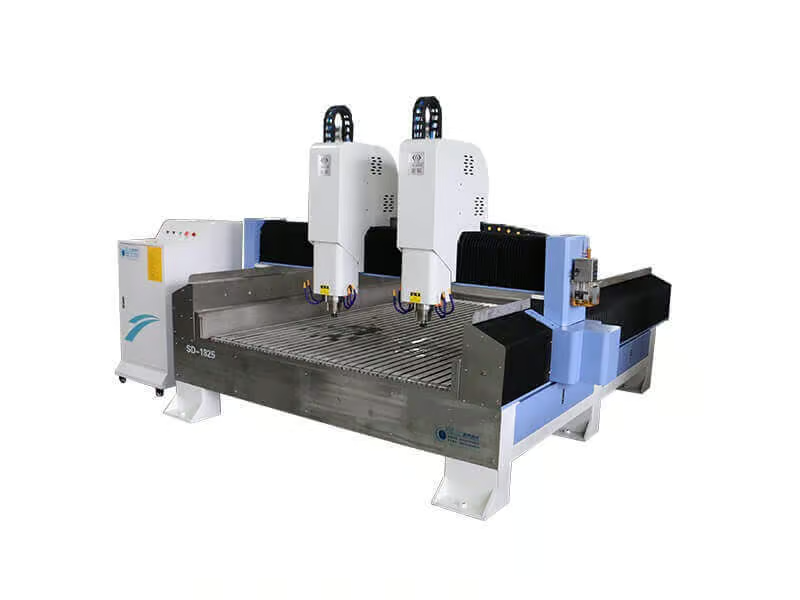 Stone Engraving Machines
 Thin Stone Veneer Saw Machine
 Horizontal Stone Slab Splitting Machine
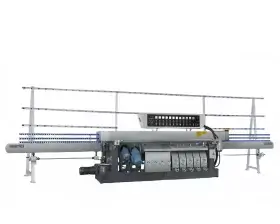 Stone Edge Polishing Profiling Machine
 Stone Auxiliary Equipment
In powder metallurgy and abrasive cutting engineering, the overall lifecycle and execution speed of a diamond saw blade are completely governed by the erosion rate of its metal matrix bond. According to scientific data on diamond containment and self-sharpening mechanics catalogued by the Metal Powder Industries Federation (MPIF), industrial diamonds do not cut rock independently; they act as microscopic teeth anchored by a sacrificial metal alloy binder. If the wear rate of this binder does not precisely match the hardness and abrasiveness of the target stone, the tool will trigger a catastrophic failure. It will either lose its diamonds prematurely or stop cutting altogether, spinning uselessly while burning through fuel and destroying the steel core.
A high-volume red granite operation in Texas, USA, recently fell victim to this exact procurement misunderstanding. To extend the lifespan of their 3000mm double-blade mining machine consumables, the manager specifically requested their supplier provide segments formulated with the “hardest possible metal matrix.” Within two hours of mounting the new blades, the machine emitted a deafening squeal, and the down-feed plunged to a dead stop. The blade was sliding flat over the granite, generating intense friction heat that warped the steel core. MosCut metallurgical engineers were called to analyze the failure. We educated the procurement team on the fundamental law of “hard rock, soft bond” and replaced the discs with our premium, high-cobalt soft-bond formula. The blades immediately bit into the rock with relentless cutting speed, perfectly balancing tool longevity with extreme field productivity.
The Grand Illusion: Why Intuition Fails in the Quarry
“I am cutting the hardest granite in the world. Give me your hardest diamond segment.” — The most expensive mistake in quarrying.It seems completely logical to a novice: if you are attacking an incredibly hard material like Class 4 granite, your cutting tool needs to be as hard and tough as possible to avoid wearing down. In standard machining, this rule applies. In diamond tool engineering, it is a recipe for disaster.
When you use a very hard metal bond (rich in tungsten carbide or iron) to cut hard granite, the exposed industrial diamonds quickly blunt and fracture against the dense rock. Because the rock is not highly abrasive, it fails to scratch or wear away the hard metal bond surrounding the blunt diamonds.
The blunt diamonds cannot fall out, and fresh diamonds cannot emerge. Within minutes, your diamond segment is reduced to a smooth, polished piece of shiny metal rubbing flat against solid stone. This is known as Glazing. Friction heat spikes past 800°C, the machine overloads, and the blade segments drop off or the core warps beyond repair.

The Engine of Cutting: The Self-Sharpening Mechanism
A diamond segment is not a static, solid blade; it is an active, sacrificial cutting system.A MosCut diamond segment is a carefully calculated mixture of synthetic diamond crystals distributed uniformly throughout a sintered metal powder matrix (cobalt, iron, copper, bronze, and tungsten). The entire cutting operation relies on a continuous, controlled degradation cycle:
The Golden Rule of Sintering: The core purpose of the metal bond is not to protect the diamonds from wearing down indefinitely. Its purpose is to erode at the exact same volumetric speed that the diamonds become blunt.
Soft Bond: The Hard Rock Specialist
Hard, dense rock dulls diamonds rapidly. You need a bond that strips away easily to expose fresh teeth.Target Geological Formations: Granite, Quartzite, Basalt, and heavily reinforced concrete.
Rock Characteristics: Extremely high Mohs hardness and high compressive strength, but low chemical abrasiveness. The stone slurry generated during cutting is like fine flour—it does not deeply scratch metal.
The Metallurgical Formula: Soft bonds are composed predominantly of Cobalt and Bronze powders. Cobalt provides excellent adhesion to the diamonds, but it wears away under moderate friction. Because the fine granite slurry does not scrape the metal heavily, we must make the bond intentionally soft so that it wears down via simple friction, ensuring the blade never glazes over and maintains an aggressive, continuous bite through tough rock walls.

Hard Bond: The Abrasive Stone Armor
Soft stone cuts easily, but its gritty slurry acts like liquid sandpaper. Your bond must fight back.Target Geological Formations: Sandstone, Laterite, porous Limestone, and green concrete.
Rock Characteristics: Relatively low Mohs hardness and low compressive strength, meaning the diamonds slice through it effortlessly. However, it contains massive amounts of loose, unbonded silica quartz grains. When mixed with water, this slurry forms a highly destructive, abrasive paste that flows over the segment.
The Metallurgical Formula: Hard bonds are heavily reinforced with Tungsten Carbide and Iron alloys. If you made the mistake of using a soft granite bond here, the liquid sandpaper slurry would instantly wash away the metal matrix. It would uncover perfectly sharp diamonds and strip them out of the segment before they ever had a chance to cut rock. The segment would disappear in days. A hard bond acts as armor, resisting the abrasive sand paste and forcing the diamonds to work until they are truly spent.

Field Diagnostics: Glazing vs. Stripping
Read the micro-texture of your segments to optimize your machine settings and correct your procurement formula.🔍 Condition A: Glazing
Visual Signs: The segment looks smooth, shiny, and metallic. Running your bare finger over the surface feels like touching glass; you cannot feel any protruding diamond grit.
The Diagnostic Cause: Your bond is too hard for the rock, or your machine’s linear wire/blade speed (RPM) is set too high, causing the diamonds to skip and rub instead of chip.
Field Emergency Fix: Lower your machine’s RPM to force more down-pressure per diamond crystal. To restore the edge immediately, take a highly abrasive firebrick or asphalt block and run the blade through it a few times. This will strip away the smooth metal layer and force the diamonds to emerge (dressing the blade).
🔍 Condition B: Premature Stripping
Visual Signs: The segment looks like a lunar landscape, covered in deep microscopic craters or “comet tails” behind empty sockets where diamonds used to be. The segments are wearing down at an alarming rate.
The Diagnostic Cause: Your bond is far too soft for the abrasive stone slurry. The metal binder is disintegrating under the sand-blasting action of the quartz particles, dropping perfectly sharp diamonds.
Field Emergency Fix: Drastically increase your cooling water pressure and volume to violently flush the abrasive grit out of the cutting slot before it can wash over the blade sides. For your next order, request an ultra-hard tungsten carbide matrix formulation.
Formulate for Your Specific Quarry
Stop guessing and wasting your valuable consumable budget on generalized tools. Let MosCut’s expert metallurgical engineers formulate the perfect custom diamond bond tailored specifically to your quarry’s unique geological strata.
Consult a MosCut Metallurgist