
 Stone Cutting Machines
 Stone Polishing Machines
 Bridge Saw Machines
 CNC Stone Wire Saw Machine
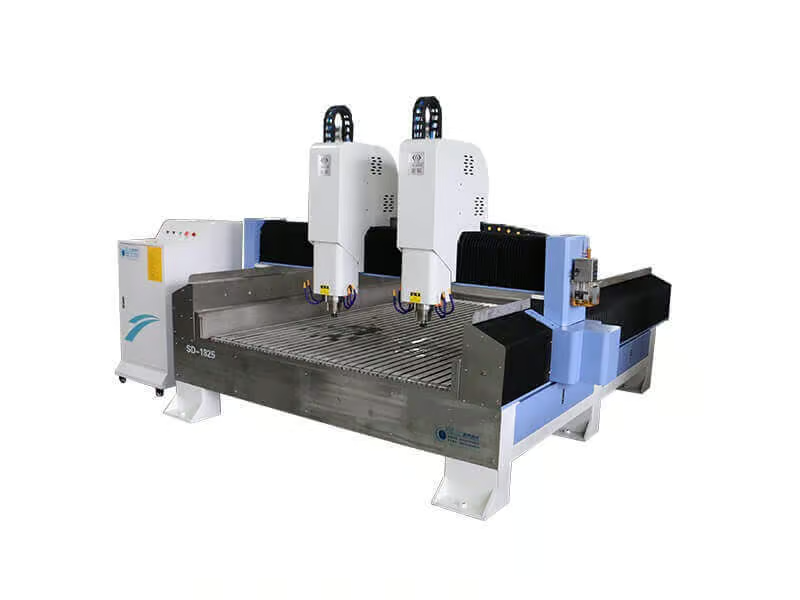 Stone Engraving Machines
 Stone Veneer Saw
 Stone Quarry Machines
 Stone Band Saw Machines
 Stone Edging Beveling Machine
 Other Stone Machines
 Stone Diamond Tools
 Stone Slab Cutting
 Stone Slab Surface Edge Polishing
 Stone Block Slicing
 Stone Quarry Mining
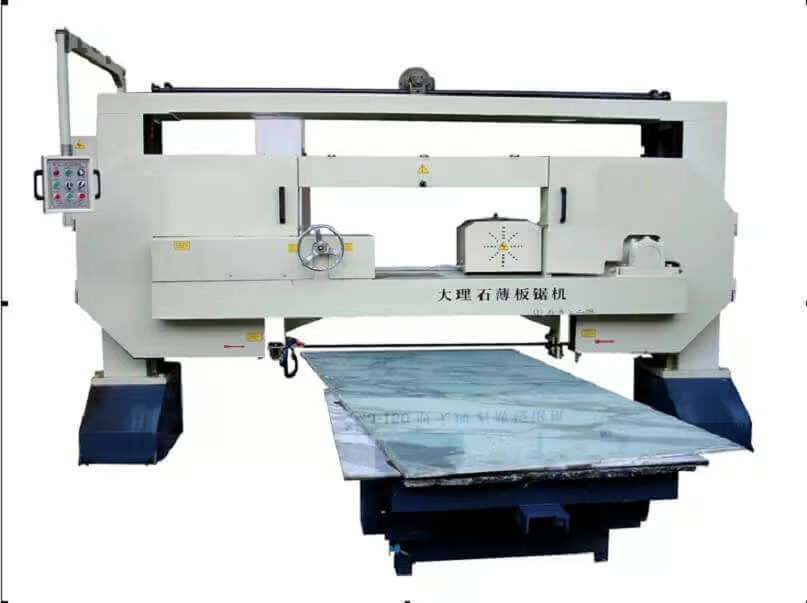 Stone Horizontal Splitting
 Stone Engraving Applications
 CNC Stone Cutting
 Countertop Cutting Polishing
 Other Applications
In the stone fabrication industry, machinery is a heavy, high-depreciation asset. If you visit different fabrication shops, you will notice a striking phenomenon: one factory might be running a 15-year-old CNC bridge saw that still cuts with millimeter precision, while another factory’s 3-year-old machine is already a rusted, inaccurate nightmare constantly waiting for spare parts.
Why such a massive discrepancy? The lifespan of a bridge saw is not purely based on luck. It is the direct result of the machine’s initial manufacturing pedigree, combined with the daily operational habits and the environmental conditions of the factory it lives in. Let’s explore the critical factors that determine whether your machine will be a long-term profit generator or a short-term liability.

Factor 1: Structural Integrity and Build Quality
The “skeleton” of the machine is the foundation of its lifespan. Cutting through dense materials like granite and sintered stone generates massive vibrational forces. If the machine’s frame cannot absorb these vibrations, they will tear the mechanical transmission apart over time.

Heavy-Duty Cast Iron vs. Light Steel
Weight equals stability. Premium bridge saws utilize massive, tempered cast-iron crossbeams and heavy monoblock steel frames. This sheer mass absorbs high-frequency cutting vibrations, protecting the delicate internal ball screws and spindle bearings. Cheap machines built with lightweight, thin steel tubes will eventually warp and bend under continuous heavy loads, permanently ruining their cutting accuracy.

Quality of Linear Guide Rails
The cutting head travels miles back and forth along the bridge every week. Top-tier machines use internationally recognized linear guide rails (like Hiwin or THK) encased in a continuous oil-bath system. This prevents metal-on-metal friction. Budget machines often use exposed, low-grade rails that wear down quickly, leading to a shaking cutting head and jagged edges on your stone.
Factor 2: Electronic and Core Component Pedigree
Ironically, most heavy-duty bridge saws do not “die” because the steel breaks; they are forced into early retirement because their cheap electronic brains and nervous systems continuously fail and cause production paralysis.

Top-Tier Servo Motors
The motors driving the X, Y, and Z axes dictate both speed and longevity. High-end absolute servo motors (like Yaskawa or Siemens) are designed to run continuously without overheating, maintaining microscopic positional accuracy for over a decade. In contrast, cheap stepper motors lose steps, overheat under heavy loads, and burn out prematurely.

Sealed Industrial Electrical Cabinets
Stone fabrication creates highly conductive water vapor and abrasive dust. If these enter the electrical cabinet, they will short-circuit expensive PLCs and inverters. Premium machines feature fully sealed, air-conditioned or highly ventilated electrical cabinets that protect the sensitive “brain” of the machine from the hostile factory environment.
Factor 3: The Factory Working Environment
Many factory owners ignore the physical environment of their workshop. Exposing highly precise CNC equipment to extreme weather variations and uncontrolled dust is a guaranteed way to slash its operational lifespan by half.

Humidity & Temperature Stability
Extreme temperature fluctuations cause metal components (like the long steel bridge) to expand and contract, which can slowly throw the machine out of alignment over years. Furthermore, placing a machine in a highly humid, unventilated, freezing warehouse leads to rapid condensation inside the electrical cabinet, rusting internal contactors and causing unpredictable software errors.
Dust Control & Airborne Particles
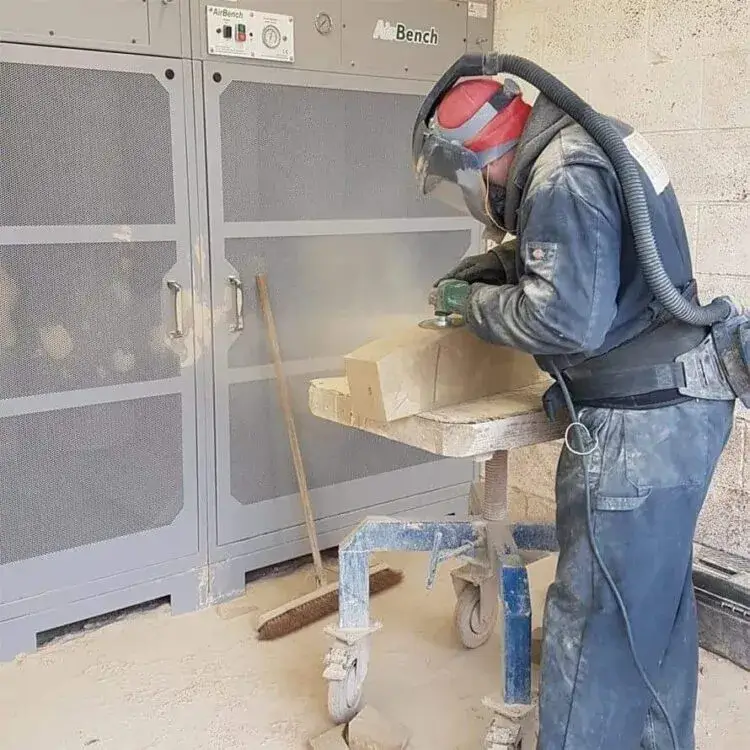
Airborne quartz dust is incredibly abrasive—it is essentially microscopic sandpaper. If your factory lacks proper ventilation or dust suppression systems, this dust settles on the exposed gear racks, ball screws, and greased moving parts. When the machine moves, it grinds this dust directly into the steel, accelerating mechanical wear and tear at a terrifying rate.
Factor 4: Operator Habits and Cutting Parameters
Even the most rugged industrial tank can be destroyed by a reckless driver. The daily habits of the operator, and how they push the machine, play a massive role in whether the equipment survives its expected lifespan.

Forcing Excessive Feed Rates
Time is money, but patience saves machines. When operators force the machine to cut too fast through ultra-hard quartzite or thick granite, they put immense back-pressure on the main spindle motor and the bridge. This continuous overloading burns out the spindle bearings prematurely and drastically shortens the life of the diamond blade.
Neglecting the Maintenance Routine
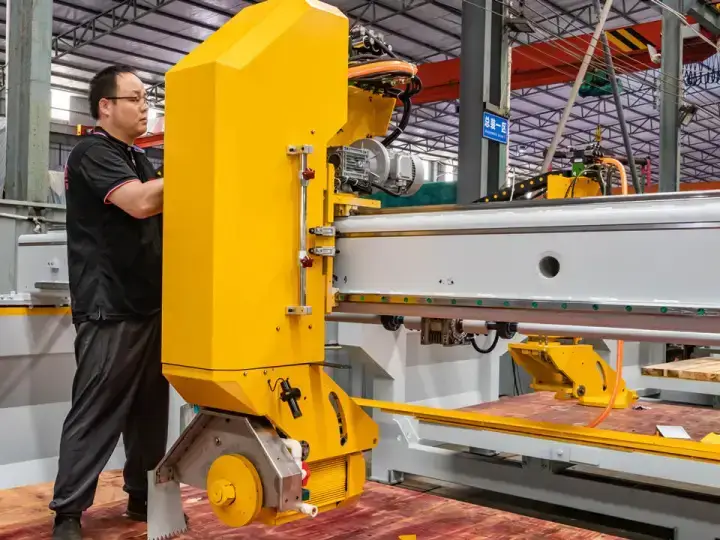
As we discussed in our comprehensive Daily Maintenance Routine Guide, failing to grease the axes or flush the mud off the table is fatal. A machine that is washed and lubricated daily will outlast a neglected machine by a decade. Operator discipline is the ultimate lifespan multiplier.
Conclusion & Maximizing Your Equipment ROI
The lifespan of your bridge saw is in your hands. By choosing a machine with a heavy-duty pedigree, protecting it from extreme factory environments, and enforcing strict operating and maintenance rules, you guarantee a massive return on your investment over the next 10 to 15 years.
Invest in Machinery Built to Last
Stop losing money on machine downtime and expensive repairs. Upgrade to MOSCUT’s heavy-duty CNC bridge saws, engineered with premium international components to withstand the harshest fabrication environments.
Explore Durable MOSCUT Bridge SawsTop 10 FAQ: Bridge Saw Longevity
Curious about the actual lifespan of specific components or when it’s time to upgrade? Review these common questions from factory owners.
Machine Lifespan & Wear Parts
1. How many years should a high-quality bridge saw last?
With proper daily maintenance and a good factory environment, a heavy-duty, premium-built CNC bridge saw should reliably operate for 12 to 15 years before requiring any major structural overhauls.
2. How long does the main spindle motor typically last?
The spindle is the hardest working part. If properly cooled with clean water and not consistently overloaded by forcing fast cuts, a high-quality spindle should last 5 to 8 years before needing a bearing replacement or rebuild.
3. Can rusted linear guide rails be repaired?
Light surface rust can be cleaned, but if the rust has pitted the steel and damaged the internal ball bearings of the slider blocks, the machine will lose precision. At that point, the entire rail and block system must be replaced.
4. Why do my vacuum lifter suction pads fail so quickly?
Rubber suction pads degrade rapidly if exposed to extreme heat, harsh chemical solvents, or direct UV sunlight. Wiping them with plain water and keeping the shop environment temperate will extend their life.
5. Do servo motors lose accuracy over time?
Top-tier absolute servo motors rarely lose accuracy mechanically. However, the gear racks they drive will wear down over the years. Consistent greasing prevents this wear and keeps the motor’s positioning perfectly accurate.
Upgrades & Replacement
6. When should I consider replacing my machine instead of repairing it?
You should consider replacing it when the cost of a major repair (like replacing the CNC controller and all servo motors) exceeds 40% of the cost of a new machine, or when the downtime is costing you more in lost client orders than the repair itself.
7. Can an old manual bridge saw be upgraded to CNC?
While technically possible, it is rarely cost-effective. Upgrading to CNC requires replacing all motors, adding a computer system, and usually upgrading the guide rails. It is almost always better to sell the manual saw and buy a new CNC model.
8. Does cutting sintered stone shorten machine life?
It can, if not done correctly. Sintered stone requires slow, high-torque cuts. If you force the machine to cut it as fast as granite, you will overheat the spindle and wear out the blade rapidly.
9. How does winter weather affect my machine?
Freezing temperatures are highly destructive. If water freezes inside the spindle cooling lines or the hydraulic pump, it can crack the internal metal casings. Factory temperatures must be kept above freezing, or the machine must be fully drained nightly.
10. Is it worth buying an extended warranty for a bridge saw?
For fully automated 5-axis CNC machines with complex electronics, a warranty or a comprehensive service contract from the manufacturer provides immense peace of mind and guarantees you receive authentic replacement parts quickly.