
 Stone Cutting Machines
 Stone Polishing Machines
 Bridge Saw Machines
 Stone Quarry Cutting Machines
 Stone Block Cutter Machine
 CNC Stone Wire Saw Machine
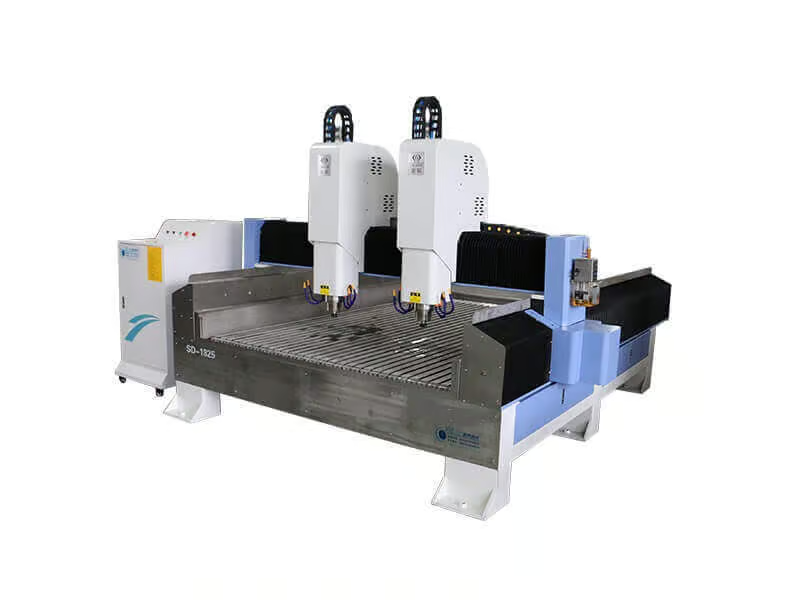 Stone Engraving Machines
 Thin Stone Veneer Saw Machine
 Horizontal Stone Slab Splitting Machine
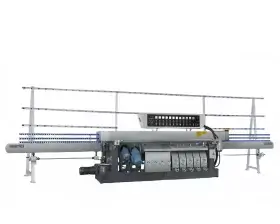 Stone Edge Polishing Profiling Machine
 Stone Auxiliary Equipment
In the heavy industrial realm of stone fabrication, investing in automation is not merely a matter of budget; it is a profound exercise in matching mechanical architecture to gravitational physics. When evaluating a vertical vs horizontal edge polishing machine, buyers must understand that neither design is inherently “superior”—they are simply engineered for entirely different applications. According to core principles of heavy machinery design regarding gravitational vectors and mechanical rigidity, manipulating a 300-kilogram slab of granite requires absolute stability. The vertical (stand type) architecture leverages gravitational center-clamping to radically compress your workshop footprint. Conversely, the horizontal (flatbed) architecture provides an unyielding, massive bottom support base designed to counteract the extreme torque vibrations generated when milling thick, complex architectural curves.
A high-volume countertop fabricator in Toronto, Canada, recently learned this architectural lesson the hard way. Aiming to save both capital and floor space, they initially purchased a vertical multi-head edge polisher. For their standard 3cm quartz kitchen perimeters, the machine performed flawlessly. However, months later, they secured a massive commercial contract requiring 6cm laminated (built-up) drop edges for luxury hotel islands. When feeding these massive, top-heavy slabs into the vertical clamp, the gravitational offset caused the stone to tilt mid-polish, violently crashing into the spindle array and shattering the diamond wheels. After an emergency consultation with MosCut engineers, they immediately supplemented their facility with a 14-Head Heavy-Duty Horizontal Line. By allowing the 6cm massive slabs to lay completely flat on a wide conveyor bed, they eliminated the tipping moment, effortlessly profiling pristine complex edges and conquering the high-margin heavy stone market.
⚖️ The Gravity Equation: How Stone Orientation Defines Quality
You are machining one of the heaviest and most unforgiving materials on earth. In stone fabrication, gravity is either your greatest ally or your worst enemy. When high-speed diamond spindles aggressively bite into solid quartz or granite, they generate massive lateral thrust forces. If the stone slab is not immobilized with absolute rigidity, it will experience high-frequency micro-vibrations (as small as 0.5 millimeters). These invisible vibrations translate directly into ugly “chatter marks” or deep gouges along the finished edge. The physical orientation of the machine—how it clamps, supports, and moves the stone against gravity—dictates the maximum weight and thickness you can safely process before vibration destroys your polish quality.
The Vertical (Stand) Edge Polisher: Speed & Space Efficiency
Maximize your daily linear throughput without expanding your factory lease.The Mechanical Principle: In a vertical edge polisher (often called a Stand Type Stone Router), the slab is fed into the machine standing up, usually leaning at a slight 85-degree angle. It is tightly secured between a lower driving conveyor track and a heavy-duty upper pneumatic clamping belt.
Core Advantages: The primary triumph of the vertical architecture is its incredibly slim width footprint. Because the stone stands upright, the machine can be placed directly against a workshop wall, saving massive amounts of valuable floor space. Furthermore, gravity assists in pulling water and abrasive slurry straight down and away from the cutting zone instantly, resulting in an exceptionally clean polishing environment.
The Sweet Spot: This architecture absolutely dominates high-speed, high-volume production of standard 2cm and 3cm flat materials. It is the undisputed king of processing straight edges, minor top/bottom bevels, narrow backsplashes, and long runs of commercial wall baseboards.

The Horizontal (Flatbed) Edge Polisher: The Heavy-Duty Dominator
Engineered to conquer massive structural islands and complex architectural curves.The Mechanical Principle: In a horizontal flatbed polisher, the stone slab lays completely flat on its back across a massive, ultra-wide vulcanized rubber conveyor bed. It is immobilized from above by a continuous row of heavy pneumatic pressure rollers.
Core Advantages: The horizontal design offers peerless bottom support rigidity. Because the center of gravity is spread wide and low, there is absolutely zero risk of a heavy, wide slab tipping or vibrating under immense spindle pressure. Additionally, the flatbed design allows for the integration of specialized bottom-mounted auxiliary saws.
The Sweet Spot: This is the ultimate heavy-duty line. It is strictly required for safely machining 4cm, 6cm, or 8cm thick laminated materials. It provides the brute stability needed to carve deep, complex profiles like the French Ogee, Full Bullnose, and Dupont. It is also the only viable choice for operating as a stair tread grooving machine, as it can polish a bullnose edge while simultaneously cutting anti-slip slots into the flat face of the tread.

Footprint vs. Capacity: The Workshop Layout Math
Evaluate your logistical ceiling before signing the purchase order.📐 The Squeeze Factor
If your fabrication shop is operating in a congested urban industrial park, a horizontal machine can become a logistical nightmare. Horizontal machines not only take up significant center-floor space, but they also require a massive physical radius for workers to manually rotate or transport large, flat-laying slabs on and off the conveyor. If your floor space is severely constrained, a wall-hugging vertical machine is your only mathematically viable option.
🏗️ The Crane Requirement
Because horizontal machines are tailored for heavy, oversized kitchen islands and thick architectural monuments, manually lifting these pieces onto the flatbed is ergonomically dangerous and painfully slow. Purchasing a horizontal line comes with the hidden prerequisite of ensuring your facility is equipped with overhead jib cranes and vacuum lifters to handle the loading and unloading cycles efficiently.
The Ultimate Selection Matrix
A definitive side-by-side comparison to guarantee a fail-proof architectural investment.| Decision Criteria | Vertical (Stand) Polisher | Horizontal (Flatbed) Polisher |
|---|---|---|
| Optimal Material Thickness | 10mm to 30mm (Standard slabs). | 30mm up to 60mm+ (Heavy/Laminated). |
| Profile Complexity Limit | Straight edges, chamfers, bevels, minor rounding. | Unlimited (Full Bullnose, Deep Ogee, Waterfall, Dupont). |
| Special Auxiliary Features | None (Strictly edge profiling/polishing). | Can be equipped with bottom saws for anti-slip grooving/drip lines. |
| Workshop Space Requirement | Minimal. Can be installed directly against shop walls. | Extensive. Requires wide center-floor placement for material handling. |
| Primary Market Application | High-volume standard countertops, backsplashes, and baseboards. | Luxury custom islands, thick masonry, and commercial stair treads. |
Deploy the Perfect Profiling Arsenal for Your Shop
Don’t gamble your operational capital on the wrong machine architecture. Let MosCut’s engineers analyze your slab dimensions, daily throughput demands, and shop floor logistics to configure the ultimate edge polishing line for your business.
Explore Our Full Edge Polisher Lineup