
 Stone Cutting Machines
 Stone Polishing Machines
 Bridge Saw Machines
 Stone Quarry Cutting Machines
 Stone Block Cutter Machine
 CNC Stone Wire Saw Machine
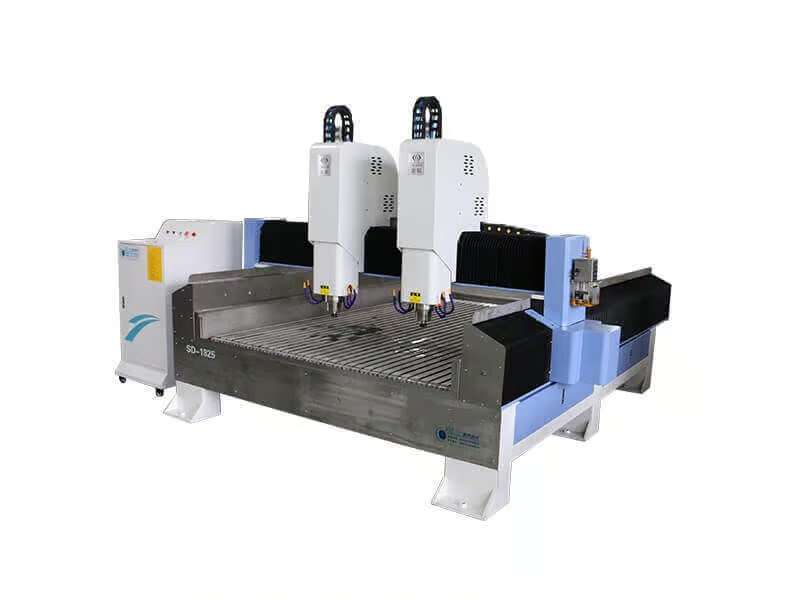 Stone Engraving Machines
 Thin Stone Veneer Saw Machine
 Horizontal Stone Slab Splitting Machine
 Stone Edge Polishing Profiling Machine
 Stone Auxiliary Equipment
Automatic Stone Edge Polishing Profiling Machine
In the architectural surfacing industry, the quality of a countertop or stair tread is judged entirely by its exposed edge. According to finish standards published by the Natural Stone Institute (NSI), premium countertop edges must achieve a uniform gloss meter reading that matches the factory surface of the slab. Traditional hand-polishing inherently fails this metric, inevitably introducing human error that results in dull spots, inconsistent chamfers, and “wavy edges” visible under lighting. MosCut’s entire lineup of Automatic Edge Polishing Machines—from agile single-head routers to massive multi-head horizontal matrices—utilizes advanced PLC controllers and pneumatic adaptive pressure systems. This guarantees constant, unified abrasive contact, eradicating manual inconsistency and delivering 100% industrial-grade mirror finishes that satisfy the strictest North American and European delivery tolerances.
A prime example of this automated scalability occurred at a high-volume commercial countertop fabrication plant in Florida, USA. Initially, they relied on a team of 8 workers using hand-held wet polishers to shape “Demi-Bullnose” edges on 4cm quartz slabs—a process plagued by high labor costs, silicosis dust hazards, and extreme rejection rates due to uneven curves. Seeking a solution, they purchased an entry-level MosCut Single-Head Polisher. As their orders skyrocketed due to their newly acquired precision, they rapidly upgraded and integrated a full MosCut 16-Head Horizontal Polishing Line. Today, a single operator commands the entire matrix. The heavy-duty conveyor advances slabs at 2 meters per minute, achieving a brilliant 95-degree gloss in one pass. By slashing labor overhead and compressing lead times by 80%, the facility successfully secured massive contracts to supply and renovate premium hotel chains across the state.
Our Stone Edge Polishing Machine Lineup
Scale your fabrication capacity. From versatile single-head routers to heavy-duty multi-head industrial lines.
Single-Head Stone Edge Polisher
Compact and highly versatile. Perfect for budget-conscious workshops or custom fabrication that requires automated precision for single-profile runs. Excellent for bespoke island pieces and short batches.
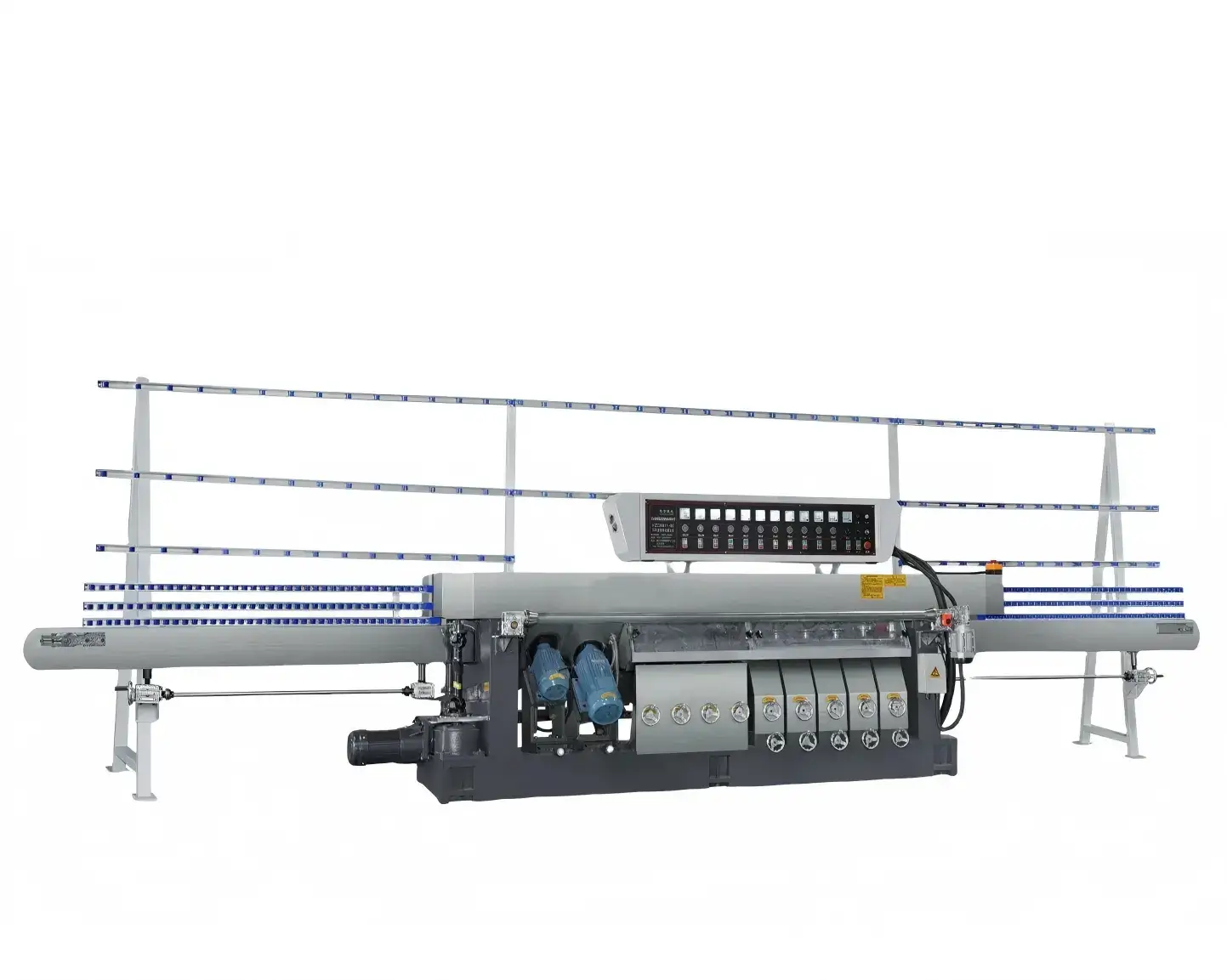
Vertical Stone Edge Polisher
Stand-type architecture designed for maximum clamping force. Ideal for rapidly processing 2-4cm standard straight edges, bevels, and backsplash strips while occupying a minimal factory footprint.

Horizontal Stone Edge Polisher
The heavy-duty flatbed industrial beast. Engineered for thick, heavy slabs, stair tread grooving, and conquering extremely complex luxury profiles like Ogee and Full Bullnose in a single, unyielding pass.
The Profit Engine: Eradicating Manual Polish Constraints
Automating edge processing removes your factory’s largest operational bottleneck.📈 300% Markup on Profiling
A basic eased edge versus a premium French Ogee carries a massive retail price gap per linear meter. Our automated profilers transform these highly difficult, lucrative architectural edges into cheap, repeatable assembly-line tasks.
🫨 Zero Hand-Arm Vibration
Completely eliminate the occupational hazards of Hand-Arm Vibration Syndrome (HAVS) and silicosis dust exposure associated with handheld angle grinders. Protect your workforce and permanently resolve hiring challenges.
📏 Flawless Linear Consistency
Whether the slab is 1 meter or 10 meters long, the CNC-guided conveyor and pneumatic heads guarantee that the chamfer depth and profile radius remain absolutely identical from end to end, eliminating wavy reflections.
🏭 Continuous Multi-Batch Output
As long as the operator keeps feeding slabs, the machine keeps polishing. A single multi-head horizontal polishing line yields the combined daily output of 10 to 15 master stonemasons.
Architectural Divergence: Vertical vs. Horizontal Design
Aligning machine architecture with your dominant material thickness and factory space constraints.📐 Vertical Stone Edge Polisher (Stand Type)
In this architecture, the stone slab travels through the machine in a vertical or slightly tilted orientation. The slab is firmly secured between a robust lower drive track and an upper pneumatic clamping belt.
Optimal Use Case: This design excels at processing standard 2cm to 3cm thicknesses, exceptionally narrow pieces like backsplash strips and baseboards, and executing pure straight edges (Eased Edges) with top and bottom micro-bevels. Its upright design significantly minimizes the machine’s required floor space.

🏗️ Horizontal Stone Edge Polisher (Flatbed Type)
Built upon a massive steel chassis, the horizontal design lays the stone slab completely flat on a highly widened, ultra-durable heavy-duty conveyor bed, providing unparalleled bottom support rigidity.
Optimal Use Case: This is the undisputed champion for heavy lifting. It is specifically engineered to handle massive, thick stones (3cm, 4cm, and laminated edges), broad stair treads, and massive kitchen islands. It possesses the intense stability required to carve and polish extremely complex, deep curves like Full Bullnose and deep Ogee profiles without structural flutter.

🪚 Single-Head Stone Edge Polisher (Compact Router)
Unlike the multi-head continuous matrix, this agile architecture relies on a single, high-torque programmable spindle. The stone is secured on the bed, and the machine makes multiple automated passes. The operator simply swaps out the escalating sequence of diamond profiling and resin polishing wheels after each pass to achieve the final mirror finish.
Optimal Use Case: The ultimate problem-solver for bespoke custom fabrication. It is highly versatile and budget-friendly, making it the perfect entry-level workhorse for startups, space-constrained workshops, or specialized ateliers processing short-run, unique custom pieces where configuring a massive 14-head industrial line would be inefficient.

The Stone Edge Profile Library: Master Any Architectural Shape
From modern straight lines to complex luxury curves, equip the right profiling wheels to carve your client’s exact vision.Our automatic edge polishing machines offer boundless architectural versatility. Whether your project demands a minimalist Eased or Bevel edge for a modern quartz island, a classic Full Bullnose for commercial safety, or highly intricate Ogee, Dupont, and Triple Waterfall profiles for luxury residential countertops—our multi-head matrix handles it all effortlessly.
Simply swap the designated diamond router bits and resin polishing wheels. The PLC-controlled pneumatic heads will replicate these exact geometric profiles with flawless mirror-gloss consistency, easily accommodating standard 2cm/3cm slabs or heavy 6cm laminated mitered drops.

The Edge Profiling Arsenal: A comprehensive visual chart of standard and premium edge shapes achievable on MosCut automatic linear polishing machines.
Multi-Head Matrix: The Physics of Continuous Grinding
From aggressive diamond shaping to microscopic resin polishing in a single, unstoppable pass.The core difference between a single-head router and a 14-head horizontal polishing line lies in workflow automation. A single-head machine requires the operator to manually swap out grinding wheels (from rough 50# to fine 3000#) for every stage, passing the stone back and forth. A multi-head line executes all stages concurrently.
Stage 1: Diamond Profiling (Aggressive Removal). The first 2 to 3 heads are armed with coarse metal-bond diamond profiling wheels. Their job is to chew through the raw stone block, violently carving the initial rough shape of the Bullnose or Ogee curve.

Stage 2: Resin Calibrating & Polishing. The subsequent 6 to 12 heads feature flexible resin-bond pads escalating in grit size (e.g., 50#, 100#, 200#, 400#, 800#, 1500#, 3000#, and finally the Buffing compound). Each head erases the microscopic scratches left by the previous wheel.
Achieving a mirror finish relies on the machine’s pneumatic compensation system, governed by the following relationship:
$$Surface Glossiness propto frac{Constant Pneumatic Pressure times RPM}{Conveyor Feed Rate}$$
If the polishing head bounces, the gloss fails. MosCut’s smart PLC dynamically adjusts the air pressure pushing down on the resin pads, ensuring continuous, hugging contact against the stone’s complex curves regardless of pad wear.

Machine Capabilities: The 5-in-1 Stone Edge Processing
From aggressive stock removal to mirror-finish polishing in a single continuous pass.⚙️ Edge Grinding
Utilizing aggressive coarse-grit diamond calibration wheels, the machine rapidly mills away excess stock. This establishes absolute straightness along the edge and ensures uniform thickness across the entire slab, creating the perfect foundational geometry for subsequent profiling.
📐 Edge Profiling
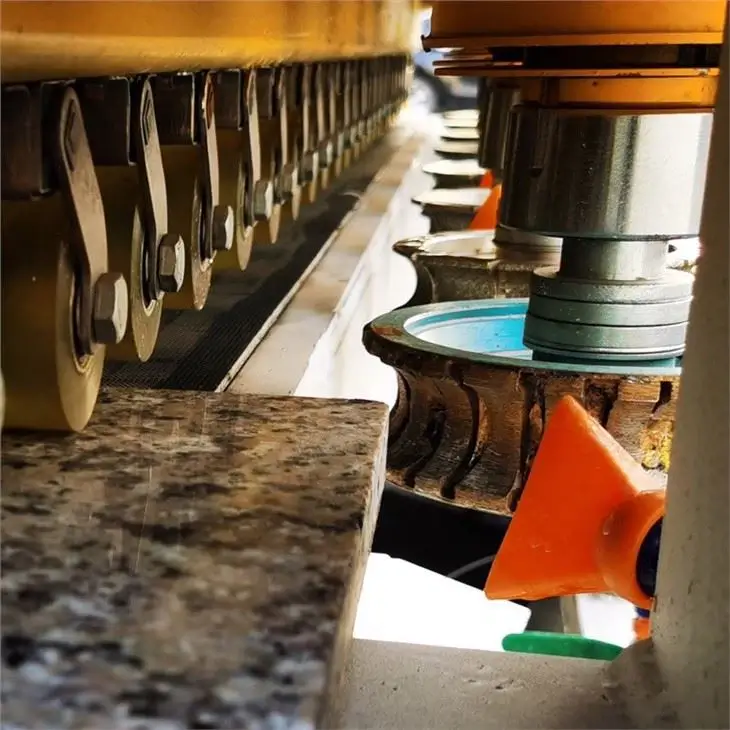
By swapping in specifically contoured diamond router bits (such as half-round or Ogee profile wheels), the machine carves the raw 90-degree edge into complex, flowing architectural curves with surgical precision.

✨ Edge Polishing
An array of pneumatic, self-adaptive polishing heads equipped with escalating resin pads systematically erase microscopic scratches. This process elevates the edge’s optical reflection to a mirror finish that perfectly matches the factory face of the slab.

📏 Grooving & Anti-Slip Slotting
Equipped with auxiliary high-speed circular saws mounted at the top or bottom, the machine can simultaneously cut water-drip grooves under countertops or carve 2 to 3 parallel anti-slip safety slots into the top surface of stair treads.

🔺 Automatic Stone 45-Degree Edge Chamfering
The machine seamlessly adjusts its spindle angle to execute perfect 45-degree chamfers. This is absolutely essential for fabricating flawless “waterfall” island drops or preparing mitered apron joints for seamless edge lamination.

Master Any Material: Broad Application Spectrum
A highly versatile platform designed to dominate the entire architectural surfacing market.🏛️ Marble Countertops & Vanities
Engineered for the delicate processing of luxury marbles. The pneumatic system perfectly modulates downward pressure to prevent the fragile natural calcite crystals from fracturing or spalling during high-gloss polishing.

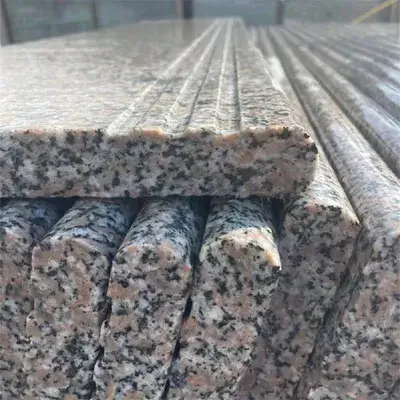
🧱 Heavy Granite Stair Treads & Cladding
Leveraging the ultra-rigid steel chassis and high-torque motors, the machine aggressively attacks extremely dense, abrasive granites. It easily handles thick monuments, exterior wall cladding edges, and anti-slip stair tread grooving without spindle flutter.
💎 Artificial Stone & Quartz Islands
Completely conquer the mainstream surfacing market. Power through ultra-hard engineered quartz and sintered stone (porcelain) slabs, churning out mass volumes of eased edges or demi-bullnose profiles for commercial hotel and kitchen contracts.

🛣️ Cement Pavers & Pool Coping
Cross over into heavy hardscaping. Easily process thick, heavy pre-cast cement or concrete pavers, sculpting rugged, large-radius bullnose edges perfectly suited for safe, slip-resistant swimming pool coping.

🪟 Architectural Glass
By simply swapping the diamond and resin wheels for specialized glass-grinding abrasives, the machine transitions into processing architectural glass, delivering safe, polished edges for frameless balcony railings and shower enclosures.

Comparative Analysis: Selecting the Right Edge Polishing Architecture
An engineering breakdown of pros, cons, and operational tradeoffs across single-head and multi-head platforms.| Comparison Dimension | Single-Head Automatic Polisher | Vertical Multi-Head Line | Horizontal Multi-Head Line |
|---|---|---|---|
| Throughput & Efficiency | Low. Requires sequential passes. The operator must manually stop the machine to change grinding wheel grits from rough to fine for a single stone. | Very High. Single-pass continuous pipeline. Slices and polishes standard straight edges up to 5 meters per minute uninterrupted. | High to Very High. Single-pass mass production. Processes complex architectural curves (Ogee/Bullnose) at a continuous speed of 0.2 to 3 m/min. |
| Profile Versatility | Excellent. Can execute almost any profile shape (Eased, Bevel, Ogee, Waterfall) by simply swapping the single profiling tool on the spindle router. | Limited. Optimized strictly for linear straight edges, flat bevels, chamfers, and minor rounded top/bottom corners. | Maximum. Engineered to carve the entire profile library, including multi-tier step designs like Triple Waterfall and deep French Ogees. |
| Material & Thickness | Superb Thickness. Can process heavy blocks up to 200mm thick. Ideal for specialized masonry pieces and heavy stone monuments. | Moderate. Capable of handling 10mm to 80mm slabs, but limited by vertical clamp stability for extremely wide or top-heavy island pieces. | Heavy-Duty. Supports massive slabs laying flat up to 80mm thickness. Exceptional rigid bed eliminates the risk of cracking fragile exotic marbles. |
| Extra Capabilities | Includes auxiliary cutting blades and core drilling bits for sink faucet cutouts. | Focuses purely on high-speed linear edge smoothing, shaping, and precise 45-degree chamfering. | Advanced Grooving. Integrates top/bottom secondary saws to polish edges while cutting anti-slip grooves on stair treads simultaneously. |
| Workshop Footprint | Ultra-Compact. Measures 3800mm in length. Easily fits into tight small-scale fabrication shops or custom stone studios. | Space-Saving Line. Long but extremely narrow profile (1100mm width). Perfect for placement against shop walls to free up floor space. | Large Footprint. Heavy flatbed conveyor design requires substantial open workshop space for broad material loading and unloading. |
| Investment & ROI | Lowest Cost. Minimal initial investment. Ideal for startups or businesses adding premium custom profiling to their existing saw lines. | Medium Investment. High ROI for factories specializing in large-volume wall baseboards, thresholds, and commercial panels. | Highest Cost. Significant capital asset expenditure, but yields immense profit loops for mass producers of high-end kitchen countertops. |
Why Buy From MosCut
Engineered to outlast and out-polish the competition.🛡️ Heavy-Duty Steel Chassis
Vibration is the enemy of a mirror finish. Our machines are built upon massively over-engineered cast iron and tubular steel frames. This immense weight absorbs all high-frequency harmonics generated by the grinding heads, protecting the stone’s fragile edges from chatter marks.

🧠 Smart PLC & Pneumatic Compensation
Equipped with intelligent micro-computers, our polishing heads utilize advanced pneumatic cylinders to automatically adapt to the stone. Regardless of how much the abrasive pads wear down during a shift, the machine maintains a constant, precise downward pressure, eliminating the risk of burning the stone.

🧩 Modular Customization
We do not force you into a one-size-fits-all box. We offer a “building block” approach, allowing you to configure machines ranging from a nimble single-head unit up to a massive 20-head industrial behemoth, perfectly aligning with your current budget and future growth trajectory.

⚙️ Global After-Sales & Tooling Supply
We are a comprehensive production partner. Beyond delivering world-class machinery, MosCut provides a complete, one-stop supply chain of specialized diamond profiling wheels, resin polishing pads, and spare parts, ensuring your line never stops running.

Technical Specifications Comparison
Analyze the parameters to find the perfect configuration for your fabrication volume.| Parameters | Single-Head Polisher | Vertical Multi-Head (8 Heads) | Horizontal Multi-Head (8 Heads) |
|---|---|---|---|
| Max Processing Thickness | 200 mm | 10 – 80 mm | Up to 80 mm |
| Max Processing Length/Width | L: 3300 mm / W: 600 mm | L: 1800 mm | W: 2000 mm |
| Travel / Feed Speed | 0.38 – 1.92 m/min | 0.8 – 5.0 m/min | 0.2 – 3.0 m/min |
| Grinding Wheel Diameter | 140 – 200 mm | – | 140 – 180 mm |
| Total Power | 3.75 kW – 4.75 kW | 36 kW | ~32 kW+ (4 kW Main Motor per head) |
| Gross Weight | 1,500 KG | 3,100 KG | 4,500 KG |
| Boundary Dimensions (L x W x H) | 3800 x 1500 x 1510 mm | 7300 x 1100 x 2000 mm | 4300 x 1200 x 2100 mm |
Global Success Showcase
Real-world fabrication facilities scaling their throughput and edge quality with MosCut.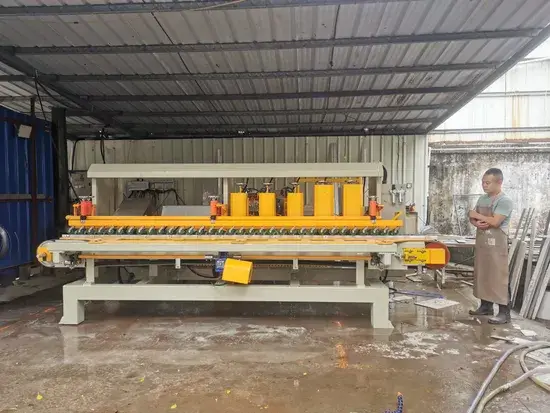
Texas, USA: 300% Boost in Quartz Countertop Output
A leading residential countertop fabricator replaced their manual wet-polishing stations with a MosCut 14-Head Horizontal Polisher. By automating their Half-Bullnose and Eased edges, they slashed labor costs and reduced lead times from 2 weeks to just 3 days.

Sydney, Australia: Dominating the Stair Tread Market
Specializing in commercial granite stair treads, this facility integrated our multi-head line with bottom grooving saws. They now simultaneously polish a full bullnose edge while cutting three perfect anti-slip grooves in a single pass.

Florida, USA: Flawless Ogee Edges for Luxury Hotels
Struggling with inconsistent hand-carved French edges, this architectural stone supplier upgraded to MosCut’s pneumatic compensation heads. Their Ogee profiles now feature a 95+ degree mirror gloss, securing massive luxury hotel contracts.
Milan, Italy: Startup Scalability with Single-Head Routers
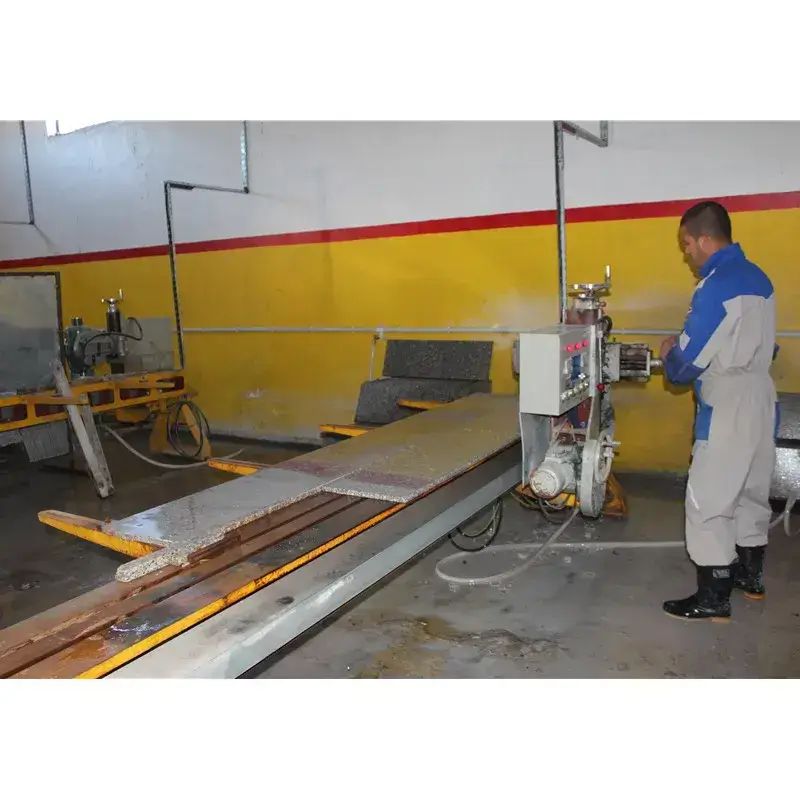
A boutique fabrication shop utilized our Single-Head Automatic Router to enter the high-end marble island market. The low capital entry and interchangeable profiling wheels allowed them to offer 15 different edge designs to their elite clientele.
Related Technical Insights
Master the physics and operational economics of automated stone edge profiling.
Why Do Quartz Edges Turn White? Preventing Resin Burn
Discover the thermodynamic reasons behind scorched artificial stone edges. Learn how proper water coolant pressure and precise RPM calibration can eliminate edge whitening permanently.
Read More
Vertical vs. Horizontal Polishers: The Ultimate ROI Guide
Are you tight on shop space, or are you processing heavy 4cm slabs? Read our deep-dive structural comparison to ensure you invest in the right machine architecture for your facility.
Read More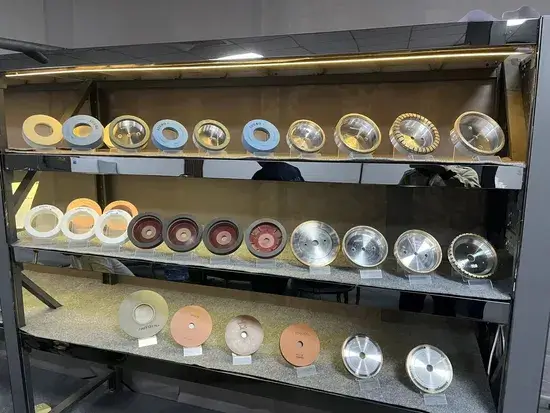
The Perfect Grit Sequence: From Metal Wheels to Buff
Unlock the secrets of continuous grinding. Understand exactly when to transition from aggressive metal-bonded diamond profiling wheels to fine resin polishing pads for a mirror finish.
Read More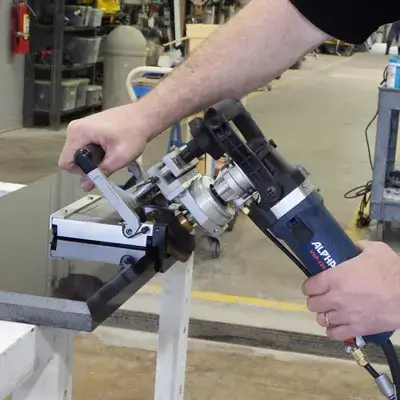
The Hidden Financial Drain of Hand Edge Polishing
Break down the true cost of hand-polishing. From abrasive waste to worker fatigue and inconsistent quality, see the spreadsheet that proves why automation is an absolute necessity.
Read MoreScale Your Edge Fabrication to Industrial Levels
Ready to eliminate manual polishing bottlenecks, guarantee absolute linear consistency, and deliver flawless countertop edges at record speed? Explore our complete lineup of automated edge polishing lines and configure the perfect machine for your fabrication shop.
View All Automatic Edge Polishing MachinesFrequently Asked Questions
1. Can a single-head machine polish as fast as a multi-head machine?
No. A single-head machine requires the operator to manually swap out polishing pads (from grit 50 up to 3000) and run the machine back and forth multiple times to finish one edge. A multi-head line (e.g., 14 heads) houses all grits simultaneously. The stone passes through once, exiting fully polished at speeds up to 2-3 meters per minute.
2. Why are the edges of my artificial quartz countertops turning white or burning during polishing?
Quartz contains up to 10% polymer resin. If the grinding wheel RPM is too high, or more commonly, if there is insufficient water coolant pressure targeting the friction point, the heat melts and scorches the resin, causing a white, cloudy burn mark. MosCut machines feature targeted, high-pressure hydro-cooling to prevent this.
3. Can this machine polish the inside cutout of a kitchen sink?
No. Linear automatic edge polishing machines are designed strictly for straight exterior edges via a conveyor belt system. To polish the interior curves of a sink cutout, you require a CNC Workcenter or a portable manual wet polisher.
4. What is the difference between pneumatic pressure and spring pressure polishing heads?
Spring pressure can be uneven and weakens over time, leading to inconsistent gloss. MosCut utilizes advanced pneumatic (air cylinder) compensation. As the abrasive pad wears down millimeter by millimeter, the PLC system automatically drives the air cylinder forward to maintain an absolutely constant grinding pressure on the stone.
5. Do I need a horizontal or vertical edge polishing machine?
If you process standard 2cm-3cm backsplashes, narrow strips, and prefer a smaller machine footprint, the Vertical (Stand) type is highly efficient. If you process heavy 4cm slabs, massive kitchen islands, complex French Ogee profiles, or need bottom grooving for stair treads, the Horizontal heavy-duty flatbed is mandatory for structural support.
6. How often do I need to replace the diamond profiling wheels?
Lifespan depends entirely on the hardness of the material (Marble vs. Quartzite) and the feed rate. Generally, high-quality metal-bonded diamond wheels can process thousands of linear meters before needing replacement. MosCut supplies a full range of long-lasting OEM tooling.
7. Can this machine cut a 45-degree mitered edge for waterfall islands?
Yes! By adjusting the specific spindle angle (or utilizing dedicated chamfering heads on multi-head lines), the machine can precisely slice and grind a flawless 45-degree angle, prepping the slab perfectly for seamless drop-edge (mitered) lamination.
8. Does the machine require a special water filtration system?
Edge polishers consume a high volume of water to flush away abrasive slurry. While the machine itself doesn’t require a built-in filter, your factory must have a water recycling and settling pit system to capture the stone dust, allowing you to pump clean water back into the machine spindles.
9. How thick of a stone slab can the horizontal polisher handle?
Standard MosCut horizontal multi-head machines can effortlessly process stone thicknesses from 10mm up to 60mm (or even 80mm on heavy-duty custom models). This makes them perfect for thick commercial stair treads and laminated double-thickness countertop edges.
10. Are the conveyor belts prone to slipping when grinding heavy granite?
Not on MosCut machines. We use ultra-thick, wear-resistant vulcanized rubber timing belts with deep anti-slip traction grooves. Coupled with heavy-duty top pneumatic pressure rollers, the slab is immobilized in a vice-like grip, ensuring zero slippage even under aggressive granite milling.