
 Stone Cutting Machines
 Stone Polishing Machines
 Bridge Saw Machines
 Stone Quarry Cutting Machines
 Stone Block Cutter Machine
 CNC Stone Wire Saw Machine
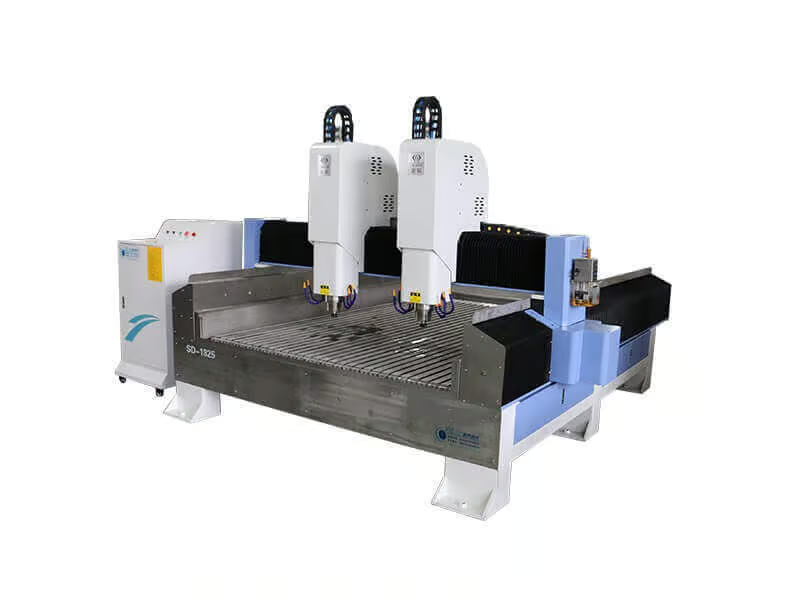 Stone Engraving Machines
 Thin Stone Veneer Saw Machine
 Horizontal Stone Slab Splitting Machine
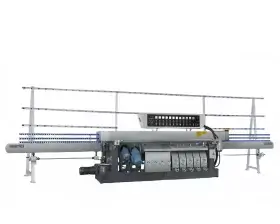 Stone Edge Polishing Profiling Machine
 Stone Auxiliary Equipment

In recent years, the rising costs of stone fabrication consumables have heavily impacted the profit margins of mid-sized and large-scale processing plants. According to Q1 2026 market intelligence published by STONE WORLD, factories optimizing their abrasive consumption efficiency have seen a 15% to 22% reduction in overall operational overhead. However, many plant managers mistakenly blame their machinery for poor gloss levels or rapid pad wear, when in reality, the mismatch between the stone material and the chosen diamond abrasive is the true culprit. Understanding the precise chemical and mechanical dynamics of abrasives is the ultimate key to unlocking a flawless, high-gloss finish.
Take, for example, a high-volume marble processing facility located in Valencia, Spain. They recently transitioned from manual labor to a 3-head bridge polishing machine but initially struggled with rapid abrasive wear and severe water ripples on their Crema Marfil slabs. They were replacing grinding pads every few hours, causing massive downtime. After consulting with MOSCUT engineers, they completely overhauled their abrasive strategy—switching to the correct metal-bond Frankfurt sequence and properly utilizing the bridge polisher’s pneumatic pressure controls. The result? They doubled the lifespan of their abrasives, eliminated surface ripples entirely, and saved an estimated $12,000 monthly in tooling costs while achieving a consistent 95+ GU mirror finish.
Table of Contents
Understanding Abrasive Tooling Basics
Even the most advanced heavy-duty bridge polishing machine cannot perform miracles if equipped with substandard or incorrectly matched tooling. The abrasive is the actual cutting interface.
The Role of Metal-Bond vs. Resin-Bond
Diamond abrasives are generally categorized by their bonding matrix. Metal-bond abrasives are aggressive and highly durable. They are primarily used in the initial stages of the polishing process to quickly mill away deep saw marks and calibrate the stone. Conversely, resin-bond abrasives are softer and more flexible. They are deployed in the middle and final stages to close the microscopic pores of the stone, buffing it to a high-gloss reflection without leaving harsh scratch patterns or heat burns.

How Diamond Concentration Affects Cutting Power
The “concentration” refers to the volume of synthetic diamond particles embedded within the bonding matrix. A high concentration provides excellent cutting power and extends the life of the tool on extremely hard materials like quartzite. However, using excessively high diamond concentrations on softer stones like limestone can result in the matrix failing to wear away quickly enough, causing the diamonds to “glaze over” and stop cutting entirely. Selecting the optimal concentration is a delicate balancing act tailored to your specific material.
Frankfurt vs. Fickert: Matching the Head to the Stone
Bridge polishing machines support different quick-change abrasive base plates. Knowing the physical mechanics behind Frankfurt and Fickert shapes is crucial for maximizing throughput.
Frankfurt Abrasives (The Marble Standard)
Frankfurt abrasives are easily identifiable by their unique trapezoidal or “shoe” shape. They are designed to operate on an oscillating polishing head. Because marble, travertine, and limestone are relatively soft, they require a broader, smoother sweeping motion to prevent deep gouging. The oscillating action of the Frankfurt head ensures uniform surface contact, making it the undeniable industry standard for achieving a perfectly flat, wave-free gloss on calcareous stones.
Fickert Abrasives (The Granite Powerhouse)
Fickert abrasives are elongated, rectangular blocks (often measuring 140mm to 170mm in length). They are mounted on high-speed rotary heads. Granite and engineered quartz are incredibly dense and require immense downward torque and aggressive cutting action. The Fickert block’s design allows it to withstand the heavy pneumatic pressure generated by the bridge polisher, effectively grinding down hard silicate crystals efficiently without shattering the abrasive matrix.
The Exact Grit Progression for a Mirror Finish
Skipping grits to save time is the most expensive mistake a factory can make. A flawless mirror finish requires a disciplined, step-by-step sequential approach.
Phase 1: Heavy Stock Removal (Grits 36 to 60)
The first phase is aggressive calibration. Using metal-bond diamonds, grits 36 to 60 are tasked with erasing the severe hills, valleys, and linear scratches left behind by gang saws or diamond wire saws. If this stage is rushed, no amount of fine polishing later will hide the underlying structural unevenness of the slab.

Phase 2: Honing and Smoothing (Grits 120 to 400)
Once the slab is completely flat, the intermediate phase begins. Here, the transition from metal-bond to hybrid or resin-bond tooling usually occurs. Grits 120, 220, and 400 systematically remove the micro-scratches left by the previous coarse steps. The stone surface will transition from a rough, matte appearance to a smooth, honed texture with a slight satin sheen.
Phase 3: High-Gloss Buffing (Grits 800 to 3000+)
This is where the magic happens. Using pure resin-bond polishing pads or specialized buffing blocks (like sponge abrasives or oxalic acid-infused pads), grits 800, 1500, and 3000+ are applied. The friction and chemical reaction close the stone’s pores entirely, creating a highly reflective, 95+ GU (Gloss Unit) mirror finish that brings out the deep natural colors and veins of the slab.
Machine Parameters That Extend Abrasive Life
Your abrasive tooling is directly at the mercy of the machine’s PLC settings. Proper calibration of the bridge polisher is essential for preventing premature pad wear.
Optimizing Pneumatic Head Pressure
A heavy-duty bridge polishing machine utilizes pneumatic cylinders to press the abrasive against the stone. Applying too much pressure on fine grits will cause the resin to burn and smear across the slab. Applying too little pressure on coarse metal bonds will cause the diamonds to skid without cutting. Operators must adjust the MPa (megapascals) on the control panel precisely based on the current grit sequence and the hardness of the material being processed.
The Importance of Water Flow and Cooling
Diamond abrasives generate extreme friction and heat during high-speed rotation. Insufficient water flow will cause the bonding matrix to melt, rendering the pad useless and potentially burning a permanent white ring into dark granites. Ensure that the bridge polisher’s central water distribution system is free of clogs and provides a generous, continuous flood of clean cooling water directly to the center of the polishing head.
Ready to Maximize Your Abrasive Efficiency?
Even the highest-quality diamond abrasives cannot compensate for a machine that vibrates or applies uneven pressure. To achieve a true mirror finish, your tooling needs a rock-solid foundation.
Explore the MOSCUT Bridge Polishing Machine
Engineered for perfect synergy with both Frankfurt and Fickert abrasives. Experience zero-vibration crossbeams, smart PLC pressure controls, and automated high-gloss performance at a fraction of the cost of a continuous line.
View Machine SpecificationsTop 10 Frequently Asked Questions About Polishing Abrasives
We have compiled the most common questions our global clients ask regarding abrasive selection and troubleshooting on bridge polishing equipment.