
 Stone Cutting Machines
 Stone Polishing Machines
 Bridge Saw Machines
 Stone Quarry Cutting Machines
 Stone Block Cutter Machine
 CNC Stone Wire Saw Machine
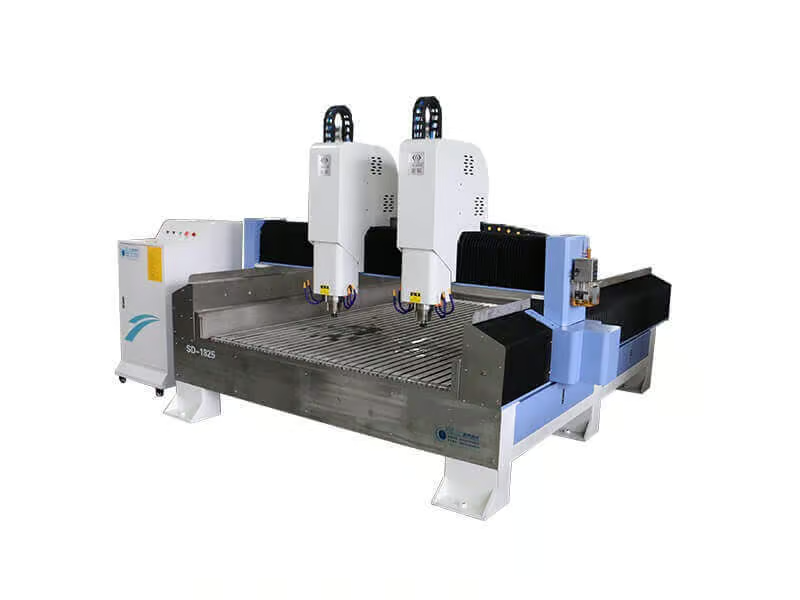 Stone Engraving Machines
 Thin Stone Veneer Saw Machine
 Horizontal Stone Slab Splitting Machine
 Stone Edge Polishing Profiling Machine
 Stone Auxiliary Equipment
In the heavy extraction industry, a machine’s cutting power is irrelevant if you cannot safely maneuver it into position. According to the international safety and stability guidelines outlined in ISO 19283 (Mining Machinery — Safety), selecting the correct mobile chassis for your specific topographical constraints is critical for preventing rollover accidents and ensuring operational stability. For quarry managers, choosing between a crawler-mounted or rail-mounted wire saw is the most consequential logistical decision they will make.
A massive white marble operation in Vietnam perfectly illustrates this logistical bottleneck. Operating on steep, highly irregular mountain terraces, their crew was using traditional rail-mounted wire saws. Moving the machine to a new cutting face required deploying heavy excavators and a 4-man crew to manually clear rocks, level the dirt, and lay steel tracks—a process taking up to 4 hours per setup. After transitioning to MosCut Crawler-Mounted Wire Saws, operators could remotely drive the machine directly onto the rough terrain. Setup time plummeted to just 15 minutes, adding an average of 80 hours of active cutting time to every machine per month.
Multi-Dimensional Comparison: Similarities and Differences
A strategic technical comparison requires looking beyond the surface. By breaking down the performance metrics across distinct operational dimensions, quarry managers can make highly informed investment decisions.1. Terrain Adaptability & Mobility
The fundamental difference lies in how the machine interacts with the ground. This dimension dictates where your operation can physically expand.
| Metric | Crawler-Mounted Wire Saw | Rail-Mounted Wire Saw |
|---|---|---|
| Slope Tolerance | Navigates inclines up to 20-30° safely | Requires an absolute 0° flat, leveled surface |
| Movement Method | Self-propelled via wireless remote control | Manual track pushing or excavator lifting |
| Ground Condition | Handles rugged, muddy, and irregular stone | Requires cleared, solid, and structurally sound floors |
2. Setup Efficiency & Labor Requirements
Time spent setting up is time not cutting stone. This dimension directly impacts your daily square-meter output and labor overhead.
| Metric | Crawler-Mounted Wire Saw | Rail-Mounted Wire Saw |
|---|---|---|
| Relocation Time | Extremely fast (approx. 15 minutes) | Slow and tedious (approx. 3-4 hours) |
| Labor Required | 1 Operator (via remote control) | 3-4 Workers for track laying and alignment |
| Auxiliary Equipment | Completely independent setup | Often requires a heavy excavator or crane to move rails |
3. Cutting Stability & Financial Investment
While the internal cutting technology is identical, the chassis affects long-distance cutting physics and initial capital expenditure.
| Metric | Crawler-Mounted Wire Saw | Rail-Mounted Wire Saw |
|---|---|---|
| Core Cutting Tech | 360° Head & Dual VFD Tensioning (Identical) | 360° Head & Dual VFD Tensioning (Identical) |
| Long-Distance Stability | Good stability for most standard cuts | Exceptional linear consistency for massive bottom cuts |
| Initial CapEx | Higher initial investment | Highly economical upfront cost |
The Crawler Revolution: Eliminating the ‘Rail-Laying’ Bottleneck
In rugged or remote mountain quarries, the ability to move a multi-ton machine independently is the single greatest boost to daily productivity.The development of the tank-style crawler chassis fundamentally changed extraction logistics. In new or high-altitude quarries, creating a flat surface just to put a machine down is incredibly expensive. The crawler system eliminates this requirement entirely.
Equipped with an industrial wireless remote control, a single operator can drive the heavy machine over rocky debris, through mud, and up steep inclines directly to the cliff face. It completely severs the wire saw’s reliance on the quarry’s excavators, freeing up your heavy digging equipment to do what it does best: moving stone, rather than babysitting the cutting machines.

The Pillar of Stability: Why Rails Still Dominate Flat Quarries
For large-scale horizontal cuts on leveled quarry floors, the traditional steel rail system provides a level of linear consistency that remains unparalleled.Despite the rise of crawler machines, rail-mounted systems are far from obsolete. If your quarry has been operating for years and boasts massive, flat, level floors, the rail-mounted chassis remains the undisputed king of cost-to-performance ratio.
Because the heavy steel tracks are manually leveled and bolted together, they create an absolutely perfect linear path. When a machine is executing a massive horizontal bottom cut (undercutting) spanning 20 or 30 meters, the steel rails ensure the machine’s pullback vector does not deviate by a single millimeter. This results in the straightest possible cuts and maximizes the lifespan of your diamond wire by eliminating lateral vibrations.

Labor Economics: Time is Your Most Expensive Consumable
The true cost of a machine includes the man-hours required to prepare it for work. Reducing setup time is the most effective way to lower cost-per-block.When debating between a crawler and a rail system, managers must calculate the hidden cost of labor. Laying rails requires moving 2-meter steel track sections, clearing debris with shovels, checking alignments, and waiting for an excavator to lift the heavy main flywheel head onto the tracks.
If your quarry layout forces you to move the machine frequently (e.g., executing multiple smaller vertical cuts across different tiers), a rail system will cost you hours of idle downtime every day. While a crawler machine carries a higher upfront price tag, the savings from eliminating a 3-man setup crew—combined with hours of extra cutting time gained each week—typically offset the price premium within the first 10 to 12 months.

Maintenance Profiles: Mud vs. Steel Alignment
Each chassis type demands a unique preventive maintenance protocol to ensure the longevity of the drive system in harsh environments.Your maintenance crew must adapt to the chassis you choose. Crawler machines are exposed to extreme mud and grit inside their track links. The primary maintenance focus must be pressure-washing the undercarriage regularly and adjusting the track tension to prevent derailing while climbing.
Rail-mounted systems, conversely, rely on a precision rack-and-pinion gear system. The teeth on the steel rails must be kept heavily lubricated with industrial grease, and the tracks themselves must be protected from heavy excavators driving over them, which can permanently bend the steel and destroy the machine’s linear tracking ability.

Match the Machine to Your Mountain
Not sure which chassis fits your specific quarry face? Explore our full range of heavy-duty extraction machinery and optimize your workflow today.
Explore MosCut Wire Saws