
 Stone Cutting Machines
 Stone Polishing Machines
 Bridge Saw Machines
 Stone Quarry Cutting Machines
 Stone Block Cutter Machine
 CNC Stone Wire Saw Machine
 Stone Engraving Machines
 Thin Stone Veneer Saw Machine
 Horizontal Stone Slab Splitting Machine
 Stone Edge Polishing Profiling Machine
 Stone Auxiliary Equipment
In the unforgiving environment of open-pit mining, the financial difference between a profitable operation and a failing one often comes down to preventive maintenance. According to the core principles of ISO 13372 (Condition monitoring and diagnostics of machines), adopting a proactive maintenance strategy for heavy industrial assets prevents catastrophic failures, ensures operator safety, and guarantees dimensional accuracy during extraction.
A high-volume marble quarry in Turkey serves as a prime example. Previously operating on a reactive ‘run-to-failure’ model, their double blade machines suffered from frequent spindle bearing seizures and blade deflection, costing tens of thousands of dollars annually in unplanned downtime and ruined stone blocks. After implementing the MosCut 5-step standardized maintenance protocol, they increased their machine uptime by 300% and completely eliminated lateral blade wobble, ensuring every extracted block met strict export standards.
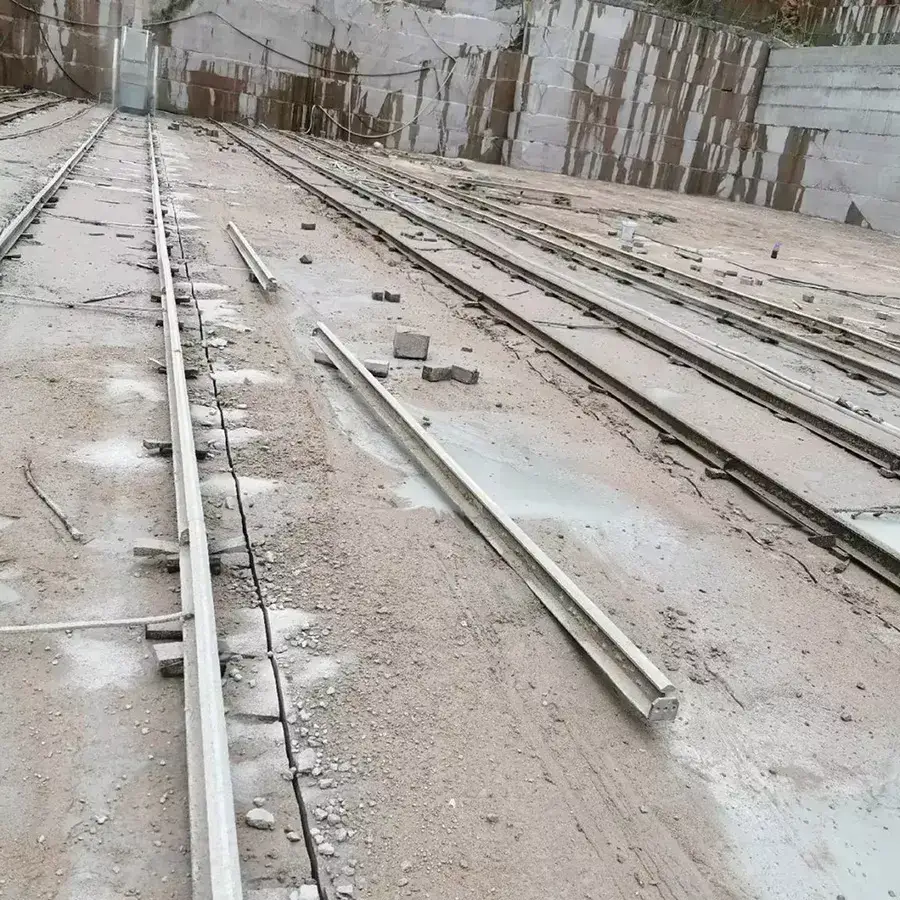
1. Forged Steel Rails and Rack Lubrication
The linear precision of your double blade cutter is entirely dependent on the condition of its foundation: the heavy-duty steel rails.Quarry mud, highly abrasive rock dust, and water form a destructive paste that acts like sandpaper on moving parts. The rack and pinion gear system that drives the machine along the rails is highly susceptible to this wear.
Action Step: After every major rail relocation, operators must use a wire brush or high-pressure air to thoroughly clean the rack teeth. Once cleared of hardened mud, apply a liberal coating of high-viscosity, water-resistant industrial grease. If the gears wear down prematurely due to a lack of lubrication, the machine will ‘stutter’ as it travels. This stuttering vibration transfers directly to the diamond blades, causing immediate segment chipping and uneven block faces.
2. Main Spindle and Bearing Care
The main spindle bears the extreme rotational forces of two massive diamond blades. Lack of lubrication here is a fast track to catastrophic failure.The rigid spindle is the mechanical core that ensures your twin blades remain perfectly parallel. The heavy-duty bearings supporting this spindle operate under immense radial load and generate significant heat.
Action Step: Implement a strict greasing schedule. We recommend pumping fresh high-temperature bearing grease into the spindle zerk fittings every 48 hours of active cutting. If these bearings run dry, the extreme friction will cause them to seize up violently. Even worse, localized overheating can cause the solid steel spindle to warp infinitesimally—permanently destroying the machine’s ability to execute a perfectly straight, parallel cut.

3. Protecting the Permanent Magnet (PM) Motor
Permanent magnet motors offer unparalleled torque and efficiency, but they require strict thermal management to maintain their magnetic strength.MosCut machines utilize advanced Permanent Magnet motors for superior deep-cutting torque. However, extreme heat is the natural enemy of permanent magnets, potentially causing irreversible demagnetization if pushed beyond operational limits without cooling.
Action Step: Quarry environments are saturated with limestone or granite dust, which quickly cakes over motor cooling fins and fan intakes, acting like a thick insulating blanket. Operators must inspect the motor housing daily. Use compressed air to blow out the cooling fan cowling and ensure the ambient air can effectively draw heat away from the motor block. Keeping the PM motor cool guarantees its torque output will remain at 100% for over a decade.

4. Securing the IP65 Electrical Control Box
The control cabinet is the brain of your machine. Keeping dirt and moisture out is essential for the survival of your VFDs and PLCs.While MosCut equips its double blade cutters with highly durable IP65-rated enclosures, the reality of quarry work means doors are occasionally opened by operators with muddy hands or during parameter adjustments in dusty conditions.
Action Step: Once a month, with the main power completely disconnected, open the cabinet and use dry, low-pressure compressed air to gently blow away any micro-dust that has settled on the Variable Frequency Drive (VFD) heat sinks and contactors. Furthermore, inspect the rubber weather-stripping around the cabinet door. If the rubber is cracked or dry-rotted from UV exposure, replace it immediately to maintain the cabinet’s waterproof integrity.

5. Blade Flanges and Mounting Precision
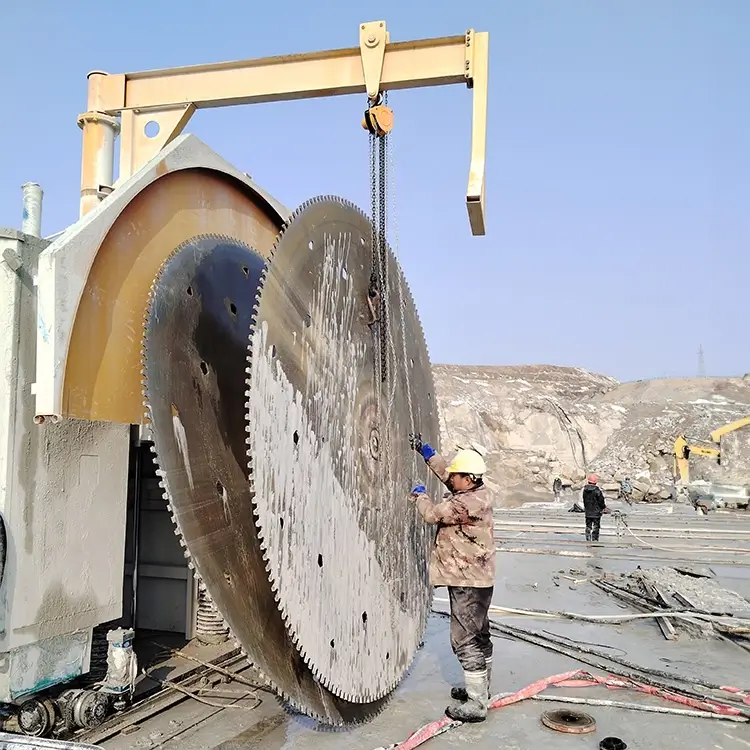
A perfect cut requires a perfectly mounted blade. Even a millimeter of debris on the mounting flange will cause massive blade wobble.When swapping out massive 3-meter or 4-meter diamond circular blades, operators are dealing with incredible centrifugal forces. Any imperfection during the mounting process translates to severe cutting inaccuracies.
Action Step: Before bolting a new blade onto the spindle, use a wire brush and parts cleaner to meticulously scrub the mating surfaces of the steel flanges. If even a single grain of sand or a flake of rust is trapped between the flange and the blade core, it will multiply into several millimeters of ‘wobble’ at the blade’s outer edge. This wobble creates an excessively wide cut, wears out the diamond segments prematurely, and destroys the parallel finish of the block.
Experience Industrial Reliability
Maximize your quarry’s uptime with machinery engineered for heavy-duty durability and ease of maintenance. Explore the MosCut Double Blade Cutter today.
View Double Blade Cutters