
 Stone Cutting Machines
 Stone Polishing Machines
 Bridge Saw Machines
 Stone Quarry Cutting Machines
 Stone Block Cutter Machine
 CNC Stone Wire Saw Machine
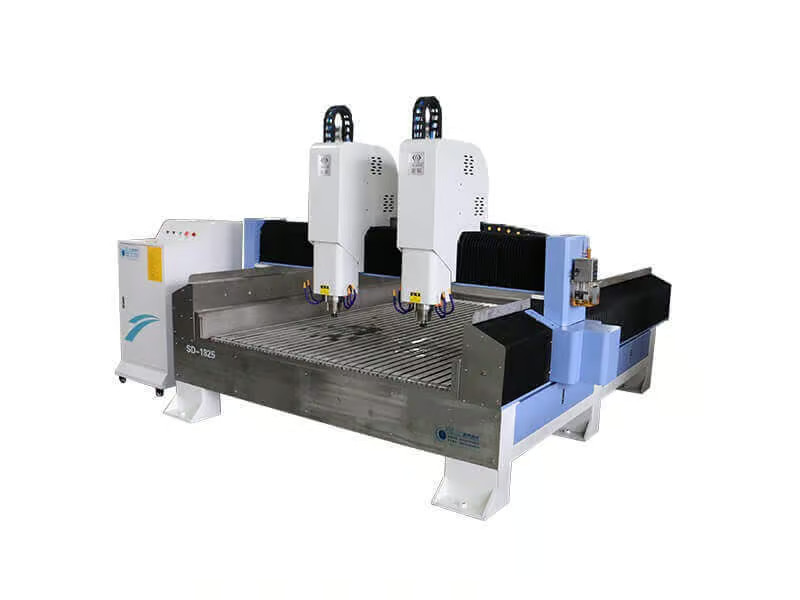 Stone Engraving Machines
 Thin Stone Veneer Saw Machine
 Horizontal Stone Slab Splitting Machine
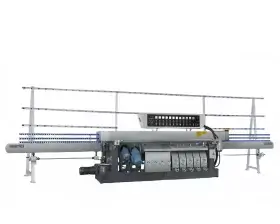 Stone Edge Polishing Profiling Machine
 Stone Auxiliary Equipment
In the global demolition and quarrying sector, many contractors operate under a dangerous financial misconception: they believe that because the per-kilogram price of dynamite is cheap, blasting is the most cost-effective extraction method. However, according to strict safety compliance frameworks published by the Occupational Safety and Health Administration (OSHA), the handling of commercial explosives introduces catastrophic “Systemic Costs”. When you factor in the requirements for specialized explosive storage magazines, licensed blasters, massive insurance premiums, and mandatory evacuation downtime, the true cost of blasting is astronomically high. MosCut Hydraulic Rock Splitters eliminate these systemic costs entirely by offering a purely mechanical, non-explosive rock-breaking solution.
A civil contractor in Colombia responsible for a major highway expansion project recently conducted a rigorous Return on Investment (ROI) audit. Under their traditional explosive methodology, they were burning through thousands of dollars weekly just to cover the salaries of certified blasting engineers, security escorts for the explosive transport, and the heavy equipment downtime caused by mandatory site evacuations. Upon transitioning to a MosCut diesel-powered hydraulic splitting system, the financial landscape transformed. Although the equipment required a higher initial capital expense, the contractor achieved total break-even in under 45 days. By eliminating compliance fees and running their excavators and splitters simultaneously without evacuation delays, their overall rock extraction costs plummeted by an incredible 65%.
The Illusion of Cheap: Hidden Costs of Blasting
Dynamite is cheap to buy, but incredibly expensive to legally detonate.If you only look at the invoice from your explosives supplier, blasting seems like a bargain. But explosives come with a massive bureaucratic and logistical tail. You cannot allow regular quarry laborers to handle dynamite. You are legally required to hire a highly paid, state-licensed Blasting Engineer.
Furthermore, explosives cannot be stored in a standard tool shed. You must construct and maintain heavy-duty, climate-controlled, anti-theft explosive magazines that meet strict national security standards. You must also pay for specialized transport vehicles and 24-hour security guards. Conversely, a MosCut Hydraulic Splitter requires zero specialized licensing. Any standard heavy equipment operator or laborer can be trained to safely operate the pump station and cylinders in less than 30 minutes. It sits in a normal storage container and requires absolutely no regulatory oversight or security guards.

The Downtime Penalty: Time is Money
You are not just paying for explosives; you are paying your entire crew to stand around and do nothing.The single greatest hidden cost of blasting is Site Evacuation Downtime. Before every single blast, alarms must be sounded. Every excavator, dump truck, and worker within a 500-meter radius must shut down and evacuate. After the detonation, the crew must wait for toxic gas and silica dust clouds to dissipate. Then, an inspection crew must sweep the area for highly dangerous unexploded ordnance (misfires). This process routinely wastes 1 to 2 hours per blast.
Hydraulic splitting offers the ultimate financial advantage: Parallel Operation. Because hydraulic splitters produce zero fly-rock, zero seismic shockwaves, and zero explosive gas, you do not need to clear the site. Your DTH drillers can be drilling the next row of holes, while the hydraulic splitters break the current row, and excavators load the broken rock into trucks just meters away. 24/7 continuous operation becomes a reality.

Insurance and Compliance Costs
The legal liability of a single fly-rock incident can bankrupt your contracting business.📈 Skyrocketing Premiums
Insurance companies view explosives as extreme high-risk liabilities. If your contracting company’s portfolio includes explosive demolition, your Public Liability Insurance and Worker’s Compensation premiums will be exponentially higher than a contractor who uses strictly mechanical methods. Switching to hydraulic splitters instantly reclassifies your operational risk profile, saving tens of thousands in annual premiums.
⚖️ Environmental Fines
Urban expansion means quarries and construction sites are moving closer to residential zones. If explosive vibrations crack the foundation of a neighboring building, or if a rogue fly-rock damages public infrastructure, your project will be shut down immediately by authorities. The legal fees, compensation payouts, and daily penalties for delayed project delivery far outweigh any money saved on cheap explosives.
Block Yield: The Dimension Stone Advantage
Explosives destroy the very product you are trying to sell. Hydraulic splitters protect your profit margins.For dimensional stone quarries extracting premium marble or granite, the financial math is even more heavily skewed against explosives. A dynamite blast relies on a chaotic, omnidirectional shockwave. Even when using careful pre-split blasting techniques, the shockwave creates millions of invisible micro-fractures deep inside the rock.
When that block is eventually transported to the processing plant and put through a wire saw, those micro-fractures cause the slabs to shatter on the cutting table, rendering them worthless. Hydraulic splitting, on the other hand, provides perfectly clean, directional tension. It snaps the rock exactly along the drilled line without damaging the internal structure of the block. By switching to MosCut splitters, quarries routinely see their usable, export-grade Block Yield increase by over 30%. You are literally pulling more money out of the same hole.

Total Cost of Ownership (TCO) Comparison
Let’s look at the actual math over a standard 12-month quarrying operation.Explosives represent a “low upfront, infinite recurring” cost model. MosCut Hydraulic Splitters represent an “upfront investment, near-zero recurring” profit model.
| Cost Category | Explosive Blasting Method | MosCut Hydraulic Splitters |
|---|---|---|
| Initial Equipment Capital | Very Low (Just buying the powder) | Moderate (Purchasing pump & cylinders) |
| Operational Manpower | High (Highly paid licensed blasters required) | Low (Standard laborers can operate) |
| Logistics & Storage | High (Secure magazines, guards, permits) | Zero (Stores in standard equipment sheds) |
| Insurance Premiums | Extreme (High-risk liability policies) | Low (Standard heavy machinery policies) |
| Downtime (Evacuations) | 1 to 2 hours lost per blast cycle | Zero (Continuous 24/7 parallel operation) |
| Material Waste (Micro-fractures) | High (Reduced quality of dimensional blocks) | Zero (Perfect structural integrity preserved) |
| 12-Month Total Expenditure | Extremely High (Continuous bleed) | Low (High ROI, paid off in months) |
Take Control of Your Demolition Timeline
Eliminate the bureaucratic delays, high insurance costs, and unpredictable dangers of traditional explosives. Upgrade to MosCut Hydraulic Rock Splitters for precise, silent, and unstoppable extraction power.
Explore MosCut Hydraulic Splitters