
 Stone Cutting Machines
 Stone Polishing Machines
 Bridge Saw Machines
 Stone Quarry Cutting Machines
 Stone Block Cutter Machine
 CNC Stone Wire Saw Machine
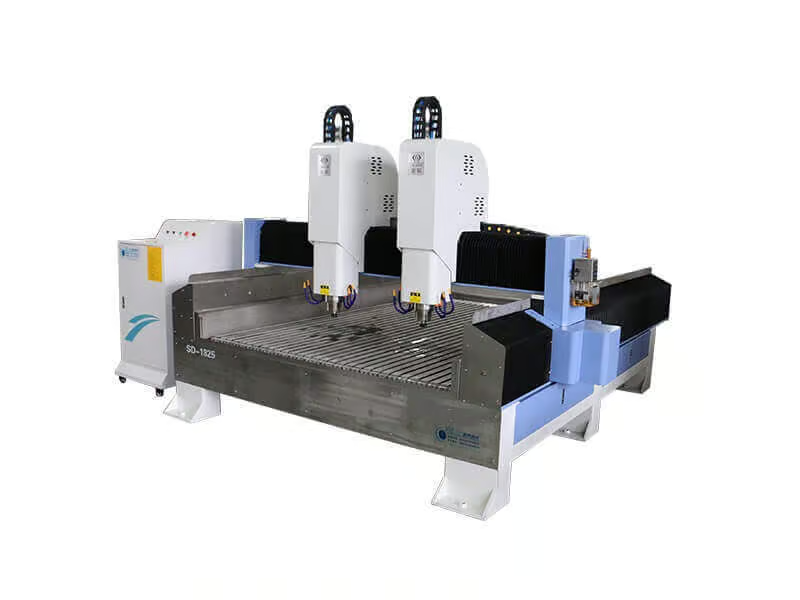 Stone Engraving Machines
 Thin Stone Veneer Saw Machine
 Horizontal Stone Slab Splitting Machine
 Stone Edging Beveling Machine
 Stone Auxiliary Equipment
Hydraulic Rock Splitter
As global environmental and safety regulations tighten, traditional explosive blasting in quarries and urban environments is becoming heavily restricted. According to urban demolition protocols established by the European Demolition Association (EDA), managing seismic vibrations and toxic dust emissions is now a legal mandate for contractors. MosCut Hydraulic Rock Splitters represent the ultimate evolution in physical rock breaking. Utilizing extreme wedge mechanics, our heavy-duty cylinders generate up to 1090 Tons of lateral tearing force within 5 to 12 seconds, silently destroying the hardest rock formations from the inside out with zero vibration and zero fly-rock.
A large-scale quarry operating on the outskirts of a residential zone in Chile faced an indefinite shutdown following a government-issued ban on explosives. Transitioning to a MosCut diesel-powered hydraulic splitting system not only allowed them to resume operations legally, but it also transformed their business model. By eliminating the administrative red tape of explosive permits and mandatory clearing times, their daily extraction efficiency increased by 40%. Furthermore, because hydraulic splitting provides controlled, directional fracturing, their premium block yield improved drastically compared to the random micro-fracturing caused by dynamite.
Solving Critical Demolition Pain Points
Traditional blasting is increasingly restricted and unpredictable. MosCut splitters provide absolute control over your extraction and demolition timelines.Bypassing Explosive Bans
The Solution: Bypass the exhausting bureaucracy, security details, and massive insurance costs associated with dynamite. Operate legally and freely 24/7 in residential zones, deep tunnels, and heavily restricted urban environments.
Maximizing Block Yield
The Solution: Explosives send chaotic shockwaves that induce invisible micro-fractures, ruining valuable dimensional stone. Hydraulic splitting allows for highly precise, directional fracturing, preserving the integrity of your granite and marble blocks.
Zero Vibration & Fly-Rock
The Solution: Protect surrounding infrastructure. Our splitters rely entirely on static physical tension. There are no shockwaves to disrupt underground utilities or compromise neighboring building foundations. Personnel remain completely safe.
Instant Secondary Breakage
The Solution: Stop wasting hours pounding on massive boulders with hydraulic breaker hammers. Simply drill a hole, insert the MosCut cylinder, and split impenetrable oversize rocks in a matter of seconds, clearing your excavation site rapidly.
Wide Application Scenarios
Wherever explosives are banned or unsafe, MosCut splitters provide the ultimate extraction and demolition solution.
Dimensional Stone Quarrying: By drilling a row of holes and activating multiple splitters simultaneously, operators achieve a perfect, straight fracture line, preserving the block’s commercial value.
Dimensional Stone Quarrying
Unlike explosives that shatter rock randomly and create invisible micro-fractures, hydraulic splitters offer surgical precision for high-value stone extraction. Paired with our DTH drilling machines, you can define an exact fracture line. Multiple cylinders act simultaneously to cleanly separate massive blocks of marble or granite from the bedrock with absolutely zero waste or internal structural damage.

Urban Demolition: Safely breaking down high-strength concrete structures adjacent to sensitive areas without ground vibrations or flying debris.
Urban Concrete Demolition
Demolishing a heavily reinforced concrete bridge pier or building foundation next to a hospital, school, or residential area requires extreme finesse. Explosives are illegal, and hydraulic breakers are too loud. Our splitters quietly tear apart ultra-high-strength concrete, snapping heavy internal rebar from the inside out, without shaking the ground, emitting dust clouds, or disrupting the city’s daily life.
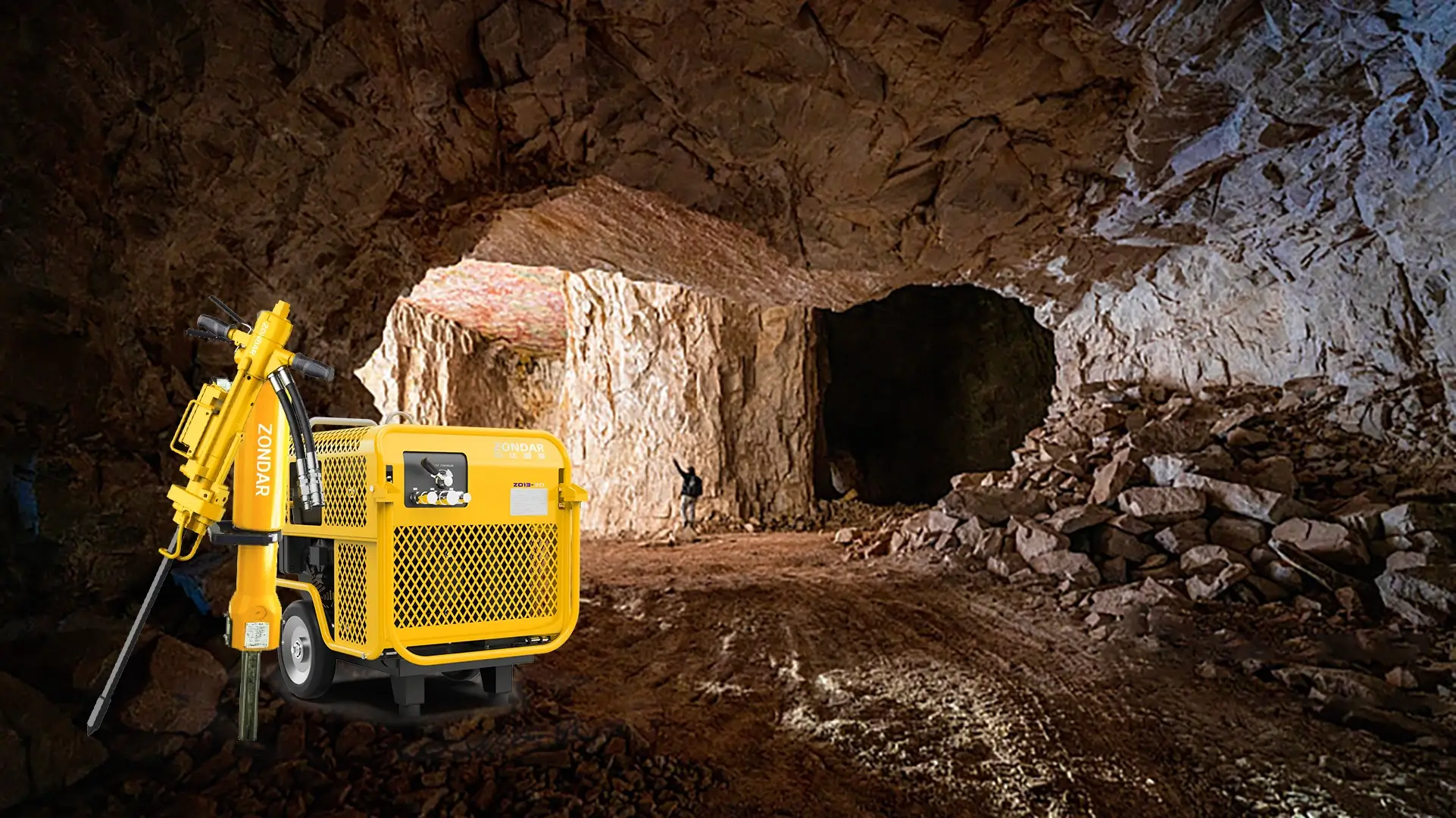
Confined spaces: The compact nature of the splitting cylinders allows a single worker to deliver massive breaking power deep inside narrow tunnels or shafts.
Tunneling & Shaft Sinking
When excavating deep underground shafts, subway expansions, or narrow tunnels in hard rock, using heavy hydraulic breaker hammers is slow and creates deafening, dangerous acoustic trauma for the crew. MosCut cylinders are light enough to be positioned horizontally or vertically by a single operator, silently cracking the tunnel face rapidly while maintaining a safe, controlled underground environment.

Secondary Breakage: Rapidly clearing massive oversized boulders that block earthmoving progress without bringing in specialized heavy machinery.
Secondary Boulder Splitting
Earthmoving contractors and highway repair crews frequently encounter massive boulders that standard excavator buckets cannot move and breaker hammers simply bounce off of. Instead of renting expensive specialty equipment or halting progress to acquire blasting permits, operators can simply drill a 46mm hole, insert a BL46 cylinder, and crack the massive boulder into manageable pieces in under 12 seconds.
High-Performance Consumables: Wedges & Feathers
Forged from premium aerospace-grade steel, our splitting components are built to endure thousands of extreme-pressure friction cycles.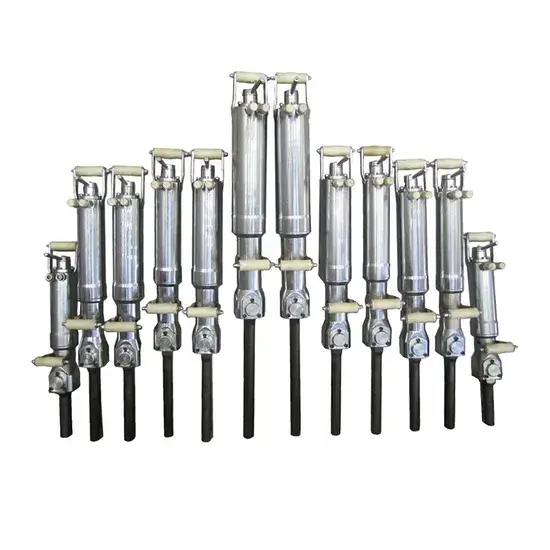
The Thrust Core: Forged from proprietary alloy steel and optimized mathematically to convert downward thrust into lateral expansion without bending under 60 MPa.
The Central Wedge (Thrust Core)
The central wedge is the heart of the mechanical transformation, enduring the absolute maximum downward hydraulic thrust from the piston. Cheap wedges will warp, bend, or snap under 60 MPa of pressure.
MosCut central wedges are forged using proprietary alloy steel and undergo over ten rigorous heat-treatment and quenching processes. The geometric taper angle is mathematically optimized to ensure 100% of the vertical force is translated into lateral expansion without binding. They are coated with a molybdenum disulfide treatment to resist extreme abrasion.

The Counter-Wedges: These outer feathers transfer up to 1090 tons of tearing force to the rock. Regular lubrication is mandatory to prevent extreme-pressure galling.
The Feathers (Counter-Wedges)
The two outer feathers are the components that physically grind against the abrasive rock wall, transferring up to 1090 tons of tearing force. They must possess immense tensile strength to avoid snapping when the rock shifts.
To prevent catastrophic metal galling (cold welding) between the sliding central wedge and the feathers under such extreme pressure, operators must strictly adhere to maintenance protocols. The inner faces of the feathers must be regularly coated with MosCut’s specialized Extreme-Pressure Lubricating Paste to ensure smooth, frictionless force transfer.
The Science of Splitting: Wedge Mechanics
Rock is extremely strong under compression, but incredibly weak under tension. We exploit this natural geological flaw.The mechanics behind the MosCut Hydraulic Splitter rely on a fundamental principle of geology: stone can withstand immense downward pressure, but it tears easily when pulled apart from the inside. The system consists of a hydraulic power pump and a heavy-duty steel cylinder containing a central wedge and two counter-wedges (feathers).
When activated, the pump delivers extreme hydraulic oil pressure (up to 63 MPa) into the cylinder. This drives the piston and the central wedge aggressively downward between the two feathers. The physics of the angled wedge convert this downward thrust into a massive lateral tearing force. The splitting force is calculated using the formula $$F_{split} = frac{F_{thrust}}{2 times tan(theta)}$$. By optimizing the angle ($theta$), MosCut splitters multiply the hydraulic thrust into an overwhelming transverse force, cleanly snapping the rock in under 12 seconds.
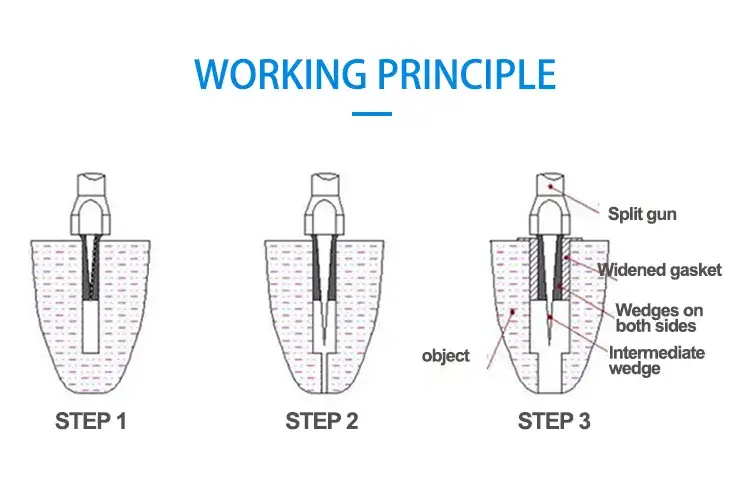
Force multiplication: A relatively small downward hydraulic thrust is converted by the angled wedge into up to 1090 Tons of unstoppable lateral tearing force.
Power Stations: The Heart of the Splitter
The cylinders deliver the force, but the pump station dictates the speed and adaptability. Choose the perfect power source for your site.⚡ Electric Motor Pump
Available in 1.5KW, 4KW, and 7.5KW (220V/380V) configurations. This is the ultimate choice for indoor tunnel excavations, basement demolitions, or fixed quarry sites with stable grid power. It provides completely emission-free, ultra-quiet operation.
🛢️ Diesel Engine Pump
Powered by a rugged 6HP diesel engine, this power station is built for remote, off-grid operations. Perfect for open-pit mining, highway slope stabilization, and heavy-duty earthworks where mobility and relentless endurance are required.
⛽ Gasoline Engine Pump
Equipped with a 9HP gasoline engine, this unit offers a lighter physical footprint and easier cold-weather starting compared to diesel. It is the preferred choice for agile municipal repair teams and medium-scale civil demolition projects.
💨 Pneumatic Pump (Air-Driven)
A strictly explosion-proof design. Driven entirely by compressed air, this specialized pump station is engineered for highly hazardous environments like gassy coal mines, chemical plants, or extremely wet underground shafts where electricity and combustion are prohibited.

Technical Specifications
Engineered to deliver massive hydraulic force. Review our comprehensive pump and cylinder specifications to match your operational scale.Rock Splitter Pump Pack Parameters
| Model Type | Packing (mm) | Weight (kg) | Tank Capacity (L) | Engine Power | Working Pressure (Mpa) | Working Flow (L/min) | Configurable Cylinders |
|---|---|---|---|---|---|---|---|
| Electric | 320*360*650 | 48 | 16 | 1.5KW (220V/380V) | 55 ~ 63 | 1 | 1 ~ 3 |
| 1100*700*850 | 100 | 33 | 4KW (220V/380V) | 3 ~ 10 | 1 ~ 10 | ||
| 1170*720*1000 | 150 | 48 | 7.5KW (380V) | 5 ~ 10 | 1 ~ 10 | ||
| Diesel | 1100*800*850 | 130 | 50 | 6HP | 3 ~ 10 | 1 ~ 10 | |
| Gasoline | 1000*800*850 | 120 | 50 | 9HP | 3 ~ 10 | 1 ~ 10 |
Technical Parameters of Cylinders (Splitting Guns)
| Model | Piston Dia. (mm) | Drilling Dia. (mm) | Drilling Depth (mm) | Wedge Length (mm) | Crack Width (mm) | Splitting Time (s) | Theory of Force (T) | Weight (kg) |
|---|---|---|---|---|---|---|---|---|
| BL38A | 80 | φ38 ~ 42 | ≥300 | 150 ~ 450 | 10 ~ 35 | 5 ~ 12 | 480 ~ 625 | 23 |
| BL38B | 80 | φ38 ~ 42 | ≥500 | 150 ~ 450 | 10 ~ 40 | 5 ~ 12 | 500 ~ 650 | 26 |
| BL42A | 90 | φ42 ~ 46 | ≥300 | 150 ~ 450 | 10 ~ 40 | 5 ~ 12 | 580 ~ 725 | 30 |
| BL42B | 90 | φ42 ~ 46 | ≥500 | 150 ~ 450 | 10 ~ 40 | 5 ~ 12 | 600 ~ 800 | 33 |
| BL44A | 100 | φ44 ~ 48 | ≥300 | 150 ~ 450 | 10 ~ 40 | 5 ~ 12 | 700 ~ 925 | 33 |
| BL44B | 105 | φ44 ~ 48 | ≥500 | 150 ~ 450 | 10 ~ 40 | 5 ~ 12 | 750 ~ 975 | 35 |
| BL46 | 110 | φ46 ~ 50 | ≥500 | 150 ~ 450 | 10 ~ 40 | 5 ~ 12 | 800 ~ 1090 | 36 |
Machine in Action: Working Video
Watch massive hydraulic pressure effortlessly split solid granite in less than 10 seconds.Global Customer Success Stories
Trusted by top-tier contractors worldwide to deliver when explosives are not an option.
India: Premium Black Granite
By switching to hydraulic splitting, this quarry eliminated micro-fractures in their dimensional blocks, increasing their export-grade yield by over 30%.
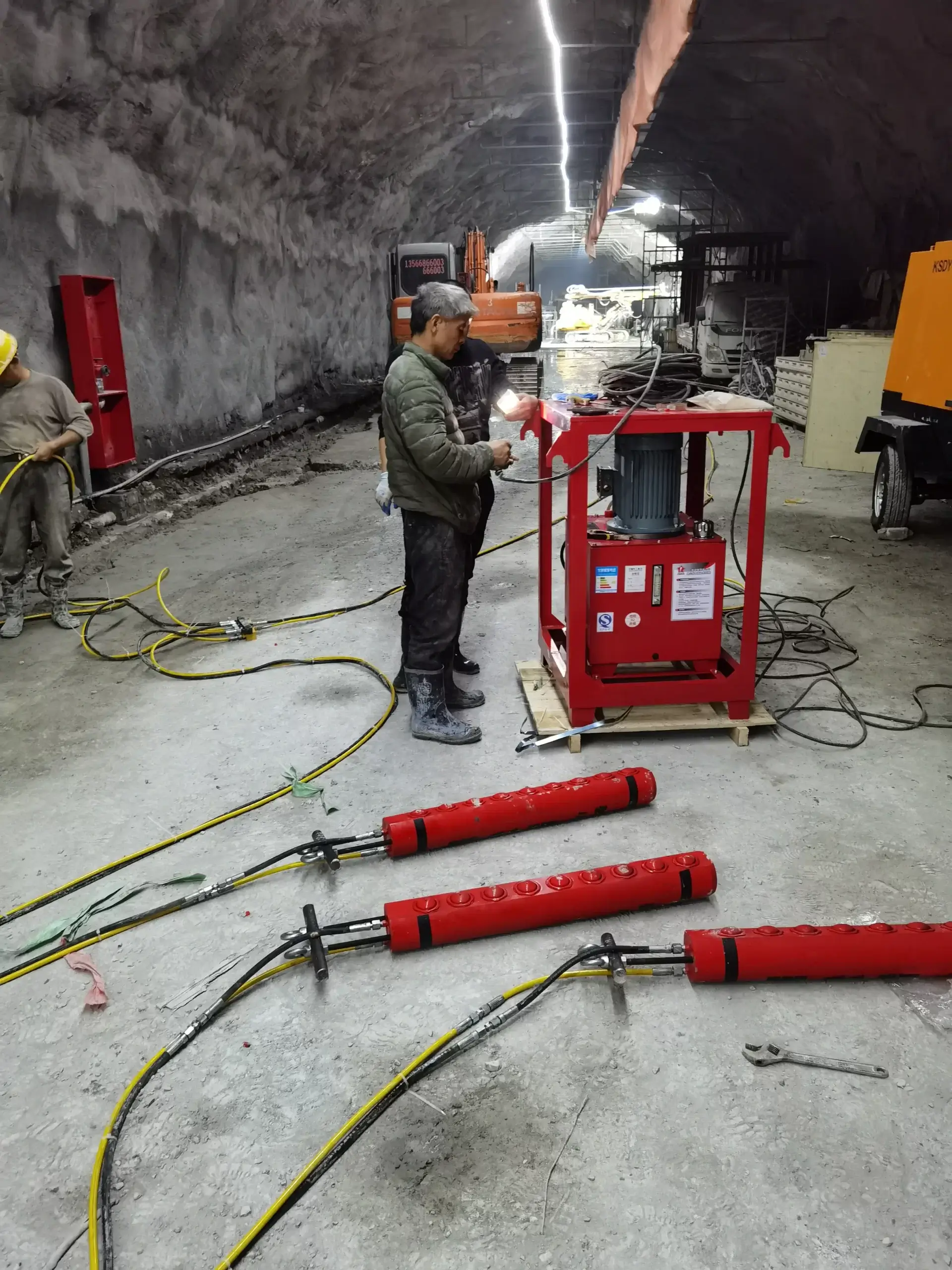
Germany: Subway Expansion
Operating directly beneath historic city buildings, our electric splitters easily cracked hard bedrock while strictly adhering to the city’s zero-decibel noise ordinances.
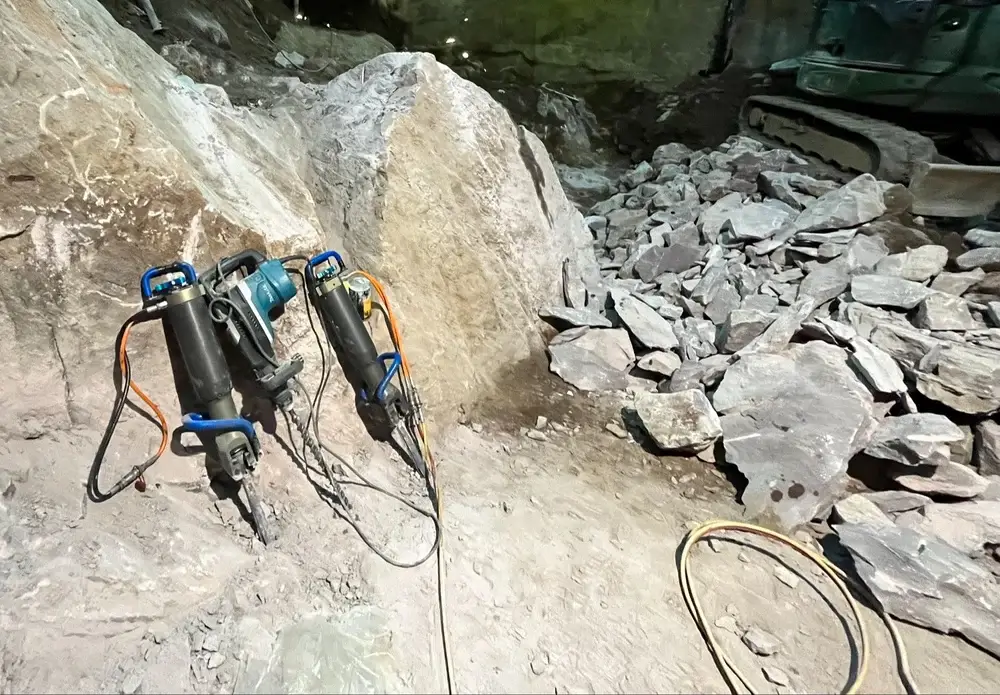
Canada: Winter Highway Repair
In -20°C conditions, the robust diesel pump station reliably powered 6 cylinders simultaneously to rapidly clear dangerous cliffside boulders without halting traffic.

Brazil: Dam Foundation Demolition
Used to silently dismantle high-strength heavily reinforced concrete, snapping thick rebar internally without causing any seismic damage to the adjacent active dam wall.
Related Insights & Demolition Guides
Master the science of silent demolition with our expert engineering guides.
Explosives vs. Splitters: Cost Analysis
A deep dive into the hidden costs of dynamite permits, security, and downtime compared to the ROI of physical hydraulic demolition.
Read More
Optimizing Hole Spacing & Depth
Learn how to calculate the perfect distance between boreholes to maximize the tearing force and ensure a clean, straight fracture line.
Read More
Preventing Feather Galling (Lubrication)
Why using standard grease will destroy your wedges. Discover the importance of extreme-pressure conductive paste for component longevity.
Read More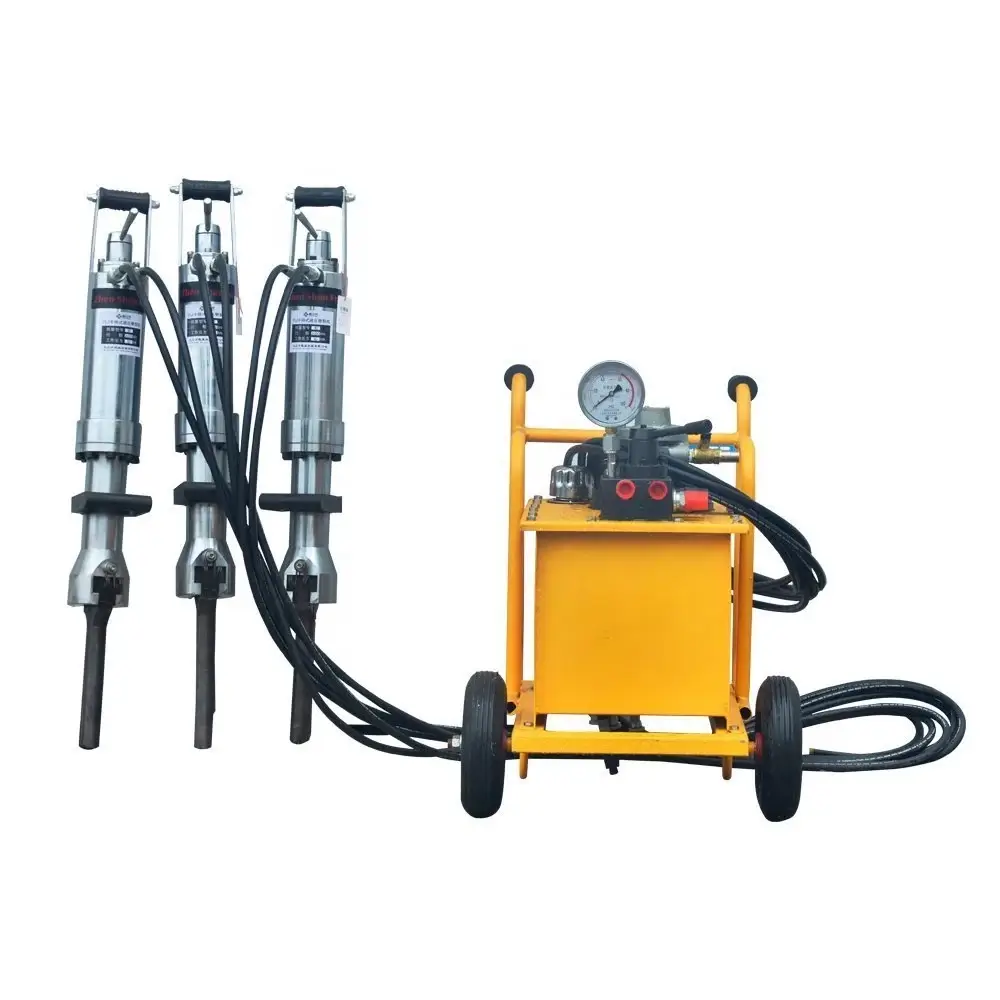
Winter Maintenance: Hydraulic Fluids
How to select the correct anti-wear hydraulic oil viscosity and properly warm up your pump station to prevent seal blowout in freezing temperatures.
Read MoreTake Control of Your Demolition Timeline
Eliminate the bureaucratic delays, high insurance costs, and unpredictable dangers of traditional explosives. Upgrade to MosCut Hydraulic Rock Splitters for precise, silent, and unstoppable extraction power.
Explore Quarry Tools & AccessoriesFrequently Asked Questions
1. How many splitter cylinders can I run from a single 7.5KW pump station?
A heavy-duty 7.5KW electric pump or a 9HP gasoline pump can comfortably power and synchronize up to 10 splitting cylinders simultaneously via a specialized manifold block, ideal for long straight cuts.
2. What happens if the rock doesn’t crack and the feathers get stuck?
If the rock is too massive and doesn’t yield, do not force it. Retract the central wedge completely. If the feathers are still tightly gripped by the rock, use a secondary drill to make a relief hole next to the stuck cylinder to alleviate the tension.
3. What grade of hydraulic oil should I use in the pump station?
We strongly recommend high-quality Anti-Wear (AW) hydraulic oil. In standard summer or warm climates, use AW-46. In freezing winter conditions, you must switch to a thinner AW-32 oil to prevent pump cavitation and sluggish cylinder response.
4. Is it necessary to drill the hole perfectly straight?
Yes, absolutely. The borehole must be as straight and cylindrical as possible. If the hole curves, the rigid steel cylinder will experience severe bending stress when inserted, which can permanently warp or break the internal wedge under 60 MPa of pressure.
5. How often must I apply the lubricating paste to the feathers?
For maximum lifespan, extreme-pressure lubricating paste should be brushed onto the inner sliding surfaces of the feathers after every 3 to 5 splitting cycles. Operating the wedges dry will instantly cause irreversible metal galling.
6. Can the hydraulic splitter break rebar-reinforced concrete?
Yes. While the splitter will not cut the steel rebar itself, the immense 1000-ton expansion force will completely shatter the surrounding high-strength concrete, fully exposing the rebar so it can be easily cut with a torch or shear.
7. What is the minimum hole depth required for the BL46 model?
The BL46 cylinder requires a minimum drilled hole depth of 500mm. The entire active wedge section must be fully enclosed within solid rock before activating the pump, otherwise, the top of the rock will simply chip off harmlessly.
8. How do I orient the cylinder to control the direction of the crack?
The rock will always split parallel to the gap between the two outer feathers. Before applying pressure, simply rotate the cylinder body in the hole so the gap aligns exactly with your desired fracture line.
9. What maintenance is required for the diesel pump engine?
Standard industrial engine maintenance applies: change the engine oil every 100 operating hours, regularly inspect and clean the air filter (crucial in dusty quarry environments), and ensure the hydraulic fluid level remains visible in the sight glass.
10. Do you provide spare wedges and feathers for international orders?
Yes. Wedges and feathers are consumable wear parts. We strongly advise purchasing backup sets of wedges and feathers with your initial machine order to guarantee zero downtime during massive excavation projects.