
 Stone Cutting Machines
 Stone Polishing Machines
 Bridge Saw Machines
 Stone Quarry Cutting Machines
 Stone Block Cutter Machine
 CNC Stone Wire Saw Machine
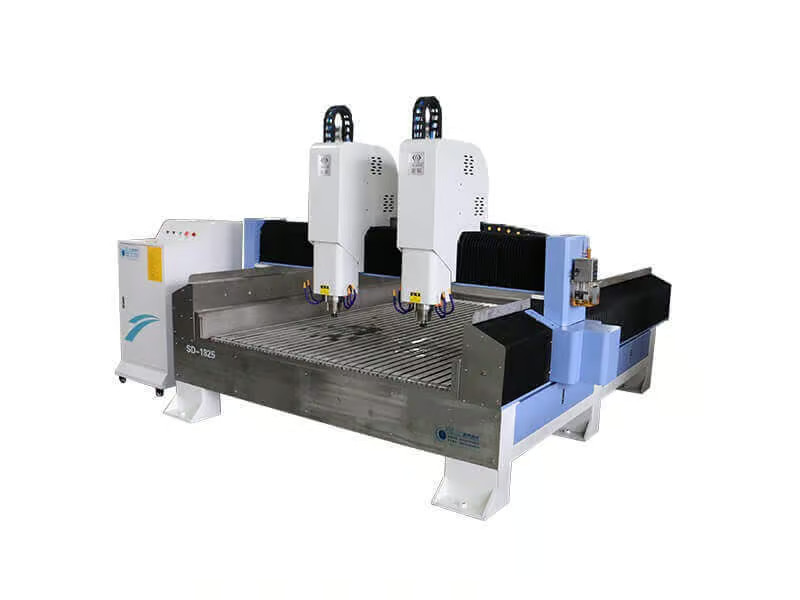 Stone Engraving Machines
 Thin Stone Veneer Saw Machine
 Horizontal Stone Slab Splitting Machine
 Stone Edge Polishing Profiling Machine
 Stone Auxiliary Equipment
In a heavy-duty automatic stone polishing line, the pneumatic cylinders act as the literal “muscles” of the machine. According to MOSCUT’s 2026 global aftermarket service data, a staggering 68% of “water ripples” and localized dull spots on finished slabs are not caused by low-quality abrasives, but rather by poorly maintained pneumatic systems failing to deliver consistent downward pressure.
Last year, a large granite countertop fabricator in Texas, USA, lost a lucrative $200,000 commercial building contract. The reason? Their highly sought-after Black Galaxy granite slabs displayed irregular, hazy dark spots under natural lighting. During a site inspection, our engineers traced the root cause back to the factory’s air compressor. Because they failed to perform routine moisture draining, condensed water had infiltrated the machine’s air lines. This caused the internal metal walls of the cylinders on polishing heads #14 and #15 to rust and bind. Consequently, they could no longer maintain stable pneumatic polishing head pressure. In the stone industry, the quality of your compressed air—as strictly outlined by international standards like ISO 8573 for compressed air purity—directly dictates the final retail value of your stone.
The Heart of the Polish: Why Pneumatic Pressure Matters
Unlike outdated manual spring-loaded machines, modern automated lines rely entirely on pneumatic proportional valves to control the heavy cast-iron spindles. When a cylinder is operating smoothly, it dynamically adjusts to minute thickness variations in the slab, keeping the diamond or resin abrasives in perfect, even contact with the stone. If a cylinder sticks or leaks air, the abrasive head will either “bounce” and smash the stone, or hover just above the low spots, leaving them entirely unpolished.
The 3 Silent Killers of Pneumatic Cylinders
Your factory environment is constantly attacking your pneumatic components. Recognizing these three enemies is the first step in effective stone polishing machine maintenance.

1. Moisture in the Air Lines
Air compressors inherently generate condensation when compressing ambient air. If your factory lacks an effective air dryer or water trap, this moisture travels directly into the polishing machine’s pneumatic valves and cylinders. Water washes away vital internal lubricants and causes the polished internal barrels to oxidize and rust, leading to severe mechanical binding.

2. Stone Slurry Ingress
A wet polishing line produces a continuous spray of highly abrasive stone slurry (a mix of water and stone dust). If the protective rubber dust boots or lower wiper seals on your cylinders become torn or age-hardened, this abrasive mud will be sucked inside the cylinder during its upward stroke. Once inside, stone dust acts like sandpaper, rapidly destroying the internal O-rings.

3. Lack of Pneumatic Lubrication
Inside every cylinder are rubber O-rings that rub against the metal walls thousands of times per shift. Without a steady micro-mist of specialized pneumatic oil delivered via the machine’s FRL (Filter, Regulator, Lubricator) unit, these seals will run dry, overheat from friction, and crack. This results in massive air leaks and an immediate drop in polishing head pressure.
The Ultimate Preventive Maintenance Routine
Print this checklist and assign it to your lead operator. Consistent, small actions prevent catastrophic machine downtime.
Daily Checks
- Drain Water: Manually open the drain valves at the bottom of the main air compressor tank and the machine’s water traps to release accumulated condensation.
- Verify Pressure: Check the main pneumatic manifold gauges to ensure incoming air pressure is stable at the recommended MPa before starting the line.
Weekly Tasks
- Check Lubricator: Inspect the FRL unit’s oil bowl. Refill it with the manufacturer-recommended pneumatic oil (never use standard motor oil).
- Clean Externals: Wash down the exterior dust covers and cylinder rods with clean water to prevent thick stone mud from hardening and tearing the rubber seals.
Monthly Audits
- Listen for Leaks: During a scheduled downtime, pressurize the system and listen closely for any “hissing” sounds near the cylinder fittings or proportional valves.
- Grease Guide Pillars: Ensure the linear guide pillars (which run parallel to the cylinders) are heavily greased to prevent binding.
Upgrading Your Air Quality: The Compressor Connection
A world-class polishing machine cannot perform with a subpar air supply. To truly protect your pneumatic investment, ensure your factory is equipped with a high-capacity rotary screw air compressor paired with a Refrigerated Air Dryer. By dropping the dew point of the compressed air, a dryer guarantees that only 100% dry, clean air reaches your polishing line, effectively eliminating rust and water-related seal failures entirely.
Protect Your Output with Precision Engineering
Your factory’s profitability relies on machines that don’t quit. Upgrade to equipment designed to withstand the harshest stone fabrication environments.
Looking for uncompromised reliability?
Don’t let poor maintenance or cheap pneumatics ruin your perfectly cut slabs. Explore how the intelligent pneumatic systems on our industrial lines ensure a flawless mirror finish, 24/7.
Explore the Automatic Stone Polishing LineTop 10 FAQ: Pneumatic Cylinder Troubleshooting
1. My cylinder is constantly hissing air. What should I do?
A continuous hiss indicates a blown internal seal or a loose quick-connect fitting. Check the external air tubes first. If they are tight, the cylinder must be removed and rebuilt with a new seal kit, or replaced entirely.
2. Can I use standard engine oil or hydraulic fluid in the pneumatic lubricator?
Absolutely not. Engine oils and hydraulic fluids contain additives that will chemically swell, degrade, and melt the rubber O-rings inside the pneumatic cylinders. Only use ISO VG 32 or the specific lightweight pneumatic oil recommended by MOSCUT.
3. Why does the polishing head lower very slowly but raise very quickly?
This is usually caused by a blocked exhaust muffler on the directional control valve, or the speed control valve (throttle valve) attached to the cylinder needs to be recalibrated to allow faster downward airflow.
4. How often do pneumatic cylinder seals need to be replaced?
In a well-maintained system with dry, lubricated air, cylinders can last 3 to 5 years before needing a rebuild. In factories with wet, dirty air, they may fail in under 6 months.
5. What should I do if my pneumatic cylinders freeze in the winter?
Freezing means water is present in your air lines. You must thaw the lines safely, completely drain the compressor tank, and immediately install an in-line heated air dryer to remove moisture before it reaches the machine.
6. How can I tell if my air pressure is too high for the marble I’m polishing?
If the pressure is too high, you will hear the machine straining, the marble may chip at the edges, and you will notice distinct “swirl marks” or heat discoloration on the stone surface. Marble requires gentle pressure (typically 0.15 – 0.25 MPa).
7. The PLC says the head is down, but the cylinder hasn’t moved. Why?
This points to an electrical issue with the solenoid valve controlling the cylinder, or a complete mechanical binding of the linear guide pillars caused by severe rust or lack of grease.
8. Is it normal for the FRL lubricator to use a lot of oil?
No. The lubricator should only drop 1 to 2 drops of oil per minute of continuous machine operation. If it drains rapidly, the drip rate dial is set too high and needs to be adjusted down to prevent flooding the cylinders.
9. Why do the cylinders on the coarse grinding heads fail faster than the buffing heads?
The coarse heads at the front of the machine bear the brunt of the heavy, initial stock removal. They experience far more violent vibration and mechanical shock when hitting uneven raw slabs, which naturally accelerates seal wear.
10. Can I clean the external cylinder rods with a pressure washer?
It is not recommended. High-pressure water can force its way past the dust wiper seals and inject water directly into the pneumatic chamber. Always use low-pressure water or a damp rag to clean the cylinder exteriors.