
 Stone Cutting Machines
 Stone Polishing Machines
 Bridge Saw Machines
 Stone Quarry Cutting Machines
 Stone Block Cutter Machine
 CNC Stone Wire Saw Machine
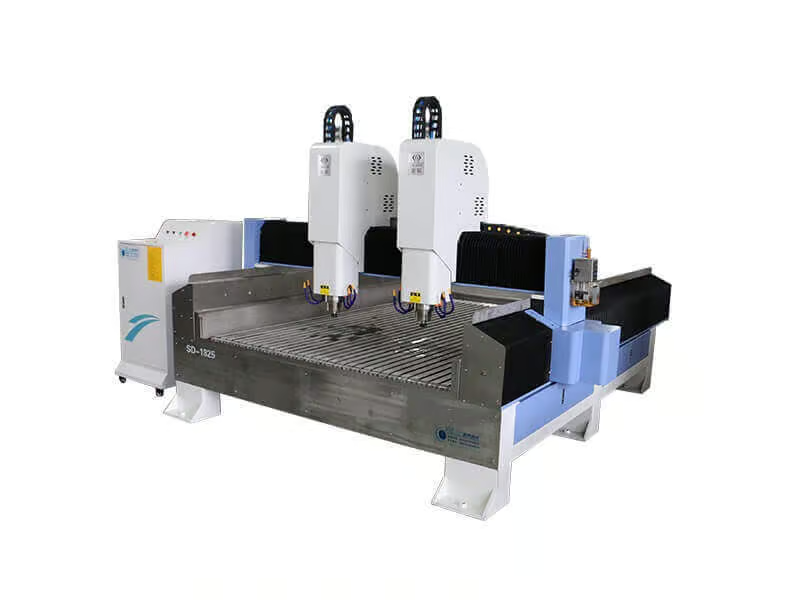 Stone Engraving Machines
 Thin Stone Veneer Saw Machine
 Horizontal Stone Slab Splitting Machine
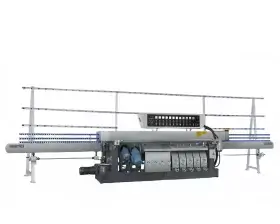 Stone Edge Polishing Profiling Machine
 Stone Auxiliary Equipment
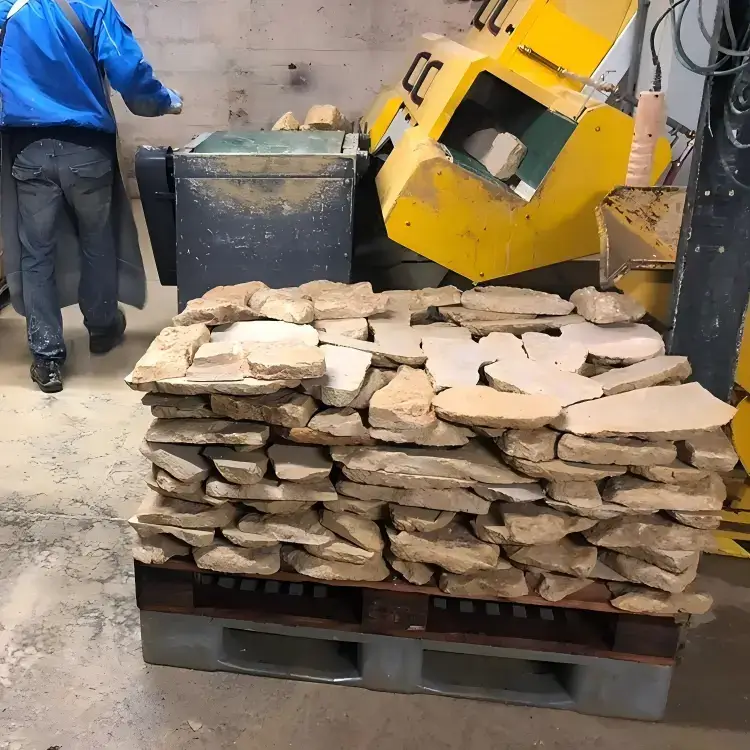
In the heavy extraction industry, what you throw away often holds more latent margin than what you successfully quarry. According to solid waste reclamation guidelines published by the Mine Safety and Health Administration (MSHA) and global environmental agencies, the traditional handling of overburden and irregular off-cuts—typically crushing them into low-value road gravel or paying exorbitant landfill fees—is economically inefficient. By introducing a multi-axis Thin Stone Veneer Saw Machine, quarries can transform this jagged, zero-value rubble into high-margin masonry veneers. Processing these off-cuts into premium flats and flawless right-angle corner stones not only fulfills ESG (Environmental, Social, and Governance) green compliance but creates a hyper-profitable secondary revenue stream with virtually zero raw material acquisition costs.
A mid-sized limestone quarry in Tuscany, Italy, recently demonstrated the financial power of this exact “waste-to-wealth” strategy. Historically, they spent tens of thousands of Euros annually to haul away fractured, un-blockable rubble. To reverse this loss, they integrated a MosCut automated veneer saw directly on-site and instituted a strict rubble-sorting Standard Operating Procedure (SOP). Workers learned to identify rocks with naturally weathered split-faces, feeding them into the machine to be hollowed out into perfect right-angle corners. By doing so, they eliminated their disposal overhead entirely. The formerly worthless scrap was transformed into rustic architectural cladding, retailing at over €150 per square meter, ultimately injecting an additional €1.2 million in pure net profit into their annual balance sheet.
💰 The Economics of Reclamation: The Yield Formula
You are currently paying heavy machinery fuel and labor costs to haul away your most profitable architectural products. When evaluating the ROI of a veneer saw, the calculation is dramatically skewed in your favor because the raw material cost is $0.
The efficiency of a reclamation line is determined by the following physical yield equation:
Even if an awkward, irregular rock yields only a 40% usable volume after being sawed, that 40% output represents 100% Gross Margin. Because the rock was destined for the crusher, every single flat and corner stone that drops off the conveyor belt is pure, unadulterated profit.
Triage Protocol: Sorting Rocks for Flats vs. Corners
Not all rubble is created equal. Operator vision is the first step in the high-yield manufacturing line.🪨 Identifying Potential Flats
To maximize the yield of flat wall cladding, operators should look for “pancake-shaped” or relatively flat rocks in the waste pile. The key feature is one side possessing an aesthetically pleasing natural cleft, weathered face, or oxidation colors. The operator simply places the ugly side face-down on the conveyor bed. The vertical blade cleanly saws off the back, leaving a perfectly uniform flat mounting surface while preserving the beautiful, rugged exterior.
📐 Scouting for the “Right-Angle” Block
Corner stones are the most lucrative items in the masonry catalog. Operators must scout the pile for “chunky,” thick, or bulbous rocks—especially those possessing a natural obtuse or rough 90-degree outer edge. These thick boulders provide the necessary depth for both the vertical and horizontal blades to plunge deep into the stone’s belly. By hollowing out the bulky interior, the machine creates a seamless right-angle veneer joint that commands premium market pricing.

🎯 Machining the Perfect Right-Angle Joint
A premium corner stone requires absolute orthogonal precision. When masons use hand-chisels or outdated guillotine splitters, the internal corner often ends up curved (radiused) or wider than 90 degrees. During installation on a building’s corner column, these inaccurate angles prevent the stones from sitting flush, resulting in massive, ugly mortar gaps that ruin the illusion of a solid stone wall.
The MosCut system eliminates this. By utilizing a micro-computer to calibrate the precise intersection point of the vertical and horizontal diamond blades, the machine cuts an absolute, pure Right Angle. With an internal tolerance strictly held to less than $0.2^circ$, your corners will lock perfectly onto the architectural framing, satisfying the most demanding luxury builders.
Workholding Physics: Taming the Wobbly Rock
A moving stone shatters blades. Absolute immobilization is required for multi-axis slicing.The biggest challenge with quarry waste is that it lacks a flat, stable bottom. If an irregular rock is placed on a standard flat belt, it will wobble like a pendulum. When the diamond blades strike the stone at thousands of RPMs, any lateral shifting will instantly snap the fragile right-angle corner, or worse, bend and destroy the expensive circular saw blades.
The Immobilization Matrix: MosCut engineered a specialized V-Way Conveyor Track paired with Lateral Clamping Boards. The V-shape utilizes gravity to force the irregular rock to seek its lowest, most stable nesting point. Simultaneously, thick vulcanized rubber teeth bite into the side walls of the rock. This creates thousands of pounds of static frictional holding force, locking the most misshapen rubble in a vice-grip as it travels smoothly through the violent cutting zone.

Turn Your Quarry Scrap into a Cash Cow
Stop treating your quarry off-cuts as an environmental liability. Transform your waste piles into your most lucrative architectural product line. Equip your facility with MosCut’s automated Thin Stone Veneer processing systems and dominate the masonry market.
View the Thin Stone Veneer Saw Machine