
 Stone Cutting Machines
 Stone Polishing Machines
 Bridge Saw Machines
 Stone Quarry Cutting Machines
 Stone Block Cutter Machine
 CNC Stone Wire Saw Machine
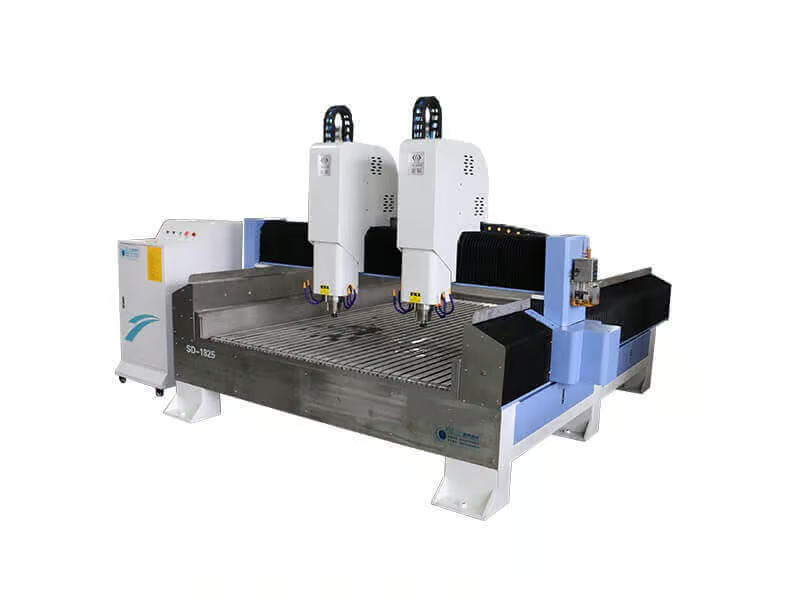 Stone Engraving Machines
 Thin Stone Veneer Saw Machine
 Horizontal Stone Slab Splitting Machine
 Stone Edge Polishing Profiling Machine
 Stone Auxiliary Equipment
In the realm of advanced masonry manufacturing, producing a flawless 90-degree L-shaped corner stone is the ultimate test of a machine’s structural rigidity. According to general principles of machine tool testing established by ISO 230 regarding orthogonal multi-axis tolerance control, intersecting cutting trajectories are highly susceptible to stress concentration. When cutting an L-corner veneer on a multi-blade saw, a spindle alignment error of merely 2 millimeters creates a catastrophic “Stress Riser” at the thinnest wall of the rock. This microscopic misalignment causes the corner to snap violently the moment it separates from the waste block. Achieving a perfect Right-Angle cut necessitates a strict mechanical calibration protocol to govern the clearance between the vertical and horizontal diamond blades.
A major sandstone exporter in Rajasthan, India, recently confronted this exact mechanical breakdown. Processing highly fragile sedimentary sandstone, their facility experienced an alarming 30% scrap rate—nearly one in three L-corners snapped just before exiting the cutting zone. Initially blaming the natural brittleness of the sandstone, they sought a consultation with MosCut engineers. Using magnetic dial indicators, our technicians remotely guided them through a diagnostic tramming sweep. The result was revealing: their outdated machine’s horizontal spindle exhibited a $1.5^circ$ “Spindle Droop” under load. This droop caused the horizontal blade to violently crash into the vertical blade’s path, severing the corner’s structural integrity. After upgrading to a rigid MosCut Veneer Saw equipped with heavy-duty lead-screw calibration, their corner snapping rate instantly dropped to 0%, securing their export yield.
🚨 The Intersection Dilemma: Over-cut vs. Under-cut
Missing the mathematical apex by a millimeter determines whether you yield a premium architectural corner or a handful of worthless dust. There are two primary failure states you must actively prevent during calibration:
1. The Over-cut (Intersecting Collision): If the vertical blade drops too low and crosses the horizontal plane of the bottom blade, it creates a deep “scar” into the inner wall of the stone. Not only does this ruin the aesthetic of the Right-Angle joint for the mason, but it artificially slices a fracture line into the thinnest part of the corner, almost guaranteeing it will break during transport.
2. The Under-cut (Incomplete Severance): If the blades do not meet at all, a 1-3mm “skin” of uncut stone remains connecting the veneer to the waste block. As the waste block drops off the conveyor, it forcefully tears this connecting skin, causing a jagged, ugly blowout on the inner edge of your premium corner stone.
The X-Z Axis Overlap Protocol
Defining the perfect microscopic clearance between high-speed spinning steel.To avoid both over-cuts and under-cuts, operators must establish the optimal clearance at the intersection point. The lowest point of the vertical diamond blade must perfectly graze the uppermost cutting plane of the horizontal blade.
Because diamond segments possess a specific width, the mathematical clearance ($C$) should be calibrated according to the following principle:
For example, if your diamond segment is 10mm wide, the ideal vertical gap between the intersecting edges is approximately 2mm. Utilizing the MosCut digital lead-screw handwheel, operators can micro-adjust the vertical spindle (Z-axis) downward until this golden ratio is achieved, ensuring complete severance without dangerous steel-on-steel collision.

Step-by-Step Dial Indicator Calibration
Execute this three-step protocol to eliminate spindle run-out and secure your 90-degree joints.🧲 Step 1: Spindle Tramming
With the machine powered completely off, attach a magnetic base dial indicator to the steel conveyor bed. Sweep the indicator tip across the face of the vertical and horizontal spindle flanges. Adjust the mounting bolts until the run-out deviation is zero, ensuring both spindles are perfectly orthogonal to the feed trajectory.
📏 Step 2: Feeler Gauge Static Check
Manually rotate both diamond blades until their closest segments align at the intersection apex. Insert a precision machinist feeler gauge into the gap. Adjust the lead-screw until the gap matches the optimal clearance calculated above. Never allow the steel cores to physically touch.
🪨 Step 3: The “Sacrificial Rock” Test
Power up the water coolant and spindle motors. Feed a low-value “sacrificial” waste rock into the machine. Engage the emergency stop midway through the cut and back the stone out. Inspect the kerf intersection. If the inner angle is a flawless Right-Angle and the waste belly separates cleanly, lock the spindle collars permanently.
Dynamic Blade Wear Compensation
A 600mm blade doesn’t stay 600mm forever. Your calibration must evolve with tool attrition.A fatal mistake made by novice operators is assuming calibration is a one-time event. Diamond segments are consumable abrasives designed to wear down. Suppose your brand-new vertical blade measures exactly 600mm in diameter, and you achieve perfect calibration. After cutting dense granite continuously for three days, the abrasive wear reduces the blade diameter to 596mm.
Because the blade radius has “shrunk” by 2mm, the vertical cut is now 2mm shallower. Overnight, your machine will go from producing perfect corners to suffering from severe Under-cuts, leaving thick connecting skins that snap the stone. MosCut’s operational mandate requires technicians to use the Z-axis handwheel to lower the vertical spindle by 1-2mm at scheduled linear-meter intervals, compensating dynamically for tool attrition and defending your yield rate.
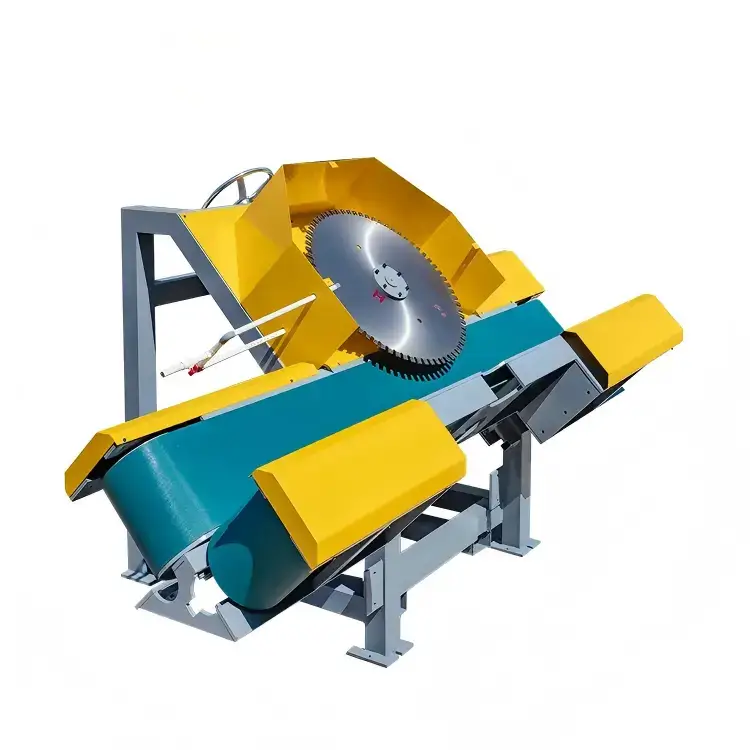
Command Absolute Orthogonal Precision
Precision is not an accident; it is engineered. Stop losing high-value corner stones to wobbly spindles, inaccurate machine frames, and sloppy intersections. Upgrade to MosCut’s micro-calibrated orthogonal veneer saws and dominate the masonry market.
Explore MosCut Veneer Saw Machines