
 Stone Cutting Machines
 Stone Polishing Machines
 Bridge Saw Machines
 Stone Quarry Cutting Machines
 Stone Block Cutter Machine
 CNC Stone Wire Saw Machine
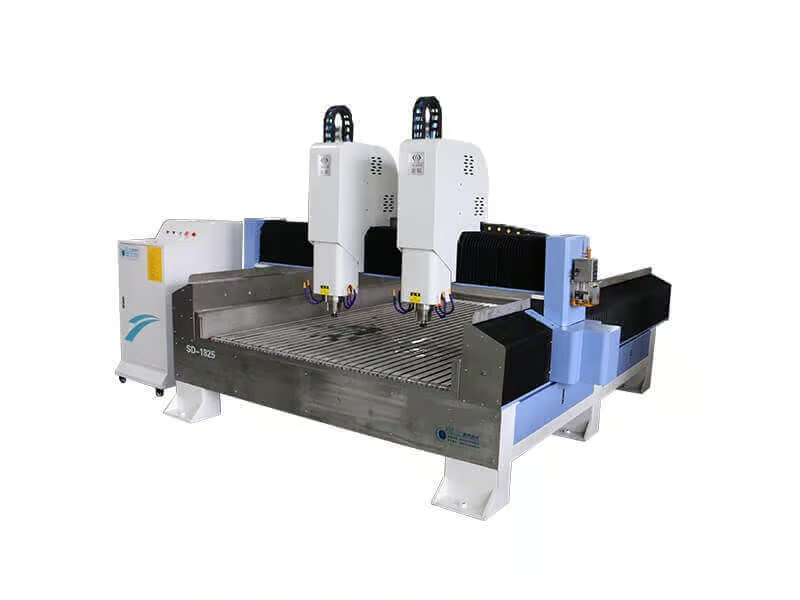 Stone Engraving Machines
 Thin Stone Veneer Saw Machine
 Horizontal Stone Slab Splitting Machine
 Stone Edge Polishing Profiling Machine
 Stone Auxiliary Equipment
In high-speed raw block extraction via arm-guided chain saw machines, consumable longevity is strictly governed by the fracture mechanics of brittle solids. Premium indexable tools—such as Polycrystalline Diamond (PCD), Cubic Boron Nitride (CBN), and ultra-fine grain Tungsten Carbide—boast astronomical compressive strength ratings. However, their ultimate metallurgical vulnerability is an exceptionally low tolerance for tensile and flexural bending strain. According to industrial cutting guidelines published by the International Academy for Production Engineering (CIRP), micro-chipping or full-body tool shattering is almost never caused by a native molecular manufacturing defect. Instead, tool fracture is nearly 100% driven by localized mechanical stresses, uneven fastening baselines, or external erratic shock-loads overloading the cutting edge.
A high-capacity pure white marble quarry in Greece recently logged an aggressive spike in tool expenditures, claiming their newly installed octagonal PCD inserts were “defective” and splitting open during their initial shifts. Sieve and stress data appeared irregular, prompting a virtual technical audit by MosCut’s service engineers. The diagnosis uncovered a glaring operational error: the quarry’s maintenance crew was replacing dull inserts rapidly without clearing out compacted rock slurry from the steel chain tool pockets, while sealing the central fastening screws using high-power pneumatic impact wrenches. The hardened debris under the carbide backing created an uneven pivot point. When locked with the uncontrolled force of the air wrench, the brittle PCD insert was pre-stressed to its breaking limit and snapped the moment it struck the marble block face. By enforcing a clean-pocket SOP and introducing calibrated torque wrenches, their chipping rate dropped to zero instantly.
Normal Wear vs. Catastrophic Chipping: Reading the Failure
Before replacing a shattered insert, you must accurately read the damage to diagnose your chain saw’s true hidden malady.To optimize your extraction budget, your site foremen must learn to differentiate between natural tool consumption and artificial tool destruction:
Normal Material Consumption: A healthy insert wears down via gradual micro-abrasion. The leading cutting edge remains completely intact but slowly transitions from sharp to rounded or flat, showing a smooth, dull polished finish. This proves your metallurgy is perfectly paired with the rock geology.
Catastrophic Chipping & Shattering: Chipping manifests as irregular, jagged chunks fracturing off the cutting perimeter. In severe cases, the insert breaks completely in half across the central screw hole. This is a violent structural failure. Treating a shattered insert as “normal wear” means you are ignoring a underlying mechanical issue that will rapidly chew through your next set of expensive tools.

🚨 Culprit 1: The Dirty Tool Pocket (Bending Fracture)
A microscopic grain of stone sand acts as a lethal wedge under a brittle diamond insert. The solid carbide backing of a PCD or CBN insert requires a 100% completely flat, steel-to-metal contact zone with the chain’s tool holder (the pocket). When an operator rotates a dull insert on the quarry floor, they often fail to flush out the dense, sticky stone paste accumulating inside the pocket. If even a 0.2mm crumb of stone sand remains trapped beneath the insert, it creates an unyielding pivot point. When the fastening screw is torqued down, the insert is suspended over empty air on one side, introducing massive internal bending stress. The moment the chain saw plunges into the rock face, the impact snaps the suspended insert like a dry cracker. Pockets must be washed and air-blown surgically clean during every single tool change.
Culprit 2: Improper Fastening Torque
Throw away the pneumatic air gun. High-performance superabrasive teeth demand precise torque calibration.🗜️ Over-Tightening Structural Crushing
Quarry laborers often assume that the tighter a screw is, the safer the tool will be. Using uncalibrated wrenches or pneumatic impact guns over-stretches the metal screw and exerts crushing down-force onto the insert’s countersunk hole. Because PCD and carbide are highly sensitive to internal tension, this violent over-tightening introduces micro-radial cracks spreading outward from the center hole, causing the insert to fall apart into multiple fragments the instant it hits the stone.
📳 Under-Tightening Micro-Vibrations
If a fixing screw is left too loose due to a worn thread or operator timidity, the insert will develop high-frequency micro-chatter within its pocket during the cutting cycle. This loose rattling allows the rock face to repeatedly hammer the leading cutting edge from irregular angles. These rapid, chaotic micro-impacts quickly exceed the fracture toughness of the diamond layer, resulting in extensive perimeter chipping.
Culprit 3: Shock-Loading and Aggressive Plunge Feeds
PCD and CBN can slice through solid stone like butter, but they will shatter instantly if you use them like a sledgehammer.A chain saw machine operates with an immense amount of automated kinetic energy. Many tool fractures occur during the initial Plunge Cutting Phase (when the arm first penetrates the rock wall). Splicing into a fresh wall restricts the active cutting contact to a highly condensed surface area.
If the operator advances the cutting arm too aggressively, the blunt physical slam overloads the material’s fracture thresholds, fracturing the leading teeth instantly. This structural trauma also occurs when cutting seamlessly through soft limestone and suddenly colliding with a dense, unmapped silica-quartz node or an iron oxide pocket. Operators must match their feed speeds to active amperage readings on their dashboards—never push the tool past its native chipping tolerance.

Culprit 4: Worn-out Chain Links & Loose Guide Bars
A perfect superabrasive insert cannot survive on an unstable, wandering chain assembly.The Lateral Deflection Whiplash
Even if your insert pockets are surgically clean and torqued perfectly with a digital wrench, your teeth will still chip if the holding chassis is loose. Over months of high-load stone cutting, the individual steel links of the saw chain stretch, and the internal channels of the guide bar wear wide. This creates excessive mechanical clearance.
As the chain circles the arm at high speed, it begins to “whip” and wander laterally from side to side inside the rock channel (kerf). This erratic twisting forces the inserts to take severe Lateral Shear Impacts—getting hit hard on their sides. While PCD and Carbide are designed to endure massive downward crushing, they possess weak resistance to lateral side-slapping, which causes the premium diamond faces to systematically spall and chip off.
Stop Wasting Your Tooling Budget
Stop throwing premium money into the quarry scrap bin due to loose assembly standards and poor installation habits. Equip your machinery with MosCut’s precision-engineered indexable inserts, implement true standard operating procedures, and experience absolute cutting longevity.
Explore MosCut Insert Solutions