
 Stone Cutting Machines
 Stone Polishing Machines
 Bridge Saw Machines
 Stone Quarry Cutting Machines
 Stone Block Cutter Machine
 CNC Stone Wire Saw Machine
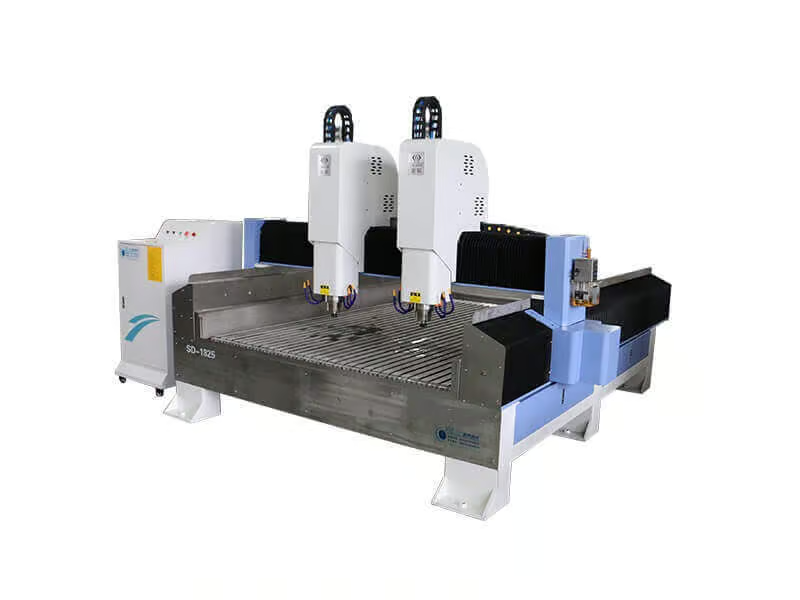 Stone Engraving Machines
 Thin Stone Veneer Saw Machine
 Horizontal Stone Slab Splitting Machine
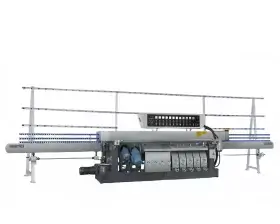 Stone Edge Polishing Profiling Machine
 Stone Auxiliary Equipment
In modern lean manufacturing, factory profitability is measured by Overall Equipment Effectiveness (OEE). For boutique stone countertop fabricators, the largest hidden cost destroying their OEE is not the machine’s top travel speed—it is setup downtime. The custom stone market is incredibly fragmented. A shop might process a 2cm engineered quartz straight edge in the morning, pivot to a 4cm granite Full-Bullnose for a kitchen island by lunch, and finish the day with marble Ogee vanity tops. If your automated machinery requires a highly complex, hour-long calibration process every time you change a profile, your equipment will spend more time sitting idle than actually cutting stone. In this fragmented landscape, mechanical “Agility” drastically outearns raw “Top Speed.”
A specialized custom stone studio in Vancouver, Canada, learned this lesson through costly trial and error. They primarily catered to interior designers ordering unique, one-off architectural pieces (e.g., custom stair treads, elaborate fireplace surrounds). Initially, they purchased a cheap, used 10-head continuous polishing line. Whenever an architect requested a custom profile, the operator had to spend over two hours changing out 10 different abrasive wheels and re-calibrating 10 separate pneumatic cylinders. The line became a massive scheduling bottleneck. After consulting with MosCut, they pivoted to a Single-Head Automatic Router featuring our quick-release spindle mechanism. Today, transitioning from an Eased Edge to a classic Dupont takes exactly 2 minutes. This ultimate agility unlocked their production flow, allowing them to process highly lucrative mixed-batch orders with zero downtime stress.
⏱️ The Setup Bottleneck of Multi-Head Lines
There is a blind worship of “more heads equal better machinery” in the stone industry. While 14-head or 20-head lines are undisputed champions for commercial high-rise projects (where you process 500 identical kitchens back-to-back), they are the wrong tool for boutique custom jobs. If you only have 5 linear meters of a specialized curved French edge to process, spending an hour configuring 14 heads will cost you more in labor setup time than the value of the actual edge polishing. High-volume machines are built for identical runs, not custom agility.
The Mechanical Elegance of the Quick-Change Spindle
From aggressive metal-bond profiling to delicate resin polishing in seconds.The engineering philosophy behind the MosCut Single-Head Router is centered entirely on ergonomic efficiency. The main spindle is designed to be universally adaptable and rapidly accessible.
The Mechanics: There are no complex CNC tool-holders to calibrate or software parameters to reprogram. The spindle shaft utilizes a heavy-duty locking nut. The operator simply grips the spindle, uses a standard industrial wrench to loosen the nut, slides off the current metal-bonded router bit, and drops on the next grit or resin pad holder. The entire physical action takes less than 30 seconds.
Intuitive Height Compensation: Because abrasive pads wear down slightly during polishing, the machine must adapt. Once a new pad is loaded, the operator uses the intuitive vertical adjustment handwheel (or electronic pendant) to seamlessly drop the spindle to the exact height of the stone line, pressing “Start” to resume immediate production.

Tooling Transition: From Grinding to Mirror Polish
Seamlessly navigate the complete abrasive sequence on a single workstation.🪨 Step 1: Structural Profiling
The operator mounts a heavy, metal-bonded diamond router bit. The 4.75kw spindle utilizes its massive torque to aggressively mill the raw square edge into a perfect, uniform architectural shape (like a Bullnose or Ogee) in one or two rapid passes.
🌫️ Step 2: Matte Honing
Within two minutes, the operator swaps to hard resin-bonded 200# / 400# pads. These critical transitional grits act as an eraser, smoothing out the deep metal saw marks and closing the stone’s pores, preparing the edge for a high-gloss finish.
✨ Step 3: Mirror Polishing
Cycling quickly through the finer resin grits (800# up to 3000# and Buff), the single-head machine repeatedly travels the exact same precise path. This single-point focus guarantees that every scratch is perfectly overwritten, bending light to achieve a 90+ degree gloss.
Mixed-Batch Profitability: Nailing the Custom Market
Turn fragmented orders from a scheduling nightmare into your most profitable niche.When you eliminate setup downtime, the entire financial model of your fabrication shop transforms. You no longer have to reject “small but complex” orders. You possess true Omni-capability.
You can cut a seamless 45-degree porcelain miter in the morning, immediately switch to an Eased-edge quartz perimeter before lunch, and polish a thick granite Dupont vanity in the afternoon—all on the exact same MosCut machine. This agility allows small-to-medium shops to command premium pricing in the custom architectural market, a highly lucrative niche that massive, rigid, high-volume commercial factories actively avoid.

Stop Rejecting High-Margin Custom Profiles
Don’t let complex setups dictate what jobs you accept. Maximize your shop’s agility, slash your machine downtime, and start executing every complex architectural order flawlessly with the MosCut Single-Head Router.
View Single-Head Spindle Capabilities