
 Stone Cutting Machines
 Stone Polishing Machines
 Bridge Saw Machines
 Stone Quarry Cutting Machines
 Stone Block Cutter Machine
 CNC Stone Wire Saw Machine
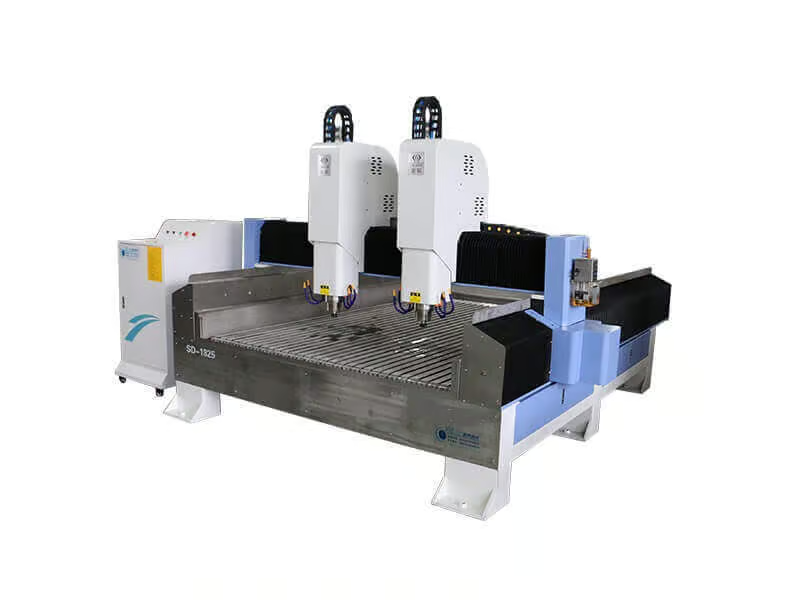 Stone Engraving Machines
 Thin Stone Veneer Saw Machine
 Horizontal Stone Slab Splitting Machine
 Stone Edge Polishing Profiling Machine
 Stone Auxiliary Equipment
The global construction industry is undergoing a massive shift towards the Circular Economy, driving an explosive resurgence in sustainable building materials. Terrazzo, which heavily utilizes recycled stone and glass aggregates, is at the forefront of this movement. According to recent sustainability standards published by the U.S. Green Building Council (USGBC), utilizing low-carbon, recycled flooring materials is a critical strategy for commercial real estate developers seeking LEED certification. As architects increasingly specify custom terrazzo for massive commercial floors and boutique hotels, tile factories must urgently scale their production capabilities. Hand-polishing or using modified slab machines is no longer sufficient; to meet this surging demand profitably, upgrading to a dedicated automatic tile polishing line is essential.
A fast-growing terrazzo tile factory in Ho Chi Minh City, Vietnam, learned this lesson when they secured contracts for several large municipal projects. Initially relying on manual polishers and a modified semi-automatic setup, they hit a severe production bottleneck, managing only 50 square meters a day with highly inconsistent gloss levels. To break through, they installed a 16-head MosCut Automatic Tile Polishing Machine (MCPG-600-16). The impact was immediate: their daily throughput skyrocketed to over 600 square meters. Furthermore, the specialized small abrasive heads completely eliminated the edge-chipping issues caused by their old equipment. Due to the massive increase in flawless, sellable output, the factory achieved a full return on their machinery investment in just four months.
The Bottleneck of Manual and Semi-Automatic Polishing
When order volumes surge, relying on manual labor or retrofitted slab polishers to process small-format tiles quickly exposes severe operational limitations, becoming the biggest hurdle to factory profitability.
Skyrocketing Labor Costs and Inconsistencies
Manual polishing is incredibly labor-intensive. Scaling production using manual machines requires hiring, training, and managing a large workforce. Not only do labor costs eat directly into your profit margins, but human fatigue inevitably leads to inconsistent surface quality. By the end of a long shift, the downward pressure applied by a worker naturally fluctuates, resulting in a batch of terrazzo tiles where the morning production is highly glossy, but the afternoon production is dull.
The Hidden Costs of Edge Breakage
Many factories attempt to save money by running small 300x300mm terrazzo tiles through massive automatic slab polishers designed for 2-meter wide granite blocks. The oversized 400mm abrasive heads of these machines exert blunt, uneven pressure on small tiles, frequently causing them to shift, flip, or shatter on the conveyor belt. This hidden cost of edge breakage and material waste can quickly exceed the cost of buying the correct machinery.
Achieving High-Volume Throughput with Dedicated Machinery
True scalability requires a continuous production line specifically engineered for small-format stone, enabling uninterrupted, minute-by-minute output.

Continuous Multi-Head Processing (12 to 20 Heads)
Unlike single-head manual polishers where a tile must be processed, washed, and moved manually, the MosCut automatic line utilizes a continuous conveyor system. Tiles pass seamlessly under an array of 12 to 20 specialized abrasive heads. Each head is equipped with a specific grit, progressively grinding, calibrating, and honing the surface until it emerges at the end of the line with a perfect, factory-grade mirror finish.
Maximizing the Conveyor Width
Efficiency is all about surface area utilization. With models offering up to 650mm of processing width (such as the MCPG-600 series), factory operators can feed two standard 300x300mm terrazzo tiles side-by-side simultaneously. This simple logistical optimization effectively doubles the machine’s throughput without requiring any increase in conveyor speed or power consumption.
Calculating the ROI of an Automatic Tile Polisher
Upgrading to an automated system is not merely about producing more tiles; it is fundamentally about restructuring your Cost Per Square Meter to maximize net profit.
Drastically Reducing Cost Per Square Meter
The return on investment (ROI) of an automatic line becomes obvious when you calculate the cost per unit. An automated machine processing 500 square meters a day only requires one or two operators to load and unload the tiles. By distributing a fraction of the daily labor and utility cost over a massive volume of tiles, the production cost per square meter plummets, allowing you to price your terrazzo competitively in the global market while maintaining high margins.
Lowering Abrasive Waste and Utility Consumption
Waste reduction is a direct driver of ROI. Dedicated automatic tile polishers feature targeted, central water cooling systems and precision pneumatic pressure controls. This prevents the resin diamond pads from overheating and glazing over. Abrasives last significantly longer on a properly calibrated automatic line than they do under the unpredictable pressure of a manual operator, drastically reducing your monthly consumable expenses.
Ensuring Finish Quality Doesn’t Suffer at Scale
A common fear among traditional tile makers is that increasing speed means sacrificing quality. However, in high-end automation, speed and premium mirror finishes are achieved simultaneously.
Consistent Pneumatic Pressure vs. Human Error
The MosCut polishing line utilizes independent pneumatic cylinders for every single abrasive head. This means the downward pressure applied to the terrazzo tile is mathematically exact and remains constant across a 24-hour shift. This eliminates the “human error” factor, guaranteeing that the 1000th tile produced that day possesses the exact same deep reflection and smooth texture as the very first tile.
The Role of PLC Automation in Quality Assurance
At the core of this quality control is the industrial Mitsubishi PLC system. It intelligently monitors the conveyor speed and controls the exact lifting and lowering timing of the polishing heads as tiles pass beneath them. This smart automation ensures the abrasive pads engage the stone smoothly, preventing “burn marks” or deep scratches that would otherwise require the tile to be discarded or reworked.
Ready to Scale Your Terrazzo Factory?
Do not let outdated equipment bottleneck your ability to secure large commercial flooring contracts. Arm your factory with the industry’s leading automation technology.
Maximize Output with MosCut Automatic Lines
Explore our specialized Automatic Terrazzo & Mosaic Tile Polishing Machines. Featuring customizable 12-20 head arrays and precision pneumatic controls, it is the ultimate solution for high-volume tile production.
View Machine Specifications & DetailsTop 10 Frequently Asked Questions About Scaling Tile Production
We have compiled the most common questions from factory owners who are actively transitioning from manual operations to high-volume automatic tile polishing lines.