
 Stone Cutting Machines
 Stone Polishing Machines
 Bridge Saw Machines
 Stone Quarry Cutting Machines
 Stone Block Cutter Machine
 CNC Stone Wire Saw Machine
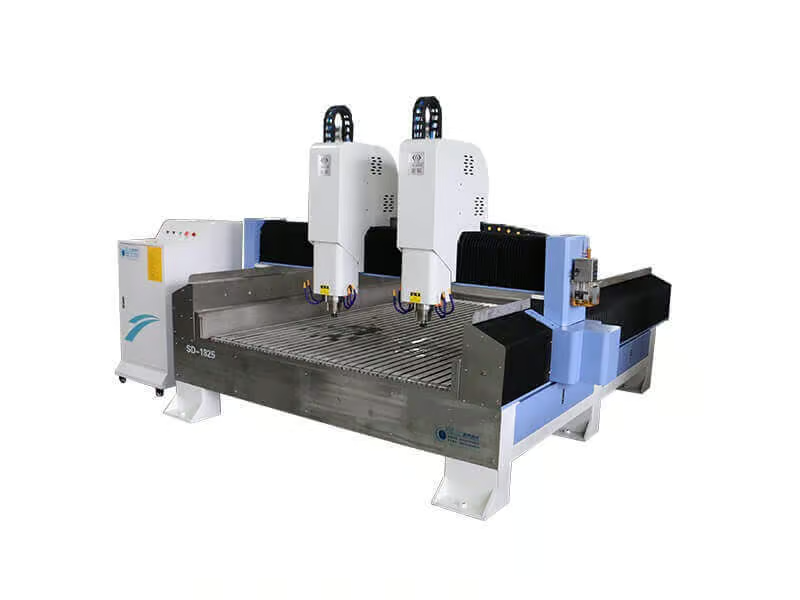 Stone Engraving Machines
 Thin Stone Veneer Saw Machine
 Horizontal Stone Slab Splitting Machine
 Stone Edge Polishing Profiling Machine
 Stone Auxiliary Equipment
Scaling a stone fabrication business using manual rail saws or basic hand cutters is like trying to win a Formula 1 race on a bicycle. You are putting in exhausting effort, but the machinery is fundamentally limiting your speed. According to the MOSCUT Q4 2026 Stone Fabrication Transition Report, shops that upgraded from manual rail cutters to automated bridge saws saw an average capacity jump of 310% in their first year, while work-related injury rates plummeted by 90%.
Consider a custom cabinet and countertop shop in Ho Chi Minh City, Vietnam. Last year, they were on the verge of collapse after securing a contract for 50 apartment kitchens. Armed with only two manual rail saws, their workers were hunched over for 10 hours a day. The inconsistent human push-force caused blades to jam frequently, resulting in severely chipped quartz edges. Facing massive penalty fees for delayed delivery, they urgently installed a MOSCUT Standard Laser Bridge Saw. Powered by a 15KW motor and automatic feed, a job that previously took four men two grueling days was flawlessly completed by one operator in a single afternoon. Manual cutters are fine for DIY projects, but to build a commercial empire, you need a heavy-duty bridge saw. Here are the 5 unmistakable signs your shop is ready for the upgrade.
Sign 1: Your Scrap Rate is Eating Your Margins
If your dumpster is full of expensive ruined stone, your manual saw is costing you more than a new machine would.
The Hidden Cost of Human Jitter
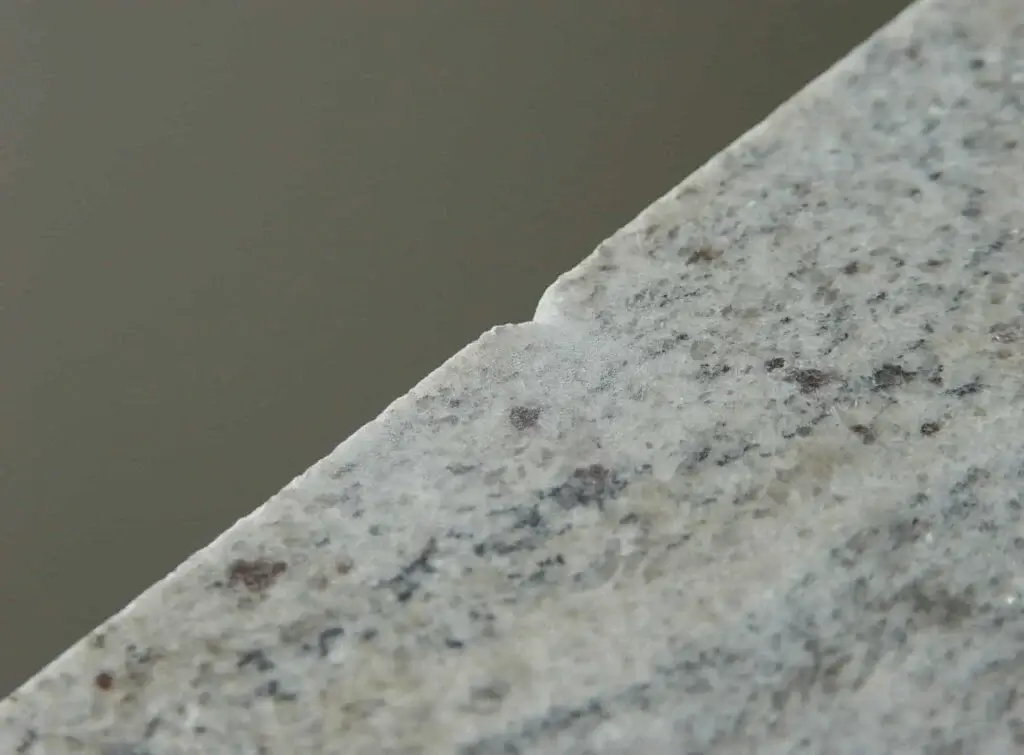
The biggest flaw of manual push saws is vibration. A human arm cannot maintain the absolute, unyielding straightness of a heavy-duty cast-iron beam. This microscopic jitter causes the diamond blade to deflect slightly inside the stone. As the blade exits the cut, this lateral tension frequently results in massive “blowouts” or corner snapping. A heavy-duty bridge saw locks the blade path into perfect geometry, reducing your scrap rate to near zero.
Sign 2: Inconsistent Quality and the “Wavy Edge”
Poor cutting upfront leads to endless hours of labor-intensive correction on the polishing table.

Fixing Machine Errors by Hand
Manual cutting often produces a “wavy edge”—micro-deviations along the length of the cut. To create a seamless joint or prepare for edge profiling, your fabricators must spend hours with a hand grinder “straightening” these waves. You are paying high hourly wages for your workers to act as human CNC machines. The hydraulic and motorized feed of an automated bridge saw delivers an edge so perfectly straight, it is ready for assembly immediately off the table.
Sign 3: You Are Turning Down Commercial Jobs
Productivity bottlenecks force you to say “no” to the most lucrative volume contracts in your market.
Losing to Better-Equipped Competitors
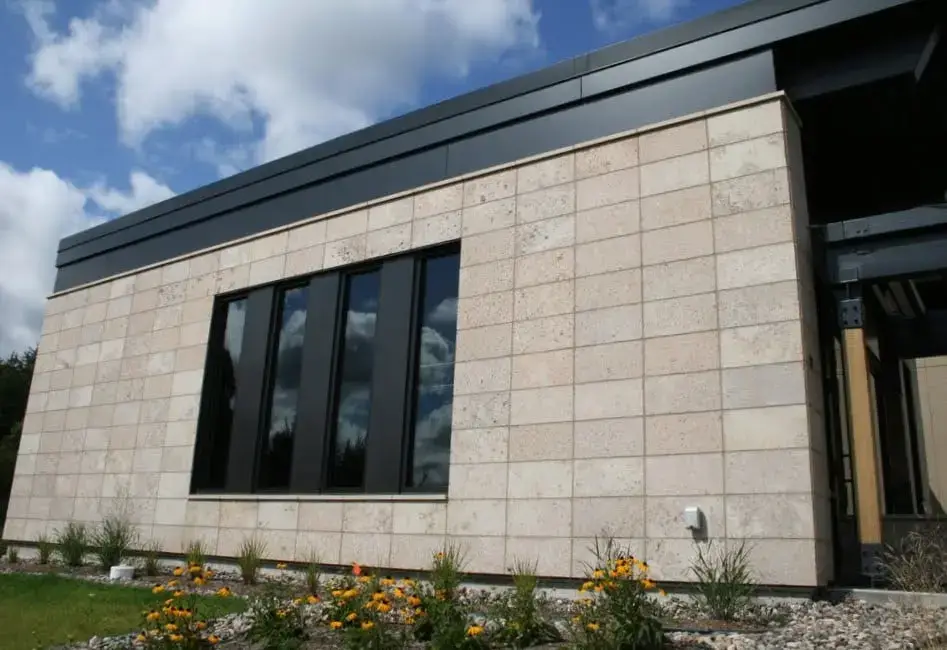
When a hotel contractor needs 200 identical wall cladding panels or stair treads, using a manual rail saw is commercial suicide. The constant measuring, chalk lining, and re-clamping of guide rails takes forever. A standard bridge saw equipped with a PLC controller features “Automatic Stepping.” You simply program the width, and the machine rapidly slices the entire slab into perfectly identical strips 5 times faster than manual methods.
Sign 4: Your Diamond Blade Costs are Out of Control
Blades are consumables, but they shouldn’t be consumed *this* quickly.
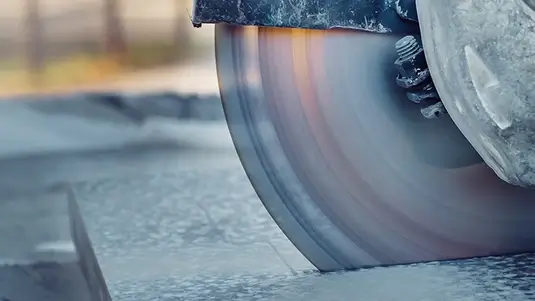
The Glazing Effect of Manual Pushing
Diamond blades require a highly consistent feed rate and RPM to perform optimally. When workers manually push a saw through a dense spot of granite, they naturally force it. This spikes the friction, glazing over the diamonds, overheating the steel core, and warping the blade. A 15KW motorized spindle provides unstoppable, consistent torque that lets the diamonds cut at their optimal temperature, extending blade life by 30% to 50%.
Sign 5: Your Best Workers are Physically Exhausted
The physical toll of manual fabrication is the leading cause of high turnover rates in the stone industry.

Burnout and the Risk of Injury
Bending over a wet, noisy slab for 8 hours a day, pushing a heavy saw, and manually lifting half-ton blocks onto makeshift tables destroys your workers’ backs. Exhausted workers make mistakes, and in a stone shop, mistakes lead to severe injuries. Upgrading to a bridge saw with a hydraulic tilting table and joystick controls transitions your team from manual laborers to machine operators, instantly improving morale and factory safety.
The Financial Tipping Point: Make the Upgrade
If you recognize two or more of these signs in your daily operations, your manual equipment is actively restricting your revenue. The transition to automation is more affordable than you think, and the ROI is immediate.
Ready to graduate to automated profitability?
Discover how the unstoppable reliability of our heavy-duty standard saw can transform your shop from a bottlenecked struggle into a high-volume production line.
Explore the Standard Laser Bridge SawTop 10 FAQ: Transitioning to an Automated Bridge Saw
1. How long does it take for a manual worker to learn an automated bridge saw?
Because standard bridge saws do not require complex CNC coding, a worker familiar with manual cutting can transition to joystick and PLC automated cutting in just half a day of training.
2. Will a standard bridge saw drastically increase my factory’s electricity bill?
While a 15KW motor uses more power than a hand tool, the machine cuts 5-10 times faster. Because you are finishing jobs in a fraction of the time, the power consumption per square meter of finished stone actually decreases.
3. I have a very small shop. Will an automated bridge saw fit?
Yes. Our Monoblock (integrated chassis) designs are extremely space-efficient. By eliminating the need to walk around the stone with long manual guide rails, the total operational footprint is surprisingly compact.
4. Do I need to dig a deep concrete foundation to upgrade to a bridge saw?
Not necessarily. If you choose a Monoblock bridge saw, it requires zero foundation work. As long as your existing concrete floor is flat and can support the machine’s weight, it is a simple plug-and-play installation.
5. Can a standard bridge saw handle fragile materials like 12mm porcelain?
Yes. The heavy cast-iron beam completely eliminates the vibration that causes manual saws to shatter fragile porcelain and ultra-compact surfaces, making it much safer for these materials.
6. How does the machine handle loading heavy slabs compared to my manual A-frames?
Automated bridge saws feature hydraulic tilting tables. The table tilts up to 85 degrees, allowing your forklift to gently lean the slab against it before smoothly lowering it flat via hydraulics—zero manual lifting required.
7. Is the water cooling system better on a bridge saw than a manual rail saw?
Absolutely. A bridge saw utilizes a high-volume, multi-directional water jet system directly integrated into the blade guard, providing vastly superior cooling and dust suppression compared to manual hoses.
8. Can I still do custom shapes if I upgrade to an automated straight-cut saw?
Yes. Many fabricators use the automated saw to rapidly “blank” the straight edges, and then use smaller manual tools or CNC routers to finish intricate custom curves and sink holes.
9. What is the maintenance difference between manual and automated saws?
Manual saws get dropped, cables fray, and small motors burn out frequently. An automated bridge saw requires regular greasing of the rails and periodic oil changes in the hydraulic station, which is more predictable and less disruptive.
10. Can I finance an upgrade to a heavy-duty bridge saw?
Yes. Most commercial equipment lenders gladly finance bridge saws because they hold their resale value exceptionally well. The monthly payment is often far less than the cost of the scrap material you are currently wasting.