
 Stone Cutting Machines
 Stone Polishing Machines
 Bridge Saw Machines
 Stone Quarry Cutting Machines
 Stone Block Cutter Machine
 CNC Stone Wire Saw Machine
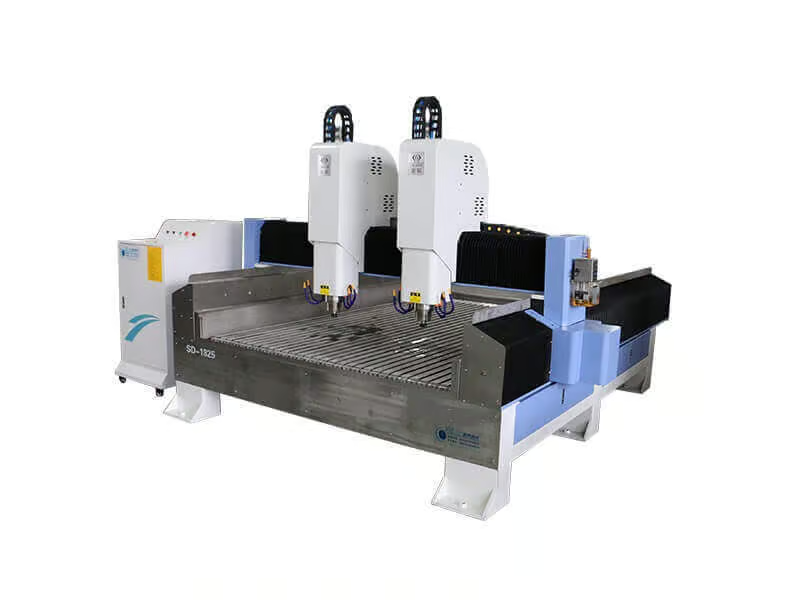 Stone Engraving Machines
 Thin Stone Veneer Saw Machine
 Horizontal Stone Slab Splitting Machine
 Stone Edge Polishing Profiling Machine
 Stone Auxiliary Equipment
High-end interior design is experiencing a renaissance of artisanal and eco-conscious flooring. Traditional hand-poured encaustic cement tiles and modern resin-bonded terrazzo are leading this trend. According to recent material forecasting by Architectural Record, architects are increasingly specifying these materials for commercial spaces due to their limitless color customization and sustainable composition. However, for manufacturers, polishing these specialty materials at a commercial scale presents a massive engineering challenge. The inherent softness of cement and the extreme thermal sensitivity of resin binders mean that utilizing standard, aggressive granite polishing machinery will inevitably result in ruined tiles, burned surfaces, and unacceptable waste.
A renowned heritage tile workshop in Marrakech, Morocco, confronted this exact challenge. They secured a major export contract for their signature encaustic cement tiles to a North American retail chain. Unfortunately, their existing automated machinery applied far too much downward pressure. The aggressive grinding heads frequently stripped away the delicate, 3mm-thick colored pattern layer on top of the tiles, exposing the grey concrete base beneath and causing a staggering rejection rate. To save the contract, they integrated a MosCut Automatic Cement Tile Polishing Machine. Utilizing the machine’s independent pneumatic cylinder system, they micro-adjusted the downward pressure to a feather-light 0.15 MPa. This precise calibration allowed them to achieve a flawless, smooth hone that perfectly preserved the intricate color patterns, increasing their daily export output fivefold.
The Fragile Nature of Specialty Tile Materials
Whether you are manufacturing traditional cement tiles or modern engineered resin terrazzo, these materials are highly sensitive to friction. Applying the brute force used for granite will instantly destroy your product.
The Thin Color Layer of Encaustic Cement
Unlike homogeneous natural stone, encaustic cement tiles are manufactured in layers. The beautiful, intricate patterns you see are formed by a pigmented cement mixture that is poured into a mold, typically measuring only 3 to 4 millimeters thick. Beneath this color layer is a structural base of coarse sand and grey cement. If a polishing machine cuts too deeply during the leveling phase, it will grind completely through the decorative layer, instantly ruining the tile.
The Thermal Sensitivity of Resin Binders
Modern terrazzo often substitutes traditional cement with epoxy or polyester resin binders to hold the marble and glass chips together. While this creates a stunning, non-porous floor, resin is highly susceptible to heat. When abrasive polishing pads spin at high speeds across the tile, the friction generates intense thermal energy. Without proper dissipation, this heat will melt and burn the resin, turning a crisp white terrazzo into an ugly, yellowed, and permanently scorched tile.
Perfecting Cement Tiles with Precise Pneumatic Control
The secret to successfully polishing cement tiles on an automated line is restraint. The machine must provide enough friction to generate a hone, but carefully limit the depth of the abrasive cut.
Micro-Adjusting Downward Pressure
The MosCut automatic tile polisher abandons rigid mechanical down-pressure in favor of independent pneumatic cylinders for every single polishing head. This allows the factory operator to drastically lower the pressure gauge (often down to 0.15 or 0.2 MPa) when running soft cement tiles. This pneumatic “cushion” ensures the abrasive pads gently glide over the tile, achieving a uniform surface finish without aggressively biting into the thin color layer.
Utilizing Soft Resin Abrasives Exclusively
When processing delicate cement tiles, it is often best to completely bypass aggressive metal-bonded diamond blocks. Instead, operators should equip the machine entirely with wet flexible resin pads, starting from a 100 or 200 grit. These flexible pads adapt smoothly to the tile’s surface, polishing the pigmented layer to a beautiful matte or satin finish without causing deep calibration scratches.
Preventing Resin Burns with Advanced Water Cooling
Heat is the enemy of resin terrazzo. To prevent thermal burning, an automated machine must rapidly dissipate friction heat faster than it is generated.

Center-Spindle Coolant Delivery
Traditional external water hoses often fail to deliver coolant directly under the spinning abrasive pad, leading to dry spots and instant resin burns. The MosCut polishing line features a sophisticated center-spindle water feed. Coolant is pumped directly down through the center of the rotating shaft and distributed outward across the face of the polishing pad. This guarantees a continuous, high-volume flow of water exactly where the friction occurs, keeping the resin surface cool and safe.
Matching Conveyor Speed to Material Hardness
Another crucial factor in preventing resin burns is controlling the duration of friction. If the tile sits under a spinning head for too long, heat will inevitably build up. The intuitive control panel on our machine allows operators to easily increase the conveyor belt speed. By feeding the resin terrazzo through the polishing sequence at a faster, continuous pace, the contact time per head is reduced, entirely mitigating the risk of localized thermal damage.
Ready to Automate Your Delicate Tile Production?
Processing high-margin specialty tiles like encaustic cement and engineered terrazzo leaves no room for mechanical errors. Protect your product with an automated line designed for extreme finesse.
Protect Your Profit Margins with MosCut
Explore our specialized Automatic Terrazzo & Mosaic Tile Polishing Machines. Featuring micro-adjustable pneumatic pressure and superior center-spindle water cooling to guarantee a flawless finish on sensitive materials.
View Machine Features & SpecificationsTop 10 Frequently Asked Questions About Specialty Tile Polishing
We address the most critical processing parameters and technical concerns from workshop managers handling delicate cement, resin, and engineered stone products.