
 Stone Cutting Machines
 Stone Polishing Machines
 Bridge Saw Machines
 Stone Quarry Cutting Machines
 Stone Block Cutter Machine
 CNC Stone Wire Saw Machine
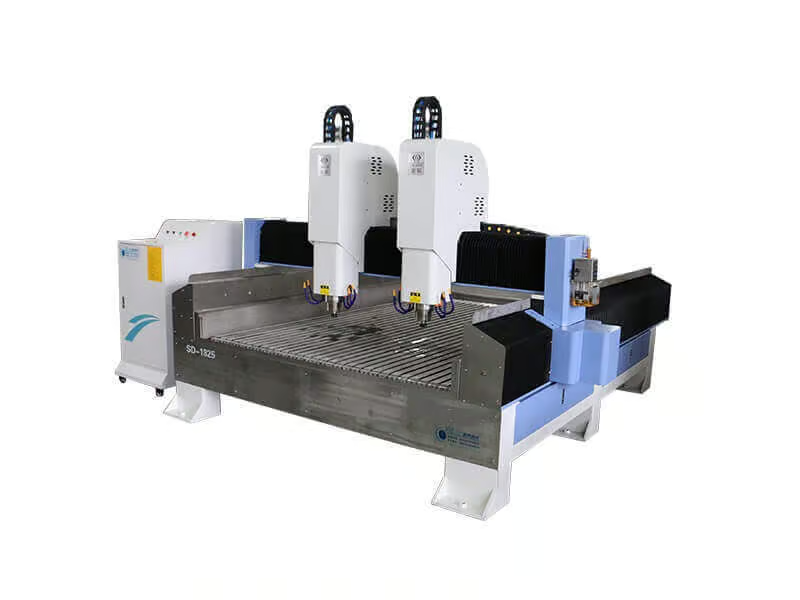 Stone Engraving Machines
 Thin Stone Veneer Saw Machine
 Horizontal Stone Slab Splitting Machine
 Stone Edge Polishing Profiling Machine
 Stone Auxiliary Equipment
The global luxury stone market is becoming increasingly segmented. While large granite countertops remain a staple, there is an explosive demand for bespoke, high-margin architectural materials like custom terrazzo, cement tiles, and intricate mosaics. According to industry growth reports by the Tile Council of North America (TCNA), the profit margins on specialized, small-format bespoke tiles frequently outpace traditional large slab commodities. However, many factory owners mistakenly believe that their existing slab machinery can simply be repurposed to manufacture these small tiles. Processing high-value, small-format stone requires an entirely different engineering logic, and using the wrong machinery is a recipe for operational disaster.
A major stone fabrication plant in Jaipur, India, learned this expensive lesson when they accepted a lucrative contract to supply 300x300mm custom terrazzo flooring for a luxury resort. Attempting to fulfill the massive order quickly, they ran the small terrazzo squares through their 2-meter-wide automatic slab polisher. The results were catastrophic: the massive, rigid polishing heads caused the small tiles to spin and collide on the conveyor belt, resulting in an unacceptable 15% breakage rate and deeply rounded edges. Facing severe delays, they urgently invested in a dedicated MosCut Automatic Tile Polishing Line equipped with 150mm specialized heads and responsive pneumatic cylinders. Their breakage rate instantly plummeted to zero, allowing them to rescue the contract and permanently open a highly profitable export channel for European boutique tiles.
The Physics of Polishing: Surface Area and Downward Pressure
At its core, stone polishing is the delicate balance of downward pressure, rotational torque, and surface contact area. Slab polishers and tile polishers are engineered with entirely different physics models in mind.
The Brutal Force of Slab Polishers
Automatic slab polishers are designed to flatten and shine 3-meter-long, incredibly dense granite or quartz blocks. To achieve this, they utilize massive polishing heads (often exceeding 400mm) or heavy-duty Fickert/Frankfurt abrasives. These heads apply immense, rigid downward pressure to overcome the natural bowing and extreme hardness of giant stone slabs. The massive surface area of a slab easily absorbs this brutal force.
The Finesse Required for Small-Format Tiles
Conversely, a 200x200mm mosaic or terrazzo tile has a very small surface area and extremely low self-weight. If you apply the brutal, rigid pressure of a slab machine to a small tile, the rotational torque of the giant abrasive will easily overcome the friction holding the tile to the conveyor belt, causing it to slide out of place instantly. Small tiles require a highly focused, cushioned downward pressure that only a dedicated tile polisher can provide.
Why Slab Polishers Fail at Processing Mosaics and Terrazzo
Attempting to process small tiles with a slab machine is like using a sledgehammer to crack a walnut. It is highly inefficient and guarantees severe material destruction.

Conveyor Shifting and Tile Displacement
Because the polishing heads on a slab machine are so large, they often cover multiple small tiles at once. As the head oscillates back and forth, the rotational force catches the edges of the lightweight tiles, causing them to shift, rotate, or violently crash into one another on the conveyor belt. This displacement causes deep gouges in the stone and ruins the entire batch.
The Costly “Edge Rounding” Effect
A premium terrazzo or cement tile must have perfectly sharp, 90-degree edges for a seamless grout installation. When a massive slab polishing head moves off the edge of a small tile, the immense downward pressure becomes unbalanced, instantly “dipping” into the gap. This grinds down the sharp corners, creating a flawed, rounded edge (or causing it to chip entirely), rendering the tile useless for high-end architectural projects.
The Engineering Advantage of Dedicated Tile Polishers
The MosCut automatic tile polisher eliminates these catastrophic failures directly at the engineering level, purposefully built for stones ranging from 100mm to 600mm.
Small-Diameter Heads (125mm/150mm) for Edge Precision
Instead of oversized abrasive discs, our tile polishing lines utilize tightly grouped arrays of 125mm or 150mm polishing heads. These smaller diameters ensure that the abrasive pad stays flat and fully engaged with the surface of the small tile. Because the head does not drastically overhang the edge, the rotational force remains balanced, preserving perfectly sharp architectural corners and entirely eliminating the rounding effect.
Responsive Pneumatic Cylinders for Fragile Materials
Rather than relying on heavy, rigid mechanical pressure, the dedicated tile polisher uses independent pneumatic cylinders to lift and press each individual head. This air-driven system acts as a responsive shock absorber. It gently hugs the surface of fragile mosaics and eco-terrazzo, buffering against micro-variations in tile thickness while maintaining enough friction to deliver a flawless 95+ GU mirror finish.
Floor Space, Power Consumption, and Total Cost of Ownership (TCO)
Beyond processing quality, the operational overhead between the two machines is vast. For a factory focused on small-format production, the dedicated tile polisher offers an unbeatable economic advantage.
Optimizing Factory Floor Space and Power
A standard slab polisher is a colossal machine, often requiring a massive power grid and up to 15 meters of factory floor space. In contrast, a highly efficient MosCut 16-head tile polisher (with a focused 400mm or 650mm processing width) has a significantly smaller footprint (around 4 to 5 meters in length). The smaller motors driving the 150mm heads consume a fraction of the electricity, radically lowering your monthly utility bills.
Multi-Lane Feeding for Massive Throughput
Because the conveyor system on a tile polisher is designed specifically for small, uniform squares, you can leverage “multi-lane feeding.” For example, on a machine with a 650mm processing width, operators can lay two rows of 300x300mm tiles side-by-side. This simple workflow adjustment allows the dedicated tile polisher to achieve a daily square-meter throughput that absolutely crushes a slab machine attempting to run single, scattered tiles.
Ready to Process Small-Format Stone with Precision?
Stop destroying your high-value bespoke tiles with the wrong machinery. Protect your margins and maximize your daily output with an automated line built specifically for the job.
Discover the MosCut Automatic Tile Polisher
Explore our specialized polishing lines featuring 125mm/150mm abrasive heads, independent pneumatic controls, and multi-lane conveyor widths designed specifically for mosaic and terrazzo perfection.
Compare Machine Specifications TodayTop 10 Frequently Asked Questions About Tile vs. Slab Polishers
We address the most critical comparative questions from factory procurement managers trying to decide on the best automation path for their flooring products.