
 Stone Cutting Machines
 Stone Polishing Machines
 Bridge Saw Machines
 Stone Quarry Cutting Machines
 Stone Block Cutter Machine
 CNC Stone Wire Saw Machine
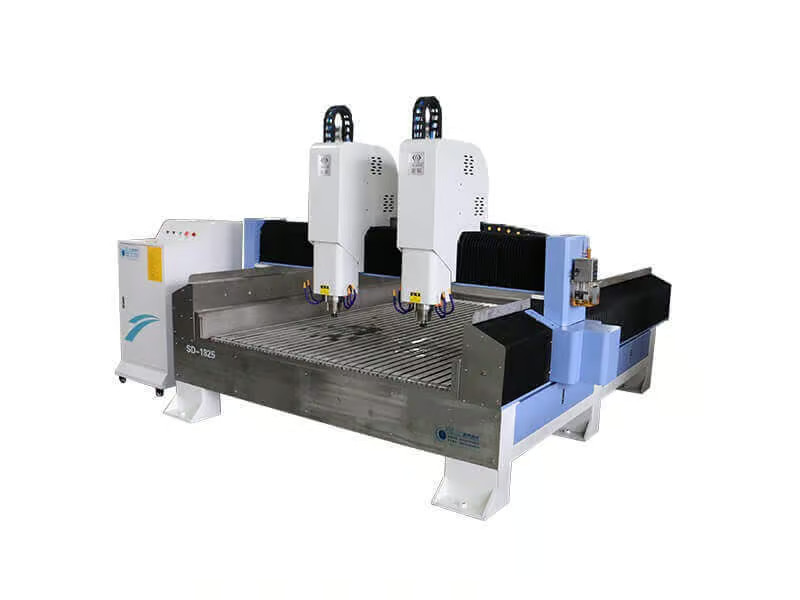 Stone Engraving Machines
 Thin Stone Veneer Saw Machine
 Horizontal Stone Slab Splitting Machine
 Stone Edge Polishing Profiling Machine
 Stone Auxiliary Equipment
In the highly competitive stone fabrication sector, the global shift towards lean manufacturing is reshaping how new businesses approach their initial capital investments. “Right-sizing” your equipment is proven to be far more critical for early-stage profitability than investing heavily in over-automation. According to 2026 small business economic resilience data published by the International Monetary Fund (IMF), manufacturing startups that maintain lower initial debt-to-equity ratios and avoid complex mechanical overhead are 40% more likely to survive and scale during their first three years of operation. For stone fabricators, the manual radial arm polishing machine perfectly aligns with this lean-growth strategy.
Consider the journey of a newly established father-and-son stone shop located in Ho Chi Minh City, Vietnam. Initially, they planned to take out a massive commercial bank loan to purchase a fully automatic continuous polishing line. However, recognizing the financial risk, they pivoted and chose to install a heavy-duty MosCut manual stone polishing machine instead. By completely avoiding high monthly interest payments and taking advantage of the machine’s ultra-low power consumption, they remarkably reached their break-even point in just five months. Today, their manual machine serves as the reliable workhorse of their operation, empowering them to take on high-margin, custom vanity top orders that their heavily automated competitors simply refuse to process.
Lowering the Financial Barrier to Entry
For a new stone shop, positive cash flow is the most vital metric for survival. Investing in heavy automation too early can create a financial strain that suffocates a business before it matures. The manual polisher offers industrial-grade performance at a fraction of the cost.
Minimal Capital Expenditure (CAPEX)
A manual radial arm polisher requires an incredibly small initial investment compared to CNC routers or multi-head bridge polishers. This dramatically lowers the financial barrier to entry, allowing entrepreneurs to allocate their remaining capital toward high-quality stone inventory, aggressive local marketing, and hiring skilled labor. When your machinery is paid off quickly, every subsequent slab polished translates directly into pure net profit.
Low Power Consumption for Sustainable Growth
Industrial electricity bills can silently erode a workshop’s profit margins. Unlike massive continuous lines that require tremendous three-phase power draws just to start up, a manual polisher operates on a highly efficient, single high-torque main motor (typically around 5.5kw). This allows start-ups to keep their monthly utility overhead strictly under control, ensuring sustainable financial growth even during slower production months.
Unmatched Versatility in Bespoke Projects
Large automatic lines are built purely for volume, but they often struggle to adapt to one-off custom pieces. Manual machines allow the operator to physically adapt to every unique slab, no matter how irregular or intricate.
Precision Surface Finishing for Irregular Slab Geometries
While large-scale automated polishers excel at uniform rectangular slabs, they often struggle with the surface finishing of irregular geometries such as L-shaped countertops, circular island surfaces, or complex architectural segments. The manual radial arm allows the operator to precisely navigate the polishing head across these unique surface shapes. By maintaining a consistent sweeping motion, the MosCut operator can achieve a uniform mirror gloss across the entire top surface of any bespoke piece, ensuring that even the most complex custom orders meet professional industrial standards without the need for expensive CNC surface programming.

Precision Finishing for Thick Monument Blocks
The monument and tombstone industry is incredibly profitable, but it requires machinery capable of handling extremely thick and heavy blocks. The impressive vertical hoisting stroke of a manual polisher makes it the perfect fit for these specialized jobs, allowing a small workshop to fulfill high-value memorial contracts with ease.

The Zero-Downtime Advantage: Simplicity is Reliability
In a start-up environment, a sudden machine breakdown is a catastrophe. Because manual polishers lack complex sensors and delicate motherboards, they are virtually immune to the digital glitches that plague automatic lines.
Maintenance You Can Perform Yourself
The mechanical architecture of a manual machine is brilliantly straightforward. It relies on robust cast-iron gears, simple belts, and standard industrial bearings. This means that regular maintenance consists merely of daily greasing and basic cleaning—tasks that the business owner or operator can perform themselves in under 10 minutes without relying on external help.
Eliminating the Need for Specialized Tech Support
When an automated PLC system fails, it often requires an expensive visit from a specialized electronic technician, leaving the machine paralyzed for days. With a manual polisher, there is no software to crash and no delicate lasers to misalign. This structural simplicity guarantees maximum uptime, ensuring you never miss a client deadline due to a technical glitch.
Skill Mastery & Tactile Quality Control
There is absolutely no substitute for the physical “feel” of the stone. Manual polishing teaches new fabricators the profound nuances of different materials, ensuring a higher standard of craftsmanship across the board.
Immediate Feedback on Abrasive Performance
As the operator guides the polishing head, they receive immediate tactile feedback regarding how the diamond abrasive is interacting with the stone. If a hard spot in a granite slab requires more pressure, or a soft vein in marble requires a lighter touch, the operator can adjust their technique instantly, preventing expensive material waste.
Perfecting the Mirror Gloss through Human Intuition
Achieving a 90+ Gloss Unit (GU) mirror finish requires an understanding of water flow, friction heat, and pacing. A skilled operator using a manual machine develops an intuitive rhythm, guaranteeing that the final polish meets the exact aesthetic standards of demanding luxury clients.
Ready to Build a Profitable Stone Business?
Do not let high industrial overhead crush your entrepreneurial dreams. Start your fabrication journey with the machinery that offers the fastest path to net profit and the highest level of mechanical trust.
Maximize Your ROI with MosCut Today
Explore our heavy-duty manual stone polishing machines. Engineered with premium cast-iron and designed for decades of zero-downtime performance. Take control of your production line today.
View Manual Polishing Machine DetailsTop 10 Frequently Asked Questions About Manual Polisher ROI
We address the most common financial, operational, and maintenance concerns for new workshop owners considering the strategic switch to manual radial arm polishing.