
 Stone Cutting Machines
 Stone Polishing Machines
 Bridge Saw Machines
 Stone Quarry Cutting Machines
 Stone Block Cutter Machine
 CNC Stone Wire Saw Machine
 Stone Engraving Machines
 Thin Stone Veneer Saw Machine
 Horizontal Stone Slab Splitting Machine
 Stone Edge Polishing Profiling Machine
 Stone Auxiliary Equipment
In the highly competitive commercial stone fabrication sector, bidding on mega-projects—such as five-star hotel bathroom vanities, massive luxury apartment developments, or miles of public infrastructure wall cladding—is a ruthless numbers game. The profit margins are compressed to their absolute limits. If your factory still calculates edge polishing costs using “Man-hours” (the variable cost of manual labor), you will inherently fail to outbid competitors who have successfully transitioned to automated continuous lines. Winning these contracts requires a fundamental shift in how you view Marginal Costs: you must transition from paying for human time to leveraging mechanical throughput.
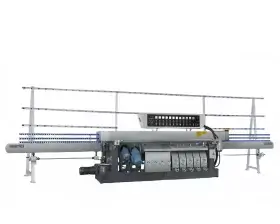
A mid-sized fabrication plant in London, UK, experienced this bidding reality firsthand. They attempted to secure a massive contract supplying flat-edge quartz countertops and baseboards for an 800-unit luxury apartment complex. Relying on their existing 6 manual polishing stations, their labor overhead per linear meter was so exorbitant that they were instantly disqualified in the first round of bidding. Realizing they needed a structural paradigm shift, they invested in a MosCut 14-Head Vertical Continuous Polisher. Upon recalculating their production capacity, their Cost Per Linear Meter plummeted by 75%, and their estimated delivery timeline was cut in half. Armed with these new mechanical economics, they re-entered the bidding for the developer’s Phase 2 project. Their pricing was undeniably superior, allowing them to secure the contract, permanently elevating their company into the top-tier commercial supplier bracket.
🚨 The Labor Trap: Why Manual Shops Lose Mega-Projects
Large-scale commercial projects despise uncertainty. Human fatigue is the biggest unpredictable variable in your bidding sheet. A skilled worker might polish perfectly in the morning, but by 4:00 PM, muscle fatigue leads to erratic pressure, wavy edges, and uneven chamfers. Furthermore, relying on manual labor to process 10,000 meters of stone introduces massive logistical nightmares: sick days, overtime pay, and high turnover rates. When a commercial inspector arrives on site and discovers inconsistent edge quality across different apartment units, they will reject the entire batch, immediately wiping out whatever slim profit margin you had on the job.
Redefining “Cost Per Linear Meter”
Shift your expense from variable human hours to fixed mechanical output.To win a bid, you must aggressively compress your Cost of Goods Sold (COGS). The vertical continuous line alters the mathematical reality of your shop floor. Operating at a moderate speed of 4 meters per minute, the machine outputs roughly 240 linear meters per hour.
Distributing Fixed Costs: The electricity, water consumption, and capital depreciation of the machine are relatively fixed hourly costs. When you spread those fixed costs over a massive yield of 240 meters per hour, the mechanical cost per meter drops to fractions of a penny. You are only paying the base hourly wage of two operators (one loading, one unloading). This extreme cost efficiency is the ultimate weapon that allows you to submit aggressive, winning bids while maintaining a healthier net margin than your competitors.

Consistency is Compliance: Beating the Inspectors
Automated uniformity guarantees zero rejections from rigorous commercial site managers.📐 Identical Chamfers
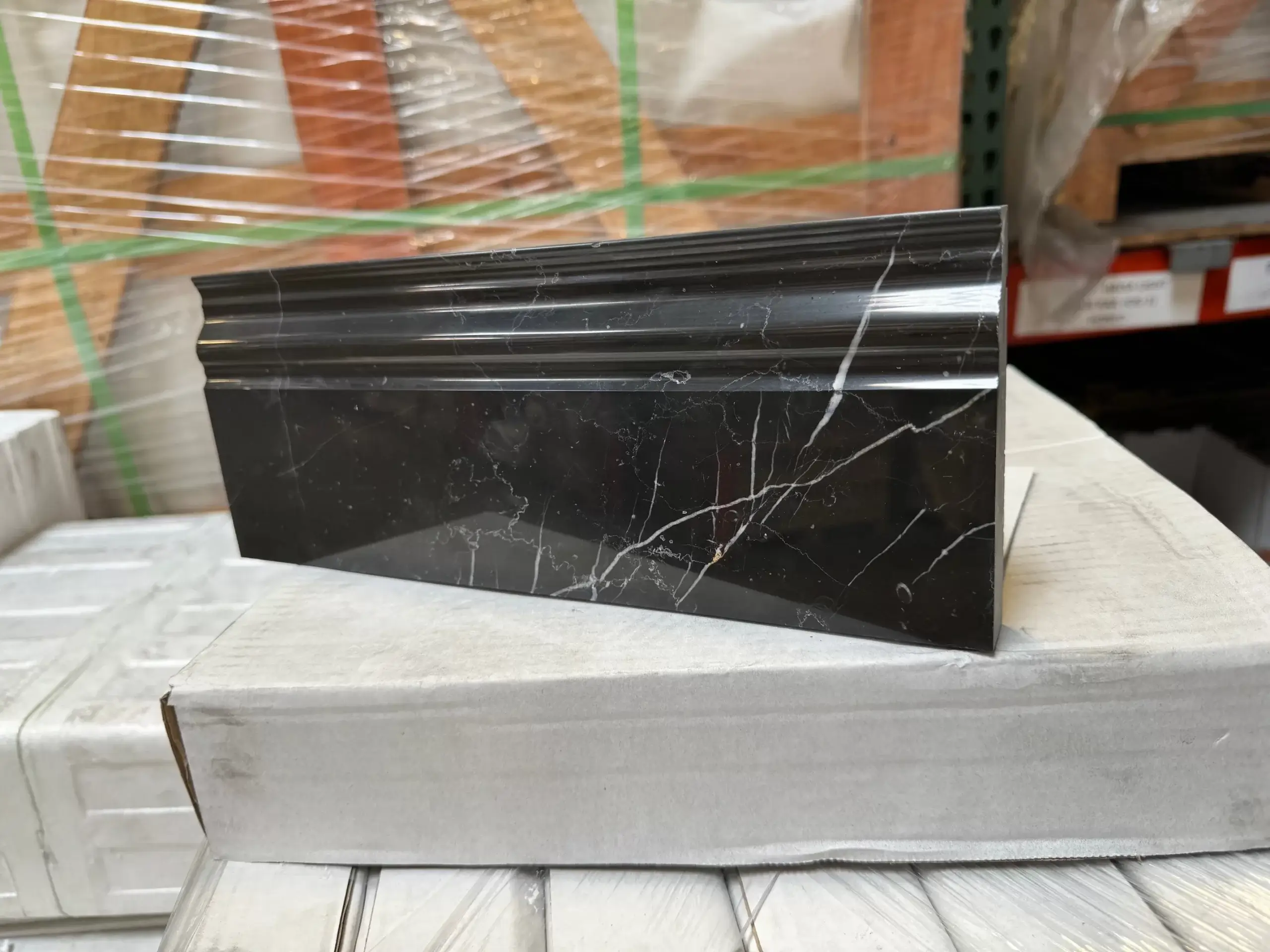
Commercial contracts demand strict adherence to architectural blueprints. Once the vertical machine’s front chamfering motors are locked in, a 1.5mm safety bevel will remain exactly 1.5mm across the entire 10,000-piece production run, ensuring absolute visual uniformity.
⚙️ Standardized Calibration
Bulk commercial stone slabs often suffer from slight thickness variations. The machine’s aggressive metal diamond wheels force-calibrate every piece to identical dimensions. This flawless sizing saves installation crews massive amounts of time on-site, making you the developer’s preferred vendor.
✨ 90-Degree Spec Gloss
Pneumatic polishing heads ensure that the physical pressure applied to the stone remains perfectly constant, regardless of the slab. This guarantees that every piece of baseboard reflects light with the exact same 90-degree high-gloss finish when installed in a long, illuminated hotel corridor.
The ROI Formula: Cash Flow Turnaround
Speed is not just about producing more; it’s about getting paid faster.In large commercial contracts, developers operate on Progress Payments. You do not get paid until the materials arrive on site and pass inspection. If it takes your manual shop two months to fulfill Phase 1 of an order, you are floating labor and material costs (paying out of pocket) for those entire 60 days.
The continuous output of a MosCut vertical line turns weeks of production into days. By rapidly accelerating your delivery timelines, you trigger your client’s payment milestones much faster. The machine is not just reducing your production costs; it is dramatically accelerating your cash flow cycle, allowing you to quickly reinvest that capital into securing the next mega-project.
Win the Commercial Bids You Deserve
Stop relying on unpredictable manual labor for mega-projects. Lower your Cost Per Linear Meter, pass rigorous quality inspections effortlessly, and dominate the commercial architectural market with the MosCut Vertical Continuous Line.
Calculate Your ROI Today