
 Stone Cutting Machines
 Stone Polishing Machines
 Bridge Saw Machines
 Stone Quarry Cutting Machines
 Stone Block Cutter Machine
 CNC Stone Wire Saw Machine
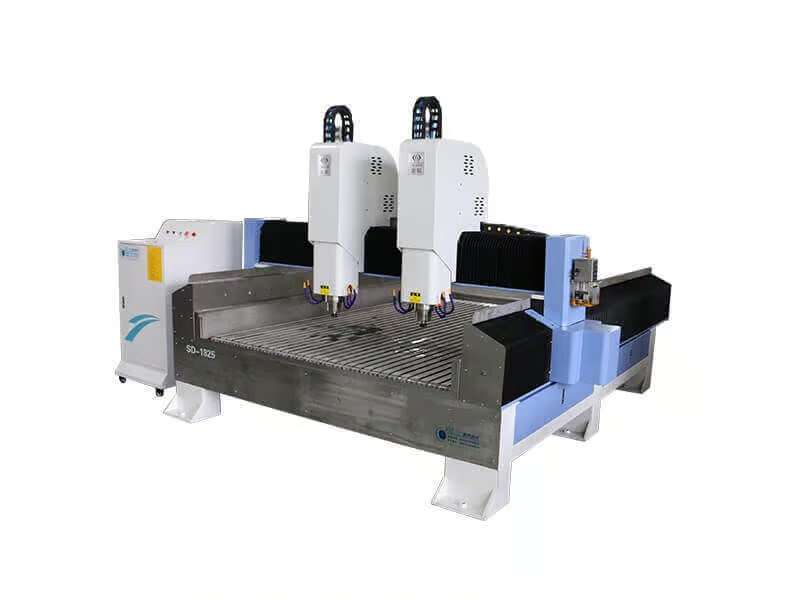 Stone Engraving Machines
 Thin Stone Veneer Saw Machine
 Horizontal Stone Slab Splitting Machine
 Stone Edge Polishing Profiling Machine
 Stone Auxiliary Equipment
In modern industrial manufacturing, unplanned machinery downtime has devastating financial impacts that reach far beyond mere repair bills. According to deep industry analysis published by the World Economic Forum (WEF), manufacturing facilities that implement strict predictive maintenance protocols reduce their unexpected equipment failures by up to 30%, successfully safeguarding their supply chain commitments. In the stone fabrication sector, where heavy machinery endures constant exposure to abrasive slurry and high humidity, proactive care is the ultimate barrier between maintaining a profitable production schedule and suffering catastrophic mechanical failure.
Consider the experience of a large-scale granite exporter based in Cape Town, South Africa. Operating in a harsh, humid coastal environment, they historically suffered from frequent spindle jams and rapidly rusting guide rails on their older polishing equipment due to poor maintenance habits. These recurring issues resulted in missed export deadlines and severe financial penalties. After completely overhauling their production line by upgrading to a heavy-duty MosCut bridge polishing machine, they decided to strictly implement our recommended daily maintenance checklist. The transformation was absolute: the factory experienced completely zero unplanned downtime over a consecutive 24-month period, preserving peak production speed and saving an estimated $18,000 in emergency repair fees and delayed shipping penalties.
Quick Navigation
The Critical Importance of Water and Sludge Management
While fresh water is the lifeblood of wet-polishing, recycled water heavily saturated with stone sludge acts as a highly destructive abrasive that can slowly grind away expensive internal machine components.
Clearing the Spindle Water Feed
The central water feed running through the main spindle is designed to cool the diamond abrasives and flush away debris. If the water supply is cut off due to internal sludge blockages, the intense friction will instantly burn out your expensive resin pads and potentially damage the spindle bearings. At the end of every shift, operators must flush the system with clean, pressurized water to ensure no sediment settles and hardens inside the plumbing overnight.
Implementing Proper Slurry Filtration
Recycling water is an environmental and economic necessity, but it must be done correctly. Utilizing a multi-stage settling tank or an active filter press ensures that the water returning to your bridge polisher is free of heavy silicate particles. Allowing thick slurry to circulate freely will rapidly erode your water pumps, valves, and the protective rubber seals on the machine.
Daily Lubrication and Guide Rail Care
Heavy cast-iron bridges moving continuously across wide spans require flawless lubrication. Friction is the absolute enemy of both machine longevity and a perfectly flat polished slab.
Greasing the X and Y Axis Tracks
The smooth operation of the crossbeam and side rails dictates the quality of the finish. If the tracks run dry, the machine will “shudder” during its travel, creating visible chatter marks on the stone surface. Operators must apply high-quality lithium-based grease to the linear guides and V-tracks daily, ensuring that the heavy cast-iron bridge glides effortlessly without micro-vibrations.

Protecting the Gear Racks from Debris
The precision gear racks that drive the machine’s movement are highly susceptible to damage if stone chips or hardened sludge become trapped between the teeth. Operators should physically inspect and brush the gear racks clean before applying a fresh, light coat of lubricant. Many modern bridge polishers come with accordion-style dust covers; ensure these covers remain untorn and fully functional.
Pneumatic System and Air Compressor Health
The precise downward pressure that creates a high-gloss mirror finish relies entirely on a healthy, moisture-free pneumatic air supply. Compromised air lines lead to uneven polishing results.
Draining Condensation from Air Valves
Air compressors naturally generate moisture through condensation, especially in humid climates. If this water travels through the pneumatic lines and enters the machine’s air cylinders, it will cause internal rusting and premature seal failure. Daily draining of the air compressor tank and checking the inline water separators is a critical, one-minute task that prevents major breakdowns.
Inspecting the Lifting Cylinders for Leaks
The pneumatic cylinders are responsible for lifting and pressing the abrasive head against the slab. Listen closely for hissing sounds indicative of air leaks. A leaking cylinder cannot maintain the consistent MPa (megapascals) programmed into the PLC, which will result in dull patches on the finished stone where the pressure unexpectedly dropped.
Safeguarding the Electrical Panel and PLC
Stone fabrication plants are notoriously wet and dusty environments—the two greatest enemies of sensitive electronic components. Protecting the “brain” of your machine is a non-negotiable daily task.
Maintaining Control Box Seals
The main electrical cabinet housing the PLC, inverters, and contactors must remain hermetically sealed. Operators should never leave the cabinet door ajar during operation. Routinely check the rubber gaskets around the doors to ensure they are not degraded. If fine stone dust infiltrates the cabinet, it can cause short circuits and catastrophic failure of the motherboards.
Sensor Cleaning and Calibration
Modern bridge polishing machines rely on proximity sensors and limit switches to detect the edges of the slab and prevent mechanical collisions. Wipe down these sensors daily with a dry cloth. If a sensor is blinded by a splash of stone mud, the machine might fail to lift the polishing head at the edge of the stone, causing severe damage to the abrasive and the slab.
Ready to Upgrade to a Maintenance-Friendly Machine?
Sometimes, older machinery is simply beyond repair. If your team is spending more time fixing your equipment than polishing stone, it is time to invest in industrial reliability and smart engineering.
Discover the Reliability of the MosCut Bridge Polishing Machine
Built with heavy-duty cast iron, fully enclosed guide rails, and premium electronic components. Our machines are designed to withstand the harshest factory environments with minimal daily upkeep.
View Machine Details & SpecificationsTop 10 Frequently Asked Questions About Machine Maintenance
We have compiled the most urgent maintenance questions from plant operators globally to help you troubleshoot common mechanical issues before they become catastrophic failures.